

Maddy summaryHR 7746, the "Destroy Zombie Guns Act," requires businesses that destroy firearms to destroy every component of a firearm during the process, not just parts of it. This law directly affects licensed firearm destruction businesses and individuals operating as regular business to destroy firearms for profit. The bill amends federal law (18 U.S.C. § 922) to make it unlawful to fail this complete destruction, adding penalties including fines, up to 2 years in prison, and license suspension or revocation for licensed destroyers who violate the rule. The key mechanism ensures no firearm parts remain usable after destruction, targeting incomplete destruction practices.
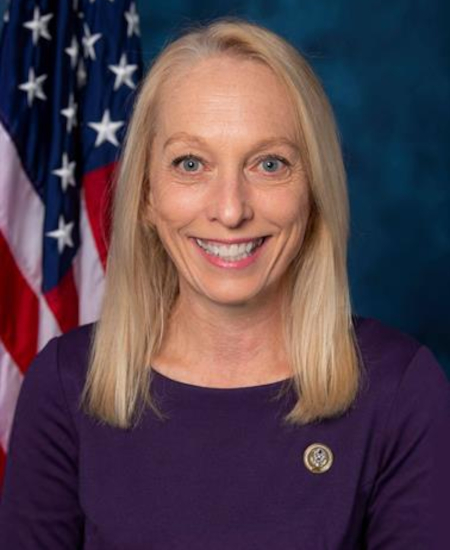
Rep. Mary Gay Scanlon
Sponsored bills
Maddy summaryHR 7634, the Plastic Pellet Free Waters Act, prohibits plastic pellets and pre-production plastic materials from being discharged into water through wastewater, spills, or runoff from specific facilities. It directly affects plastic polymer production facilities, plastic molding and forming facilities, and any point source (like packaging or transport operations) handling plastic pellets. The bill requires the EPA to issue a final rule within 60 days of enactment banning these discharges and updating all relevant wastewater, stormwater, and performance standards in permits and regulations. This creates a legal requirement for facilities to prevent plastic pellet pollution in waterways, targeting a major source of ocean plastic pollution.
Maddy summaryThis concurrent resolution (HCONRES 97) recognizes the gender wage gap, noting that women working full-time earn 84 cents for every dollar earned by men. It highlights racial disparities (e.g., Latinas earn 57 cents, Black women 69 cents) and the economic impact of the gap, including $965 billion in annual lost wages for women. As a symbolic resolution, it does not create new laws or policies but formally acknowledges the issue and reaffirms Congress’s commitment to addressing wage inequality.
Maddy summaryThis bill requires states to immediately stop Medicaid recovery claims against beneficiaries' estates. Specifically, it mandates that states withdraw all existing liens within 90 days of enactment and notify affected individuals or their estates about the withdrawal. The law also prohibits states from initiating, maintaining, or collecting any future Medicaid recovery claims for benefits correctly paid. It directly affects Medicaid recipients and their heirs who were previously subject to state recovery efforts. The key mechanism is the 90-day deadline for states to remove existing liens and cease all new recovery actions.
Maddy summaryHR 6203 extends funding for the Emergency Food Assistance Program (EFAP) through fiscal year 2028, increasing annual commodity funding to $500 million per year for 2024-2028. It raises storage and distribution funding from $100 million to $200 million annually and creates new delivery options for geographically isolated states (Hawaii, Alaska, Puerto Rico, Northern Mariana Islands, U.S. Virgin Islands, and Guam), including allowing them to order through the Department of Defense Fresh Fruit and Vegetable Program. The bill also permits these states to use up to 20% of allocated funds to directly purchase locally grown food. Finally, it allows the Secretary to consider factors like product variety and transportation distance when awarding contracts for fresh produce packages, while maintaining nutritional goals.
Maddy summaryThis bill designates the U.S. Postal Service facility at 28 East Airy Street in Norristown, Pennsylvania, as the "Charles L. Blockson Post Office Building." It directly affects the specific post office location and all official references to it. The key provision requires that all future government documents, maps, and records referencing this facility must use the new name. The bill makes no changes to postal services, operations, or affected individuals - only updating the facility's official designation. (Procedural naming bill; summary limited to 2 sentences as specified.)
Maddy summaryHRES 1032 is a symbolic resolution designating the week of February 26-March 1, 2024, as "Public Schools Week" in the U.S. House of Representatives. It expresses congressional support for public education, highlighting its role in preparing students and communities. The resolution has no legal effect or funding provisions - it solely serves as a formal expression of backing for public schools. It directly affects no individuals or entities but aims to raise awareness about public education. This is a non-binding gesture, not a policy change.
Maddy summaryThis symbolic resolution (HRES 1026) recognizes Black History Month and honors the 94 African-American recipients of the Congressional Medal of Honor for their military bravery, heroism, and valor. It does not create new laws or policies but formally acknowledges their contributions, referencing historical context like Sergeant William Harvey Carney’s 1863 actions and the 1993 study revealing racial discrimination in Medal of Honor awards during WWII. The resolution specifically calls for the House to recognize Black History Month and honor these 94 service members. It is a non-binding expression of support with no concrete policy changes.
Maddy summaryThis bill requires the U.S. Department of Education to automatically send information about Supplemental Nutrition Assistance Program (SNAP) eligibility to college students with a zero expected family contribution (EFC) who submit the Free Application for Federal Student Aid (FAFSA). It directs the Secretary to provide written and electronic details about SNAP benefits, including how to apply and contact information for state SNAP agencies, in both formats. The bill mandates consultation between the Education and Agriculture Departments to design this communication. It directly affects low-income undergraduate students who qualify for federal aid but may not know about SNAP food assistance. The policy change aims to connect eligible students with existing nutrition support programs.
Maddy summaryThe Price Gouging Prevention Act of 2024 prohibits businesses from charging "grossly excessive" prices for goods or services during exceptional market shocks (like natural disasters or pandemics), directly affecting large corporations with over $100 million in annual U.S. revenue. Key provisions include presuming violations if prices rise more than 20% above pre-shock averages without justification, allowing companies to defend against claims by proving legitimate cost increases, and requiring major corporations to disclose pricing changes in SEC filings. Enforcement will be handled by the Federal Trade Commission (FTC) and state attorneys general, with civil penalties up to 5% of a company’s revenue. The bill defines "unfair leverage" for dominant firms and mandates annual inflation adjustments to revenue thresholds starting in 2025.