

Maddy summaryThis bill prohibits Members of Congress, their spouses, and dependent children from owning or trading certain investments, including stocks, commodities, and derivatives (referred to as "covered investments"). It requires affected individuals to divest these investments within 90-180 days, with specific exemptions for Treasury bonds, diversified mutual funds, small business interests, and family trusts meeting strict conditions. Violations incur penalties of 10% of the investment's value plus disgorgement of profits, paid directly to the U.S. Treasury. The law applies to all covered individuals during federal service, with exceptions for investments acquired through inheritance or occupational trading (e.g., a spouse’s finance job).
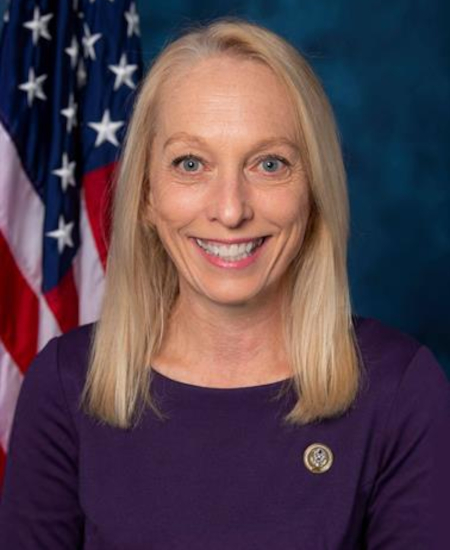
Rep. Mary Gay Scanlon
Sponsored bills
Maddy summaryThis bill prohibits federal courts from excluding potential jurors based on disability or age. It amends jury selection laws to require reasonable accommodations (like sign language interpreters or accessible seating) so people with disabilities can serve if otherwise qualified. The law removes automatic disqualification for "infirmity" and ensures individuals aren't barred from jury service solely due to disability when accommodations could enable participation. It directly affects millions of Americans with disabilities and older adults who may have been previously excluded from federal jury duty. The changes apply specifically to jury service in U.S. district courts.
Maddy summaryHR 4992, the FEMA Critical Staffing Act, requires the Federal Emergency Management Agency (FEMA) to reinstate employees who were involuntarily separated between January 20, 2025, and the bill’s enactment date, within 30 days of passage. It directly affects FEMA staff who lost their positions during that period and ensures continued support for communities relying on FEMA programs. The bill mandates reinstating two key programs: the Building Resilient Infrastructure and Communities program (for state/local disaster preparedness) and the flood mitigation assistance program (for flood risk reduction projects), while prohibiting cuts to existing disaster resource access. These provisions aim to maintain FEMA’s workforce and program continuity amid increasing climate-driven disasters.
Maddy summaryThe SUN Act (HR 4998) requires the President to submit a detailed report to Congress within 15 days whenever National Guard members are deployed domestically for non-disaster purposes under specific laws. The report must include the legal basis for the deployment, evidence of reduced violence, input from local law enforcement, total costs, and a certification that the deployment won’t interfere with disaster response capabilities. It applies to all domestic uses of the National Guard except for responses to natural disasters under the Stafford Act. The bill aims to enhance congressional oversight of military deployments on U.S. soil.
Maddy summaryThis bill (HJRES 115) terminates a presidential emergency declaration made on August 11, 2025, which claimed a "crime emergency" in Washington, D.C. It directly affects the District of Columbia by ending federal restrictions that prevented D.C. from using $1 billion in locally-raised funds for public safety, law enforcement, fire services, and schools. The resolution cites that the emergency declaration was legally flawed - section 740 of the DC Home Rule Act does not permit federalizing the Metropolitan Police Department - and notes that D.C. violent crime has reached a 30-year low. The bill formally ends the emergency under the DC Home Rule Act, restoring D.C.'s authority over its own budget and public safety resources.
Maddy summaryHR 4959, the "Land of the Free Act of 2025," repeals a specific deportation provision in immigration law. It removes Section 237(a)(4)(C) of the Immigration and Nationality Act (8 U.S.C. 1227(a)(4)(C)), which previously allowed non-citizens to be deported for engaging in "protected speech activities." This change directly affects non-citizens who might have faced deportation under that provision for exercising free speech rights. The bill makes a concrete policy change by eliminating this exception to deportation.
Maddy summaryThis bill amends the Food and Nutrition Act to clarify that Social Security benefits (income under Title II of the Social Security Act) are not counted when determining eligibility for SNAP (Supplemental Nutrition Assistance Program) benefits. It directly affects seniors receiving Social Security who rely on SNAP for food assistance, ensuring their Social Security payments do not reduce their SNAP benefits. The key change adds Social Security income to the list of non-countable resources under SNAP rules. The amendment takes effect 90 days after the bill is enacted.
Maddy summaryHR 4966 prohibits grocery stores from selling items at "grossly excessive prices," defined as 120% or more above the average market price over the previous six months (with exceptions for unavoidable cost increases like supply chain issues). It bans using facial recognition or personal data to set different prices for individual customers (e.g., adjusting prices based on shopping history) and requires clear signage if facial recognition is used. Stores over 10,000 square feet must replace electronic shelf labels with physical price tags. The Federal Trade Commission enforces these rules, allowing consumers to seek $3,000 per violation or actual damages, with penalties for willful violations.
Maddy summaryThe Ending Trading and Holdings in Congressional Stocks (ETHICS) Act requires members of Congress, their spouses, and dependent children to divest or place most personal investments in qualified blind trusts. It bans the purchase of covered investments (including stocks, commodities, and derivatives) after enactment, with current members having 90 days to sell existing holdings and new members having 90 days after taking office to divest. The bill includes specific exceptions for diversified mutual funds, Treasury securities, and certain family business investments while establishing enforcement mechanisms including civil penalties of up to 10% of the value of noncompliant holdings. The law applies to members serving terms beginning after January 31, 2023, and mandates public online disclosure of financial information through updated government databases.
Maddy summaryThe SWIFT VOTE Act provides $120 million in grants to state and local election offices to fund digital check-in systems (e-pollbooks) and real-time wait time reporting at voting locations for federal elections. It requires jurisdictions to publish hourly wait times for short polling locations or four daily intervals for longer ones on official websites, plus post-election summary reports. The bill mandates that funds supplement, not replace, existing election funding and requires training for election officials on accessibility for voters with disabilities and limited English proficiency. This directly affects state and local election administrators by creating new reporting obligations and funding for technology to reduce voter wait times.