

American Families United Act This bill authorizes the Department of Homeland Security (DHS) or the Department of Justice (DOJ) to exercise discretion in certain immigration cases. Under this bill, DOJ or DHS may, on a case-by-case basis, exercise discretion by declining to remove a non-U.S. national ( alien under federal law) or bar an alien from entering the United States to prevent hardship for the alien's U.S. citizen spouse, parent, or child. This discretion may also be exercised if the alien is the spouse or child of a deceased U.S. citizen. For the purposes of this bill, it shall be presumed that family separation constitutes hardship. However, DOJ or DHS may not exercise this discretion if the alien is removable or inadmissible due to certain grounds, including specified crime- and security-related grounds. This exercise of discretion may be applied to an alien who was ordered removed or denied entry prior to this bill's enactment if the alien files a motion to reopen or reconsider within two years of this bill's enactment.
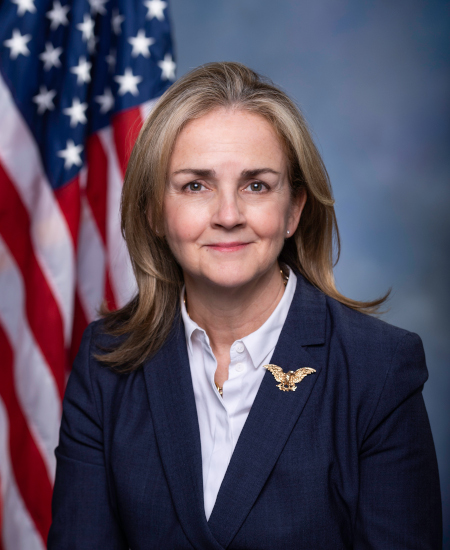
Rep. Madeleine Dean
Sponsored bills
Maddy summaryHR 1723, the Abortion is Health Care Everywhere Act of 2023, amends the Foreign Assistance Act to remove restrictions on using U.S. foreign aid funds for abortion services. It explicitly allows U.S. foreign assistance programs to fund comprehensive reproductive health care, including abortion services, training, and equipment. This change directly affects U.S. international health programs and recipient countries, enabling them to integrate safe abortion care into broader reproductive health services. The bill aims to align U.S. policy with global health guidelines by making abortion services a standard part of reproductive health care funded through foreign assistance.
Maddy summaryThe Railway Safety Act of 2023 establishes new safety requirements for trains transporting hazardous materials, including advance notification to emergency response agencies and restrictions on blocked crossings. It mandates minimum 2-person crews for most freight trains (with specific exceptions for low-risk operations), requires rail carriers to install and maintain wayside defect detectors on tracks carrying hazardous materials, and increases civil penalties for violations based on a percentage of annual income rather than fixed amounts. The bill also sets a phase-out schedule for older DOT-111 tank cars by May 2025 and authorizes research into safer tank car designs. These provisions directly affect rail carriers, shippers of hazardous materials, and emergency response agencies responsible for planning and response.
Maddy summaryHR 1680, the Black Sea Security Act of 2023, mandates the U.S. government to develop a coordinated strategy for security and economic engagement with Black Sea states (Turkey, Romania, Bulgaria, Moldova, Ukraine, and Georgia). The bill requires an interagency strategy within 180 days, focusing on enhancing security cooperation with NATO, bolstering economic ties, supporting democratic resilience, and improving regional connectivity. Key mechanisms include assessing military presence options, diversifying energy partnerships, countering economic coercion from Russia and China, and strengthening infrastructure through initiatives like the Three Seas Initiative. The strategy aims to deepen U.S. engagement without creating new funding or altering existing authorities for affected countries.
Correcting Guam's History in the PACT Act This bill expands eligibility for a presumption of service-connection for specified diseases associated with exposure to certain herbicide agents. Under a presumption of service-connection, specific conditions diagnosed in certain veterans are presumed to have been caused by the circumstances of their military service. Health care benefits and disability compensation may then be awarded. Under the bill, service performed in Guam or its territorial waters between August 15, 1958, and July 31, 1980, provides a veteran who has a specified disease that is associated with exposure to certain herbicide agents with eligibility for a presumption of service-connection. (Under current law, the eligible time frame for service in Guam is between January 9, 1962, and July 31, 1980.)
Maddy summaryHCONRES 23 is a non-binding resolution expressing Congress's support for recognizing March 10, 2023, as "Abortion Provider Appreciation Day." It honors abortion providers and clinic staff for delivering essential reproductive healthcare amid increased restrictions following the Supreme Court's Dobbs decision, which overturned Roe v. Wade. The resolution condemns the Dobbs ruling, affirms Congress's commitment to protecting providers' safety, and emphasizes ensuring access to abortion care. As a symbolic gesture, it does not create new laws or change existing policies.
Maddy summaryHR 1619 requires schools participating in the National School Lunch Program to provide fluid milk substitutes (like soy or almond milk) upon request by a student or their parent/guardian. The bill removes the previous requirement that substitutions needed a medical authority's written statement for most dietary needs, instead allowing requests based on the student's or parent's request alone. It aligns the definition of acceptable substitutes with current Dietary Guidelines for Americans. This change directly affects students with dietary restrictions, making it simpler for schools to accommodate their needs without extra medical documentation.
Maddy summaryHR 1503, the Prescription Information Modernization Act of 2023, allows drug manufacturers to provide FDA-approved prescribing information exclusively via digital means (like email or online portals) to doctors and pharmacists, while requiring them to still offer paper copies upon request at no extra cost. The bill directly affects drug manufacturers and distributors, who must implement this change by 2025 (or when regulations take effect), and ensures prescribers and dispensers can choose their preferred format. Key provisions include mandating manufacturers to honor paper requests promptly without additional fees and requiring the Health Secretary to issue implementing regulations within one year. The law aims to modernize how medical information is shared while maintaining accessibility for healthcare providers.
Maddy summaryThis bill creates a new definition for "currently accepted medical use with severe restrictions" under the Controlled Substances Act, specifically for certain investigational drugs. It applies to drugs designated as breakthrough therapies by the FDA or authorized for expanded patient access under specific emergency protocols for serious diseases with no other treatment options. The definition excludes drugs that are already fully approved under standard FDA pathways or that lose their expanded access status. If a drug no longer meets these strict criteria, the Attorney General must reclassify it into the highest restriction category (Schedule I) within 90 days of notification from the Health Secretary. This changes how certain experimental treatments are classified under federal drug laws.
Maddy summaryThis bill authorizes a Congressional Gold Medal to honor the "Hello Girls" - female telephone operators who served in the Army Signal Corps during World War I. They provided critical battlefield communications in France (connecting 26 million calls), wore military uniforms, and faced combat risks, but were denied veteran benefits for 60 years due to being classified as civilian contractors. The medal recognizes their pioneering service, devotion, and the decades-long struggle to gain military recognition. The award follows similar recognition for other WWII women veterans and aims to correct the historical injustice they faced.