

Maddy summaryThe Stronger Communities through Better Transit Act establishes a new federal grant program to improve public transportation service. It provides funding to urban areas, states, and Indian tribes to cover up to 50% of public transit operating costs (up to 80% in persistent poverty areas and 100% for Indian tribes), with requirements to report on service frequency, access to jobs, and conduct community surveys. The program mandates that a majority of funds must benefit underserved communities and areas of persistent poverty, defined as census tracts with high poverty rates or minority populations. Recipients must maintain their transit funding levels and report on improvements in access to essential services. The bill authorizes $20 billion annually for fiscal years 2024-2027.
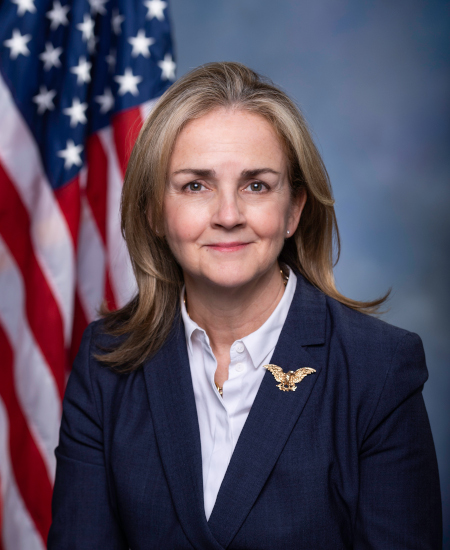
Rep. Madeleine Dean
Sponsored bills
Maddy summaryThis bill restores visa eligibility for immigrants who had diversity visas allocated for fiscal years 2017-2022 but were denied entry due to specific travel restrictions (like Executive Orders 13769/13780 or related proclamations) or pandemic-related delays. The State Department must notify affected individuals within 90 days of the bill’s enactment, giving them one year to confirm they wish to proceed with their visa applications. Unused visas from those years can be reallocated without counting against current annual limits, and applicants who fail to respond or are denied for standard reasons (like education requirements) lose eligibility. The policy directly affects individuals impacted by these specific past barriers to immigration.
Maddy summaryThis bill establishes an Office of Prison Education within the Bureau of Prisons to improve educational opportunities for incarcerated individuals in federal facilities. It creates a Federal Prison Education Program that partners with educational providers to offer adult literacy, high school equivalency, postsecondary education, and career training programs. The bill requires data collection on program outcomes, including recidivism rates and employment impacts, with $170 million allocated for implementation from 2024-2030. It also includes provisions for training State correctional facilities and special considerations for incarcerated veterans seeking educational assistance.
Maddy summaryHRES 967 would amend House rules to allow Members who have recently given birth to vote by proxy for up to six weeks after childbirth. Specifically, a new rule permits a Member to designate another Member as their proxy during this period to cast votes on their behalf. The proxy cannot be used to count the Member's presence for quorum purposes in the House or its committees. This change directly affects female Members during their postpartum leave, with no other proxy voting allowed under the amendment.
Maddy summaryHRES 963 is a symbolic resolution honoring Korean American Day, which commemorates the January 13, 1903 arrival of the first large wave of Korean immigrants to the U.S. It recognizes Korean Americans' contributions to U.S. society, including their economic, cultural, and military impacts, and marks the 121st anniversary of this historic migration. The resolution urges all Americans to observe Korean American Day to appreciate these contributions. As a commemorative measure, it does not create new policies or affect specific groups beyond this ceremonial recognition.
This bill allows certain small businesses a new tax credit for 10% of their qualified drug threat mitigation research expenses. Such expenses include research into mitigating or treating the effects of specified drugs, including any emerging drugs, fentanyl, a fentanyl-related substance, or methamphetamine.
Maddy summaryThe BOP Release Card ID Act of 2024 requires the Bureau of Prisons to issue a photo identification card meeting federal standards to U.S. citizen prisoners released from federal custody. The card must be valid for at least 18 months and accepted by federal programs like Social Security, Medicaid, Medicare, and SNAP, as well as for entry into federal buildings. The bill also directs the Attorney General to provide guidance to states on issuing similar cards for state prisoners, with annual reports to Congress on progress.
Maddy summaryThe Affordable Connectivity Program Extension Act of 2024 allocates $7 billion in funding for the Affordable Connectivity Program (ACP) during fiscal year 2024. The ACP provides subsidies to low-income households to help cover the cost of internet service and connected devices like laptops or tablets. This funding ensures the program can continue supporting eligible households throughout the year, with the money remaining available until fully spent. The bill extends existing program funding without changing eligibility criteria or service requirements.
Maddy summaryThis bill establishes permanent property rights in an individual's voice and likeness, granting people (and their heirs for up to 10 years after death) exclusive control over commercial uses of their digital depictions or voice replicas created via AI. It requires written consent from individuals (or court-approved agreements for minors) for any commercial use of their voice or likeness, with strict penalties: $50,000 per violation for unauthorized cloning services and $5,000 per violation for unauthorized depictions. The law balances these rights against First Amendment protections by requiring courts to weigh factors like whether the use is transformative or relevant to the work's purpose. It directly affects anyone whose voice or image is used commercially without consent, including celebrities, public figures, and ordinary individuals.
Maddy summaryHR 3315, the National Guard and Reservists Debt Relief Extension Act of 2023, extends an existing bankruptcy protection for qualifying military reservists and National Guard members. It amends the 2008 National Guard and Reservists Debt Relief Act to extend the exemption period from 15 to 19 years, allowing those activated for at least 90 days after September 11, 2001, to avoid automatic rejection in Chapter 7 bankruptcy filings due to income thresholds. This provision directly affects service members called to active duty or homeland defense roles, providing them additional time to manage debt without facing the "means-test presumption of abuse." The bill makes no new policy changes beyond extending this specific relief period.