Maddy summaryThis bill prevents people with disabilities from losing federal benefits while campaigning for elected office. It ensures that campaign work and any income earned from it (like paid campaign roles) are not counted when determining eligibility for Social Security benefits (SSI or SSDI) or other federally funded state/local programs. Specifically, it applies to individuals already receiving disability benefits under Social Security Title II or XVI. The law directly affects disabled candidates running for federal, state, or local office by removing a financial barrier to participating in elections.
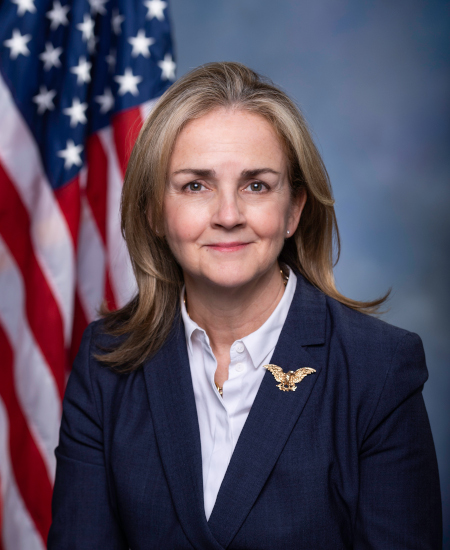
Rep. Madeleine Dean
Sponsored bills
Maddy summaryThis bill creates a federal legal cause of action for individuals significantly exposed to PFAS chemicals (found in drinking water and human blood) to sue manufacturers responsible for the exposure. It establishes a medical monitoring remedy, requiring courts to order regular health screenings for those at increased risk of PFAS-linked diseases like cancer, with costs shifted from individuals to manufacturers. The bill includes a presumption of significant exposure if individuals show PFAS was released in areas they frequented for at least one year or have detectable PFAS in their bodies. It does not replace state law claims and aims to encourage industry-funded safety research on PFAS.
Maddy summaryThe Credit for Caring Act of 2024 creates a new federal tax credit for family caregivers. It allows eligible caregivers to claim a credit equal to 30% of qualified caregiving expenses (like home modifications, medical supplies, or respite care) exceeding $2,000 per year, capped at $5,000 annually. To qualify, caregivers must earn over $7,500 in income and provide care for a relative (like a spouse or parent) certified by a healthcare provider as needing long-term care for at least 180 days. The credit phases out for higher earners, with a $75,000 income threshold for single filers and $150,000 for joint returns.
Maddy summaryThe Investor Choice Act of 2024 prohibits financial firms (brokers, dealers, investment advisers) from requiring mandatory arbitration in disputes with retail investors. It bans clauses in contracts or bylaws that force investors to use arbitration instead of court or class action lawsuits. The bill voids such mandatory arbitration provisions in new agreements and existing contracts (except for arbitrations already started before enactment). This directly affects retail investors who gain the right to choose court or class action options for securities-related disputes.
Maddy summaryThis bill amends the McKinney-Vento Homeless Assistance Act to allow federal funding through the Emergency Solutions Grant Program to cover "safe parking" initiatives. It defines "safe parking" as providing homeless individuals living in vehicles (including RVs) with overnight parking alongside re-housing and supportive services to transition to stable housing. The key change makes safe parking programs eligible for federal grant funding that previously did not cover this specific activity. This directly affects homeless individuals residing in vehicles and the service providers operating these programs.
Maddy summaryThe SWIMS Act of 2024 bans the captivity of orcas, beluga whales, false killer whales, and pilot whales for public display in the United States. It prohibits exporting, importing, or taking these animals for display - except for relocation to a sanctuary meeting specific welfare standards or release into the wild. The bill also makes it illegal to breed these species for public display. This directly affects marine parks and aquariums that currently display these animals, preventing them from acquiring new animals for exhibits or breeding them for that purpose.
Reducing Accidents In Locomotives Act or the RAIL Act This bill addresses safety requirements for rail carriers and trains transporting hazardous materials. Specifically, the Department of Transportation (DOT) must issue safety regulations for trains carrying hazardous materials to require that rail carriers (1) provide state emergency response commissioners with advance notice and information about the hazardous materials; (2) reduce blocked rail crossings; and (3) comply with certain requirements regarding train length and weight specifications, track standards, speed restrictions, and response plans. DOT must also establish requirements for wayside defect detectors. These are used by railway systems alongside the tracks to detect defects and failures (e.g., wheel bearing failures). Current federal regulations do not require their use, but federal guidance does address their placement and use. Under the bill, DOT must issue regulations establishing requirements for the installation, repair, testing, maintenance, and operation of wayside defect detectors for each rail carrier operating a train carrying hazardous materials. Further, these regulations must establish requirements that safety placards be able to withstand heat in excess of 180 degrees. The bill also increases the maximum fines DOT may impose on rail carriers for violating safety regulations, requires DOT to update rail car inspection regulations and audit the federal inspection program, phases out certain railroad tank cars by May 1, 2028 (one year sooner than required under current law), expands training for local first responders, and imposes a new fee on certain rail carriers.

Maddy summaryThe ACCESS Act of 2024 creates a federal grant program to help clinics and health care providers expand abortion and reproductive health services in states where abortion is legal (outside of life or health exceptions). It authorizes $200 million annually for fiscal years 2024-2028 to fund specific capacity-building activities, including facility expansions, hiring clinical staff, telehealth services, and culturally appropriate patient resources. Priority is given to providers in states experiencing the highest increases in out-of-state patients seeking abortion care. The bill directly supports health care entities serving patients who travel across state lines for services, aiming to reduce wait times and improve access for vulnerable communities.
Maddy summaryHR 7056, the Access to Family Building Act, establishes federal rights for individuals to access assisted reproductive technology (ART) like IVF without unreasonable restrictions, directly affecting patients seeking fertility treatments and health care providers offering ART services. The bill prohibits states from imposing limitations on ART that are more burdensome than those for comparable medical procedures, fail to advance safety, or unduly restrict access, while allowing health and safety regulations that are necessary and least restrictive. It creates federal enforcement mechanisms, including lawsuits by the Attorney General or affected individuals to challenge violating state laws, and preempts conflicting state regulations. The bill explicitly preserves state authority over health/safety regulations and does not alter existing state insurance coverage laws for ART.
Maddy summaryThis bill extends the existing ban on undetectable firearms - weapons that evade standard airport or security X-ray detection - for an additional 10 years. It amends the 1988 Undetectable Firearms Act by changing the expiration date from 35 to 45 years after the law's original passage. The measure directly affects firearm manufacturers and sellers who produce or distribute weapons that cannot be detected by conventional screening equipment. This is a renewal of current restrictions, not a new policy, maintaining the same requirements for detecting firearms.