

Hydrogen Infrastructure Finance and Innovation Act This bill requires the Department of Energy (DOE) to establish a hydrogen infrastructure finance and innovation pilot program. Under the program, DOE must provide grants and low-interest loans to certain entities for hydrogen infrastructure, including projects for hydrogen transportation, storage, or delivery.
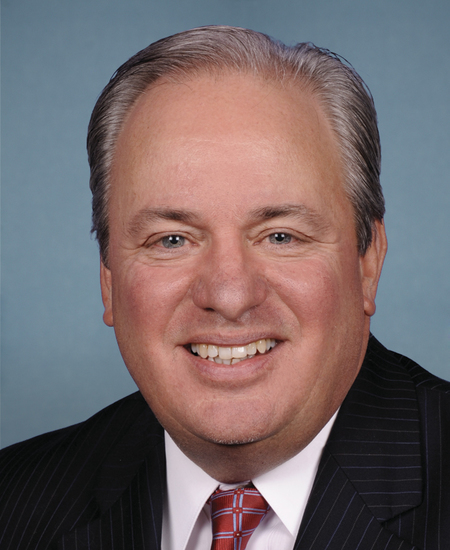
Rep. Michael F. Doyle
Sponsored bills
Maximizing Outcomes through Better Investments in Lifesaving Equipment for (MOBILE) Health Care Act This bill allows a health center that currently receives funding through a Health Resources & Services Administration Health Center Program grant to use a New Access Point grant to set up a mobile unit regardless of whether the health center also establishes a permanent health care delivery site. New Access Point grants help health centers establish new delivery sites to provide comprehensive primary care to medically underserved populations. Under current law, health centers may only use the grants to set up a mobile unit if they also establish a permanent site.
Social Security Fairness Act of 2021 This bill repeals provisions that reduce Social Security benefits for individuals who receive other benefits, such as a pension from a state or local government. The bill eliminates the government pension offset , which in various instances reduces Social Security benefits for spouses, widows, and widowers who also receive government pensions of their own. The bill also eliminates the windfall elimination provision , which in some instances reduces Social Security benefits for individuals who also receive a pension or disability benefit from an employer that did not withhold Social Security taxes. These changes are effective for benefits payable after December 2021.
Preventing a Patronage System Act of 2021 or the PPSA Act of 2021 This bill prohibits executive agency positions in the competitive service from being placed in the excepted service, unless such positions are placed in Schedules A through E as in effect on September 30, 2020. The bill also prohibits positions in the excepted service from being placed in any schedule other than the aforementioned schedules. On October 21, 2020, former President Donald Trump issued an executive order titled Creating Schedule F in the Excepted Service . The order placed executive agency positions that are of a confidential, policy-determining, policy-making, or policy-advocating character, and that are not normally subject to change as a result of a presidential transition, under a new schedule in the excepted service (Schedule F) instead of the competitive service. The order also required any such positions in the excepted service to be reclassified to Schedule F. The order was revoked by President Joe Biden on January 22, 2021.
Improving Seniors' Timely Access to Care Act of 2022 This bill establishes several requirements and standards relating to prior authorization processes under Medicare Advantage (MA) plans. Specifically, MA plans must (1) establish an electronic prior authorization program that meets specified standards, including the ability to provide real-time decisions in response to requests for items and services that are routinely approved; (2) annually publish specified prior authorization information, including the percentage of requests approved and the average response time; and (3) meet other standards, as set by the Centers for Medicare & Medicaid Services, relating to the quality and timeliness of prior authorization determinations.
National Nuclear University Research Infrastructure Reinvestment Act of 2021 This bill reauthorizes through FY2026 and expands the Nuclear Energy University Program within the Department of Energy (DOE) that supports university research and training in nuclear science and engineering. For example, the bill expands the program to provide support to universities for revitalizing and upgrading existing nuclear science and engineering infrastructure that support the development of advanced nuclear technologies and applications. In addition, the bill establishes an Advanced Nuclear Research Infrastructure Enhancement Subprogram under which DOE must establish four new research reactors as well as new nuclear science and engineering facilities.
Reese's Law This act requires the Consumer Product Safety Commission (CPSC) to establish a product safety standard with respect to batteries that pose an ingestion hazard (i.e., button cell or coin batteries) and consumer products containing the batteries. Specifically, the batteries and consumer products with these batteries must include a warning label that clearly identifies the hazard of ingestion and instructs consumers to keep the batteries out of the reach of children, seek immediate medical attention if a battery is ingested, and follow any other consensus medical advice. Consumer products containing the batteries must also include a battery compartment that eliminates or adequately reduces the risk of injury from battery ingestion by children who are six years of age or younger. Additionally, such batteries, if sold separately or included separately with a product, must comply with federal child-resistant packaging regulations. The act exempts from these requirements (1) toy products that are in compliance with certain existing battery accessibility and labeling requirements, and (2) batteries that are in compliance with the marking and packaging provisions of the American National Standards Institute (ANSI) Safety Standard for Portable Lithium Primary Cells and Batteries. The act also provides for compliance with the requirements by relying on a voluntary standard that is approved by the CPSC before it establishes the standard required by this act.
Harriet Tubman Bicentennial Commemorative Coin Act This bill directs the Department of the Treasury to mint and issue 50,000 $5 gold coins, 400,000 $1 silver coins, and 750,000 half-dollar clad coins emblematic of the legacy of Harriet Tubman as an abolitionist. The Secretary may issue coins under this bill only during the period of January 1, 2024, through December 31, 2024. All surcharges received by Treasury from the sale of such coins must be paid equally to the National Underground Railroad Freedom Center in Cincinnati, Ohio, and The Harriet Tubman Home, Inc. in Auburn, New York, for the purpose of accomplishing and advancing their missions.
National World War II Memorial Commemorative Coin Act This bill directs the Department of the Treasury to mint and issue up to 50,000 $5 coins, 400,000 $1 silver coins, and 750,000 half-dollar clad coins in commemoration of the National World War II Memorial in the District of Columbia. The design of the coins shall be emblematic of the memorial and the service and sacrifice of American soldiers and civilians during World War II. All surcharges received from the sale of such coins shall be paid to the Friends of the National World War II Memorial to support the National Park Service in maintaining and repairing the memorial, and for educational and commemorative programs.
National Strategy to Utilize Microreactors for Natural Disaster Response Efforts Act This bill directs the President to develop a national strategy to utilize microreactors to assist with natural disaster response efforts. A microreactor is a nuclear reactor with at most 20 megawatts of thermal energy generating capacity. Specifically, such strategy must include an assessment of the effectiveness of utilizing diesel generators to assist with natural disaster response efforts; a comprehensive, research-based, and long-term discussion of goals, objectives, and priorities for utilizing microreactors instead of diesel generators to assist with such efforts; a Department of Defense analysis regarding the use of such microreactors to assist with such efforts; recommendations on how the Nuclear Regulatory Commission may expedite the approval of designs for microreactors and issuing licenses; an assessment of the challenges and barriers to deploying microreactors to assist with such efforts and solutions; and recommendations on how to utilize microreactors as charging stations for electric vehicles in the event of a mass evacuation resulting from a natural disaster.