

Battery Material Processing and Component Manufacturing Act of 2021 This bill requires the Department of Energy to establish grant programs to support, enhance, and sustain a domestic supply chain for batteries, including grants to facilities for processing, manufacturing, and recycling batteries.
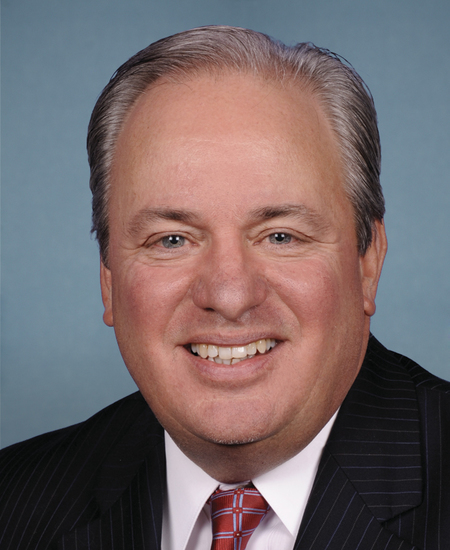
Rep. Michael F. Doyle
Sponsored bills
The Pioneering Antimicrobial Subscriptions To End Up surging Resistance Act of 2021 or the PASTEUR Act of 2021 This bill authorizes the Department of Health and Human Services (HHS) to enter into subscription contracts for critical-need antimicrobial drugs, provides $11 billion in appropriations for activities under the bill, and contains other related provisions. A manufacturer of a Food and Drug Administration-approved antimicrobial drug may apply to HHS to have the drug designated as a critical-need antimicrobial, and HHS may enter into a subscription contract for such a critical-need antimicrobial. The bill imposes certain requirements related to such contracts, including a mechanism to lower payments under the contract in certain instances to limit the manufacturer's revenue from the drug. Furthermore, HHS and the Centers for Disease Control and Prevention (CDC) shall award grants to support efforts to encourage the appropriate use of antimicrobial drugs and efforts to combat antimicrobial resistance. The CDC shall also track and assess data relating to antibacterial resistance and human antibiotic use and make such data publicly available. HHS shall also establish a Committee on Critical Need Antimicrobials. The committee shall develop a list of prioritized infections for which new antimicrobial drug development is needed, among other duties. Within six years of the bill's enactment, the Government Accountability Office shall report to Congress a study on the bill's effectiveness in developing priority antimicrobial drugs.
Nuclear Power Purchase Agreements Act This bill requires the Department of Energy to develop and carry out a program under which it will enter into one or more long-term (i.e., 10 to 40 years) nuclear power purchase agreements with nuclear reactors that received initial licenses after January 1, 2020.
Domestic Workers Bill of Rights Act This bill provides rights and protections for domestic workers (e.g., housekeepers, nannies, caretakers, personal assistants, and chauffeurs), including pay and leave rights, and health and safety protections. Specifically, the bill repeals the exemption of domestic live-in employees from certain minimum wage and maximum hour requirements. Employers must provide written notice of termination and provide at least 30 days of lodging and two weeks of severance pay to terminated live-in employees. Live-in employees also must be provided with reasonable access to telephone and internet service during their employment. The bill requires employers to provide domestic workers with a written agreement covering wages, sick leave, benefits, and other matters. Further, domestic workers may request and be granted changes to work schedules due to personal events. The bill also provides domestic workers with certain privacy rights, extends to domestic workers protections against discrimination in employment, and increases the federal medical assistance percentage (FMAP) for certain Medicaid-funded medical services provided by domestic workers. The Department of Labor must (1) award grants for a domestic worker national hotline for reporting emergencies, training on hazards facing domestic workers, and workforce investment activities for domestic workers; and (2) establish a Domestic Worker Wage and Standards Board to investigate standards in the domestic workers industry. Labor must publish online a document that describes the rights and protections for domestic workers under this bill.
Protecting Renters from Evictions Act of 2021 This bill extends through December 31, 2021, the order issued by the Centers for Disease Control and Prevention titled Temporary Halt in Residential Evictions To Prevent the Further Spread of COVID–19 and published on September 4, 2020.
Captive Primate Safety Act This bill limits the trade and possession of nonhuman primates. For example, the bill prohibits most individuals from owning a nonhuman primate as a pet.
Bear Protection Act of 2021 This bill prohibits the import, export, and commerce of bear viscera or related products except for limited acts carried out solely to enforce wildlife protection laws.
Steel Industry Preservation Act This bill extends and modifies the production tax credit for steel industry fuel. (Under current law, steel industry fuel is a fuel that is (1) produced through a process of liquefying coal waste sludge and distributing it on coal, and (2) used as a feedstock for the manufacture of coke.) Specifically, the bill modifies the tax credit to (1) extend the credit period and the placed-in-service date for steel industry fuel producing facilities, (2) revise the definition of steel industry fuel to allow blends of coal and petroleum coke or other coke feedstock in the fuel, and (3) specify requirements for treating an owner as producing and selling steel industry fuel. The bill also allows a taxpayer that produces steel industry fuel to elect to accept an increased tax credit in lieu of certain deductions for expenses in connection with the production of steel industry fuel.
Mature Technology Node Resiliency and Manufacturing Act of 2021 This bill provides $2 billion in FY2022 funds for the Department of Commerce to give financial assistance that incentivizes investment in semiconductor facilities and equipment at mature technology nodes. (A technology node is a specific semiconductor manufacturing process and its design rules.) This assistance shall be provided to certain entities with a demonstrated ability to substantially finance, construct, expand, or modernize a semiconductor facility. Such entities must also (1) provide equipment or materials or operate at mature technology nodes, and (2) commit to using federal financial assistance received pursuant to the bill to increase semiconductor production at such nodes. Commerce must prioritize entities that support the resiliency of the semiconductor supply chain for critical manufacturing industries in the United States.
Closing the Meal Gap Act of 202 1 This bill revises the requirements for calculating Supplemental Nutrition Assistance Program (SNAP) benefits. The bill increases the minimum SNAP benefit and requires benefits to be calculated using the value of a low-cost food plan. The Department of Agriculture (USDA) must determine the requirements for the low-cost food plan, which is the diet required to feed a family of four, consisting of a man and a woman 19-50 years of age, a child 6-8 years of age, and a child 9-11 years of age. USDA must (1) reevaluate and publish the market baskets of the plan by January 1, 2027, and every five years thereafter, based on current food prices, food composition data, consumption patterns, and dietary guidance; and (2) make adjustments to the plan to account for household size, changes in the cost of the diet, and the costs of food in specified areas. The bill modifies the requirements for calculating household income to determine SNAP eligibility by (1) authorizing a standard medical expense deduction for households containing an elderly or disabled member, and (2) eliminating the cap on the excess shelter expense deduction. The bill eliminates certain work requirements for SNAP. The requirements apply to able-bodied adults who are ages 18-49 and have no dependent children. The bill allows Puerto Rico, American Samoa, and the Northern Mariana Islands to participate in SNAP. Currently, the three territories receive block grants instead of participating in SNAP.