

Work Without Worry Act This bill modifies eligibility for Social Security Disability Insurance (SSDI) benefits for individuals who have a disability that began before age 22. Under current law, these individuals may obtain SSDI benefits based on the work record of a retired, disabled, or deceased parent. However, an individual with earnings after age 22 that exceed a specified monetary limit (i.e., constitute substantial gainful activity) permanently loses eligibility for such benefits. This bill allows individuals to retain eligibility for such benefits regardless of the amount of earnings after age 22. Additionally, individuals who apply for SSDI benefits on a parent's record and also independently qualify for Social Security benefits on their own record will receive the larger of the two benefit amounts.
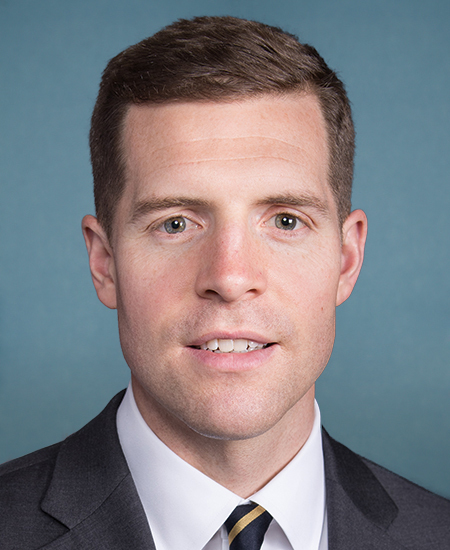
Rep. Conor Lamb
Sponsored bills
Ground-Based Augmentation Systems in the National Airspace System Implementation Act or the GBAS Act This bill requires the Department of Transportation to award grants for deploying ground-based augmentation systems (GBAS) at airports and in aircraft. GBAS augment the Global Positioning System (GPS) used in U.S. airspace to improve the accuracy of, and provide integrity for, an aircraft's GPS navigational position when the aircraft is near an airport.
This resolution recognizes the historical significance to the nation of Juneteenth Independence Day (commemorating the end of slavery in the United States).
Support UNFPA Funding Act This bill authorizes annual contributions to support the core functions and programs of the United Nations Population Fund for the five fiscal years following the bill's enactment.
Brandon Act This bill modifies the regulatory requirement for referrals by commanding officers and supervisors of members of the Armed Forces for mental health evaluations. Specifically, the regulations must (1) establish a phrase that enables the member to trigger a referral for a mental health evaluation, (2) require a commanding officer or supervisor to make such referrals as soon as practicable following disclosure by the member of the established phrase, and (3) ensure that the process protects the confidentiality of the member.
Support for Community Bridges Act This bill sets aside a portion of Federal-aid highway funding for repairing structurally deficient bridges that are not part of the National Highway System and prescribes a formula to allocate this funding to states based on their share of such bridges.
Shark Fin Sales Elimination Act of 20 21 This bill addresses the sale of shark fins and the inclusion of rays and skates in the Seafood Traceability Program. The Seafood Traceability Program has data reporting and recordkeeping requirements at the time of entry for imported fish or fish products entered into U.S. commerce. The bill makes it illegal to possess, buy, or sell shark fins or any product containing shark fins, except for certain dogfish fins. A person may possess a shark fin that was lawfully taken consistent with a license or permit under certain circumstances. Penalties are imposed for violations under the Magnuson-Stevens Fishery Conservation and Management Act. The Department of Commerce must revise its regulations to include rays and skates as species that are subject to the Seafood Traceability Program.
Michael Lecik Military Firefighters Protection Act This bill establishes a presumption of service-connection for specified diseases becoming manifest in certain veterans to a degree of disability of 10% or more within 15 years of the veteran's separation from active military, naval, or air service. Under a presumption of service-connection, specific diseases or disabilities diagnosed in certain veterans are presumed to have been caused by the circumstances of their military service. Health care benefits and disability compensation may then be awarded. Veterans addressed by this bill are those who (1) are trained in fire suppression, and (2) served on active duty in a military occupational specialty or career field with a primary responsibility of firefighting or damage control for at least five years in the aggregate.
Strengthening and Amplifying Vaccination Efforts to Locally Immunize All Veterans and Every Spouse Act or the SAVE LIVES Act This bill authorizes the Department of Veterans Affairs (VA) to furnish a COVID-19 (i.e., coronavirus disease 2019) vaccine to covered individuals during the COVID-19 public health emergency. Under the bill, covered individuals are veterans who are not eligible to enroll in the VA health care system; specified veterans who are eligible for hospital care, medical services, and nursing home care abroad; beneficiaries who are eligible for care due to a specified disability or death of a veteran; family caregivers of veterans who are participating in the VA's Program of Comprehensive Assistance for Family Caregivers; caregivers of veterans participating in the VA's Program of General Caregiver Support Services; caregivers of veterans participating in the VA's Medical Foster Home Program, Bowel and Bladder Program, Home Based Primary Care Program, or Veteran Directed Care Program; and the spouses of veterans. The VA must prioritize the vaccination of (1) veterans who are enrolled in the VA health care system, (2) veterans who fail to enroll but receive hospital care and medical services for specified disabilities in their first 12 months of separation from service, and (3) caregivers accompanying such prioritized veterans. Under the bill, the VA is authorized to determine the timing for offering a vaccine to the spouse of a veteran.
Flexible Financing for Rural America Act This bill allows rural utility service providers to submit to the Department of Agriculture (USDA) a request to adjust the interest rate or modify the terms of certain loans. The request shall include a report summarizing how the adjustment or modification will assist the borrower in providing critical utility services to a rural community. Specifically, on receipt of a request, USDA or the Department of the Treasury (in the case of a loan owned by the Federal Financing Bank) must adjust the interest rate on the loan to match certain interest rates for obligations of comparable maturity to the term remaining on the loan (or a higher rate requested by the borrower), and make modifications to the loan terms as necessary to address changes in the financial position of the borrower due to the COVID-19 public health emergency and to promote the financial sustainability of the borrower. In carrying out the adjustments or modifications, USDA or Treasury shall not impose or collect any fee from, or impose any penalty on, a borrower. The bill also provides funding to implement the adjustments and modifications and for the liquidation of residual intragovernmental amounts owed by the Federal Financing Bank in connection with certain loans.