

Tax-Free Pell Grant Act This bill excludes from gross income, for income tax purposes, any amount received as a federal Pell Grant. It also expands the definition of qualified tuition and related expenses under the American Opportunity and Lifetime Learning tax credit to include computer or peripheral equipment (up to a maximum of $1,000), child and dependent care expenses, and course materials.
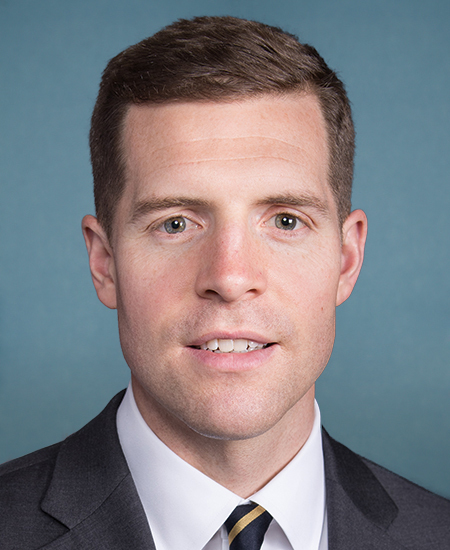
Rep. Conor Lamb
Sponsored bills
Better Care Better Jobs Act This bill establishes programs and provides funds for state Medicaid programs to improve home- and community-based services (HCBS), such as home health care, personal care, case management, and rehabilitative services. Specifically, the bill provides funds for the Centers for Medicare & Medicaid Services to award planning grants, develop quality measures, and provide technical assistance to states regarding specified HCBS improvements, particularly with respect to access, utilization, and the associated workforce. The bill also increases the Federal Medical Assistance Percentage (i.e., federal matching rate) for HCBS in states that develop plans and meet specified benchmarks for improvements. The bill also makes permanent (1) the Money Follows the Person Rebalancing Demonstration Program (a grant program to help states increase the use of HCBS for long-term care and decrease the use of institutional care), and (2) certain provisions regarding Medicaid eligibility that protect against spousal impoverishment for recipients of HCBS.
Therapeutic Fraud Prevention Act of 20 21 This bill prohibits commercial conversion therapy, which is a practice or treatment designed to change a person's sexual orientation or gender identity or otherwise change behaviors, thoughts, or expressions related to gender or sexual attraction. This prohibition does not apply to treatment that assists an individual undergoing a gender transition or facilitates identity exploration and development.
Cultivating Opportunity and Recovery from the Pandemic through Service Act or the CORPS Act This bill makes several changes to AmeriCorps programs during the COVID-19 health emergency. Specifically, the bill: increases living allowance payments to program participants; increases educational awards for program participants; relaxes program requirements, including reducing the age requirement for AmeriCorps Seniors to 45 and older; creates a pilot program to allow state commissions to directly place individuals in approved AmeriCorps programs; and allows for targeted AmeriCorps grants to fund recovery projects in communities disproportionately affected by COVID-19. The bill also excludes AmeriCorps living allowance payments and educational awards from taxable income for program participants.
Ensuring Patient Access to Critical Breakthrough Products Act of 2021 This bill provides for Medicare coverage of medical devices that are approved under the Food and Drug Administration (FDA) Breakthrough Devices Program. (Under the program, manufacturers work with the FDA to expedite the review and approval of certain medical devices that provide for more effective treatment or diagnosis of life-threatening or irreversibly debilitating human diseases or conditions.) The bill allows designated medical breakthrough devices to be temporarily covered under Medicare during a four-year transitional period. The Centers for Medicare & Medicaid Services (CMS) must assign payment codes for such devices within three months of FDA approval. The CMS must also establish a process to allow for continued coverage after the transitional period has expired, taking into account any additional evidence or data the CMS deems necessary. The CMS must also provide for temporary and, where appropriate, permanent Medicare coverage of breakthrough devices for which there is no existing benefit category (i.e., classification).
Water Quality Protection and Job Creation Act of 2021 This bill addresses water infrastructure and the discharge of pollution (e.g., wastewater or stormwater) into waters of the United States, including by reauthorizing through FY2026 and revising the Clean Water State Revolving Fund (SRF) program. The clean water SRF program provides communities low-cost financing for water quality infrastructure projects.
Zero-Emission Nuclear Power Production Credit Act of 2021 This bill allows a new business-related tax credit through 2030 for the production of electricity from zero-emission nuclear power. It also allows taxpayers to elect direct payments of such credit and requires a recapture of credit amounts for contractors who fail to pay their employees the prevailing wage rate. The bill requires the Government Accountability Office to report on the effectiveness of the credit in ensuring grid reliability and on ratepayer savings. Contractors must ensure that at least 15% of their workforce is composed of qualified apprentices unless there is a lack of availability of qualified apprentices in the applicable geographic area.
Puppy Protection Act of 2021 This bill requires the Department of Agriculture to expand standards that govern the humane handling, care, treatment, and transportation of animals to include new requirements for commercial dog dealers. Specifically, the standards must require dog dealers to provide to dogs adequate housing, exercise, and veterinary care; appropriate and nutritious food; continuous access to potable water; and meaningful socialization with humans and compatible dogs for at least 30 minutes each day. The standards must also include requirements for breeders to use safe breeding practices and make all reasonable efforts to find humane placement for retired breeding dogs.
Twenty-First Century Nuclear Security Act This bill requires the Department of Energy to report on matters related to global nuclear safety, nuclear security, and nuclear nonproliferation, as well as the risks posed by Russia and China to the global nuclear energy market.
This joint resolution nullifies the Oil and Natural Gas Sector: Emission Standards for New, Reconstructed, and Modified Sources Review rule published by the Environmental Protection Agency on September 14, 2020. The rule finalized amendments to new source performance standards under the Clean Air Act for the oil and natural gas sector, such as an amendment that removed limitations on methane emissions from such sector.