

Maddy summaryThis bill creates a presumption that minerals from the Democratic Republic of Congo (DRC) containing cobalt and lithium, mined with child or forced labor, cannot be imported into the United States. It requires the U.S. government to develop an enforcement strategy to identify and block such imports, including monitoring supply chains and working with international partners. The bill mandates diplomatic efforts to address child and forced labor in the DRC's mining sector and establishes sanctions against foreign entities that facilitate or engage in such labor practices. The focus is on minerals critical for electric vehicles and electronics, which are heavily sourced from the DRC and processed in China, with specific attention to Chinese mining companies like China Molybdenum that dominate the DRC's cobalt sector.
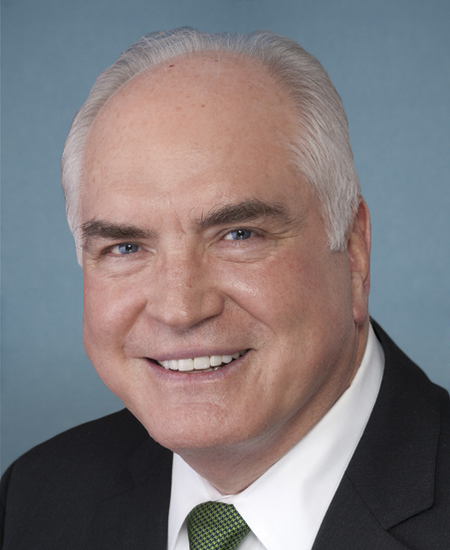
Rep. Mike Kelly
Sponsored bills
Maddy summaryThis bill prohibits Medicare from paying for certain custom-fitted or custom-fabricated orthotic and prosthetic devices delivered via "drop shipment" (direct shipping without in-person training from a qualified provider). It directly affects Medicare beneficiaries who need these devices, ensuring they receive necessary in-person fitting and training. The bill also expands which healthcare professionals (including physical therapists, occupational therapists, orthotists, and prosthetists) can prescribe these devices and updates definitions to clarify terms like "orthoses" and "prostheses." Final regulations implementing these changes must be issued within one year of the bill's enactment.
Maddy summaryHR 4307, the Medical Supply Chain Resiliency Act, establishes a framework for the U.S. to negotiate agreements with trusted foreign partners to secure reliable supplies of critical medical goods like drugs and devices. It directs the President to create "trusted trade partner agreements" with countries that maintain open trade during health emergencies, protect intellectual property, and reduce unnecessary trade barriers. These agreements would eliminate duties or restrictions on medical goods, diversify supplier networks, and harmonize regulatory standards to prevent shortages like those seen during the pandemic. The bill directly affects U.S. manufacturers, healthcare providers, and importers by aiming to reduce over-reliance on a few nations for essential medical products.
Maddy summaryThe Leveling the Playing Field 2.0 Act (HR 3882) updates U.S. trade law to better address international trade practices that disadvantage American businesses. It establishes special rules for handling multiple investigations of the same merchandise (called "successive investigations"), requiring the Commerce Department to consider previous injury determinations when making new findings. The bill also creates mechanisms to address market distortions from foreign government subsidies, including currency undervaluation, and strengthens procedures to prevent duty evasion through certification requirements for importers. These changes primarily affect foreign exporters of goods subject to U.S. antidumping and countervailing duty investigations, as well as U.S. importers of those goods.
Maddy summaryHR 3842, the Expanding Access to Diabetes Self-Management Training Act of 2023, would improve Medicare coverage for diabetes self-management training (DSMT) services for beneficiaries with diabetes. The bill expands provider eligibility to include nonphysician practitioners (like nurse practitioners), increases available training hours (initial 10 hours plus up to 2 hours annually), and requires 100% Medicare coverage with no out-of-pocket costs for beneficiaries. It also mandates a new demonstration project starting in 2025 to test virtual DSMT services, evaluating impacts on health outcomes (like A1c levels), hospitalizations, and program costs. This legislation directly affects Medicare beneficiaries with diabetes and healthcare providers offering DSMT services.
Maddy summaryThis bill requires Medicare to cover genetic counseling services provided by licensed genetic counselors at 85% of the physician payment rate. It defines "genetic counselor" as a state-licensed professional (or meeting federal criteria in non-licensing states) and mandates a new billing modifier for these services starting January 1, 2024. Medicare beneficiaries seeking genetic counseling would gain expanded access to these services under this coverage. The policy change applies to services furnished on or after the effective date, with implementation via interim rule.
Maddy summaryHR 3611, the Kazakhstan Permanent Normal Trade Relations Act of 2023, makes Kazakhstan's existing "normal trade relations" (NTR) status permanent by removing the need for annual U.S. presidential reviews under the Trade Act of 1974. This bill directly affects U.S. trade policy with Kazakhstan, ending the requirement for the President to annually determine whether Kazakhstan meets emigration freedom standards (which it has satisfied since 1997). The key provision allows the President to formally extend permanent NTR treatment to Kazakhstan's products, eliminating the current annual review process. Once enacted, Kazakhstan would automatically receive the same most-favored-nation tariff rates as other NTR countries, streamlining trade without further congressional action.
Maddy summaryThis bill amends the federal tax code to allow taxpayers to deduct expenses paid to health care sharing ministries as qualified medical expenses. It directly affects individuals who pay for membership in these ministries, which are alternative health care cost-sharing arrangements. To qualify, ministries must meet three specific conditions: be defined under existing law, publicly post required audits, and hold accreditation from an independent third party with no financial ties to the ministries. The change applies to expenses paid in tax years starting after December 31, 2023.
Maddy summaryHR 3086, the "Find It Early Act," requires health insurance plans to cover breast cancer screenings with no cost-sharing for certain individuals at higher risk of breast cancer. The bill affects people with increased risk (based on medical criteria or dense breast tissue) or those needing screening due to factors like age, race, ethnicity, or family history. Key provisions mandate coverage for 2D/3D mammograms, ultrasounds, MRI, and other technologies without frequency limits for these groups. This applies to group health plans, Medicare, Medicaid, TRICARE, and VA healthcare systems starting January 1, 2024. The law aims to improve early detection by removing financial barriers to necessary screenings.
Maddy summaryThis bill amends the Social Security Act to require U.S. passport revocation for individuals with child support arrears exceeding $2,500, replacing previous options to restrict or limit passports. It directly affects parents who owe significant unpaid child support, specifically those with arrears above this threshold. The key mechanism removes "restrict" or "limit" as enforcement options and mandates that the individual be notified before any passport revocation occurs. The change streamlines enforcement by making revocation the sole action permitted for qualifying cases.