

Maddy summaryHR 1709, the Tribal Firearm Access Act, allows members of federally recognized tribes to use their Tribal government-issued ID instead of a state-issued ID when purchasing firearms from licensed dealers. It amends federal law (18 U.S.C. § 922(t)(1)(D)) to explicitly accept tribal identification documents as valid proof of identity for firearm transactions. The bill defines "Tribal government" to include recognized tribes listed under the Federally Recognized Indian Tribe List Act of 1994. This change directly affects tribal members seeking to purchase firearms and federally licensed dealers who must now accept tribal IDs as valid identification. The law takes effect 90 days after enactment.
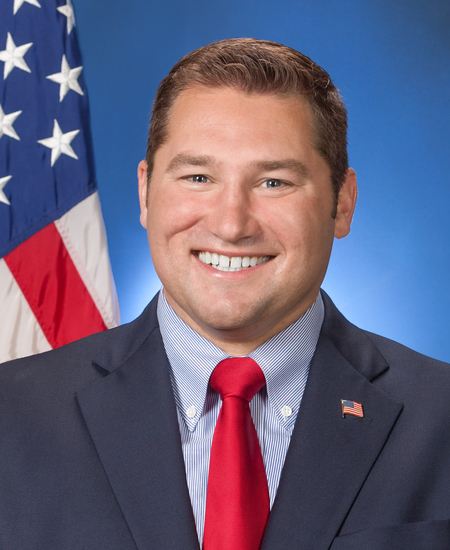
Rep. Guy Reschenthaler
Sponsored bills
Maddy summaryHRES 955 is a resolution commending Taiwan for its democratic election history and supporting Taiwan's democratic institutions. It recognizes Taiwan's transition to democracy since the late 1980s, including 7 presidential and 9 legislative elections held since then, all deemed free and fair. The resolution specifically expresses support for Taiwan's upcoming January 13, 2024, elections and condemns interference by the Chinese Communist Party. It affirms U.S. commitment to a strong partnership with Taiwan across multiple domains and supports Taiwan's self-defense and liberty. As a procedural resolution, it does not create new law but formally expresses congressional support for Taiwan's democratic development.
Maddy summaryThe REMAIN in Mexico Act of 2024 would require the U.S. government to reinstate the Migrant Protection Protocols (MPP), a policy that forces certain asylum seekers to wait in Mexico while their U.S. immigration cases are processed. It directly affects asylum seekers from Mexico and Central America who are seeking entry to the United States and would be subject to the MPP under this law. The bill mandates implementation of the MPP as described in a 2019 policy memo by former Homeland Security Secretary Nielsen. This would reverse the current administration's decision to end the program, requiring asylum seekers to remain in Mexico during their immigration proceedings.
Maddy summaryHRES 946 is a symbolic House resolution recognizing "Gold Shield Families" - defined as the families of fallen police officers, firefighters, EMTs, correction officers, emergency dispatchers, and emergency service providers who died in the line of duty. The resolution formally honors their sacrifices and resilience, affirming that their hardships should not be forgotten. It includes no new funding, regulations, or policy changes; instead, it serves as a commemorative gesture expressing national gratitude. The resolution directs that a copy be sent to the President and made public to publicly recognize these families' contributions.
Maddy summaryThis bill permanently cancels unused funds from the Department of Commerce's Nonrecurring Expenses Fund, which were set aside under the 2023 Fiscal Responsibility Act. It specifies that this cancellation won't count toward federal budget caps or allocation rules under existing budget laws. The bill directly affects how leftover government funds are handled within the Commerce Department's budget, eliminating a specific account for nonrecurring expenses.
Maddy summaryHRES 941 is a non-binding House resolution condemning the final agreement from the December 2023 UN Climate Change Conference in Dubai, which includes language urging a "transitioning away from fossil fuels." The resolution states that Congress believes the U.S. should not promote policies discouraging fossil fuels and urges the Biden administration not to implement policies aligned with the UN agreement. It references U.S. energy exports and economic benefits from fossil fuel production as context for its position. This resolution has no legal effect and serves only as a symbolic expression of congressional sentiment.
Maddy summaryHR 1147, the Whole Milk for Healthy Kids Act of 2023, allows schools participating in the National School Lunch Program to offer whole milk as an option during lunch. It amends the school lunch law to explicitly permit schools to serve flavored and unflavored whole milk alongside reduced-fat, low-fat, and fat-free milk choices for students. The bill also requires the Secretary of Agriculture to adjust meal regulations to account for saturated fat from whole milk, ensuring it doesn't count against meal fat limits. This change directly affects participating schools and the students who receive school lunches, expanding their milk beverage options.
Maddy summaryHR 6734 prohibits the use of federal funds to finalize, implement, or enforce the Bureau of Alcohol, Tobacco, Firearms, and Explosives' (ATF) proposed rule (2022R-17) defining "engaged in the business as a dealer in firearms." This bill directly affects the ATF by blocking funding for this specific regulatory rule, which was proposed in August 2023. The legislation does not create new requirements but prevents federal resources from being used to advance this particular ATF regulation.
Maddy summaryHJRES 88 is a resolution seeking to block a Department of Education rule that would have improved income-driven repayment options for federal student loan borrowers. The rule, published in the Federal Register on July 10, 2023, targeted the William D. Ford Direct Loan Program and the Federal Family Education Loan (FFEL) Program. This resolution uses the Congressional Review Act process to disapprove the rule, preventing it from taking effect and preserving the current repayment structure. If enacted, it would stop the proposed changes to repayment terms without altering existing loan policies.
Maddy summaryHR 6688, the Cold Case Modernization Act, allows states and local governments to use federal grants for identifying unidentified human remains without first determining if the death was a homicide. It amends existing laws (specifically the Child Abuse Prevention Act and Department of Justice grants) to remove the requirement that a death must be classified as a homicide to qualify for funding. This change directly affects states and local agencies receiving DOJ forensic grants, enabling them to apply these funds toward unidentified remains cases regardless of the cause of death determination. The bill focuses on expanding access to forensic DNA analysis for identification purposes, streamlining efforts to resolve cold cases involving unidentified remains.