

Maddy summaryThis bill creates a tax incentive for U.S. corporations to distribute company stock to employees. To qualify, corporations must have 500+ full-time U.S. employees, be U.S.-domiciled, and meet specific share distribution requirements (e.g., distributing at least 1% of shares to employees or maintaining a 5% "SHARE ratio" of shares granted). Eligible corporations receive a 3% reduction in corporate income tax and can deduct the fair market value of distributed stock. Employee stock received under these plans is excluded from taxable income, directly benefiting workers at qualifying companies while lowering tax liability for the corporations.
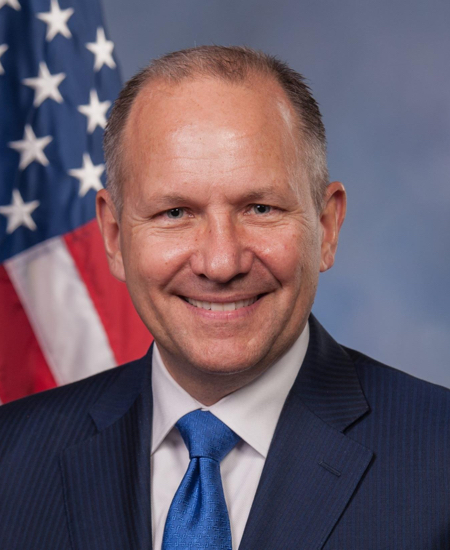
Rep. Lloyd Smucker
Sponsored bills
Maddy summaryThe SHIELD Act would change unemployment benefit eligibility by barring workers from receiving regular unemployment compensation if they are unemployed due to a strike or labor dispute they are participating in, financially supporting, or have a direct interest in (excluding lockouts). This rule would require states to adjust their unemployment programs to deny benefits in such cases. The changes would take effect two years after the bill becomes law, though states could choose to implement them sooner. The bill also repeals a federal tax provision related to unemployment tax rates, but this is a secondary provision.
Maddy summary# Summary of "Dignity for Immigrants while Guarding our Nation to Ignite and Deliver the American Dream Act" This comprehensive immigration bill proposes multiple pathways to legal status and permanent residency for undocumented immigrants while creating new employment and workforce development programs. ## Key Provisions: 1. **Dignity Program (Subtitle III)**: - Creates a 7-year program for eligible undocumented immigrants requiring $7,000 in restitution payments to an H-1B fund - Provides deferred action on removal, work authorization, and travel privileges - Requires participants to maintain employment/education, pay taxes, and comply with all laws - Upon completion, participants receive "Dignity Status" valid for 7 years with renewal options 2. **Workforce Development (Division C)**: - Directs restitution payments to fund apprenticeships and work-based learning programs - Establishes industry partnerships to support small- and medium-sized businesses - Focuses on "in-demand industry sectors" with targeted training programs - Requires 12 months of post-employment support services for participants 3. **Family Reunification (Section 3111-3115)**: - Expands discretionary authority for family-based relief - Creates new "family purpose" nonimmigrant visa category (90-day limit) - Modernizes military naturalization for service members - Includes protections for children affected by visa backlogs 4. **Backlog Reduction (Section 3201-3203)**: - Creates premium processing for long-pending cases ($20,000 fee) - Increases per-country caps from 7% to 15% - Protects children from "aging out" of family-based visas 5. **Student and Worker Visas (Section 3301-3305)**: - Modernizes student visa categories with "dual intent" provisions - Recognizes doctoral STEM graduates as "extraordinary ability" - Streamlines visa processing through a new Immigration Agency Coordinator The bill aims to balance immigration reform with workforce development, creating a pathway to legal status while directing funds toward American workers through apprenticeships and training programs in high-demand fields.
Maddy summaryThis bill would allow members of specific religious groups (who already qualify under existing self-employment tax exemptions) to receive credits or refunds for Social Security and Medicare taxes withheld from their wages. It creates a new application process for these individuals to seek reimbursement of taxes paid under Section 3101 of the tax code. The credit would apply to wages earned during taxable years starting after the bill's enactment. This directly affects employees in qualifying religious communities who work for wages but are exempt from self-employment taxes under current law. The bill does not change existing tax obligations for other workers.
Maddy summaryHR 4382 authorizes the U.S. Mint to produce commemorative coins for the 2028 Los Angeles Olympics/Paralympics and 2034 Salt Lake City Winter Olympics/Paralympics. It specifies gold, silver, and half-dollar coin designs with defined mintage limits (e.g., up to 100,000 $5 gold coins for each event), all bearing inscriptions like "2028" or "2034" and standard coin features. A surcharge ($5-$50 per coin) is added to sales, with all funds directed to the respective Olympic committees to support event hosting and legacy programs like youth sports. The bill ensures no net cost to the government by requiring surcharge revenues to cover all design, production, and marketing expenses before funds are disbursed.
Maddy summaryHR 4204, the Medicare Patient Choice Act, expands Medicare beneficiaries' ability to directly choose certain healthcare providers without requiring a physician referral. It updates Medicare rules to explicitly include physical therapists, occupational therapists, speech-language pathologists, and qualified audiologists as covered providers, replacing previous references to "physician or practitioner" throughout the law. This change allows beneficiaries to access these specific therapy services directly from qualified providers, removing prior barriers that often required a doctor's referral. The bill directly affects Medicare beneficiaries seeking these therapy services and the qualified professionals providing them. The key mechanism is amending the Social Security Act to expand the definition of covered providers within Medicare's existing framework.
Maddy summaryHR 4148 disapproves a Department of Labor regulation (88 Fed. Reg. 57526) that would have updated wage requirements under the Davis-Bacon Act for federal construction projects. The bill states this regulation "shall have no force or effect," preventing federal contractors from being subject to the proposed changes. This is a procedural measure targeting a specific regulatory update, directly affecting contractors working on federally funded construction projects.
Maddy summaryHR 649, the Whole Milk for Healthy Kids Act of 2025, amends the National School Lunch Act to allow schools participating in the program to offer students both organic and non-organic whole milk, in addition to reduced-fat, low-fat, and fat-free options. Key provisions include clarifying that milk fat in whole milk should not count toward saturated fat limits for meal compliance, prohibiting schools from purchasing milk from Chinese state-owned enterprises, and ensuring schools cannot be barred from offering the full range of milk types listed. The bill directly affects public and private schools serving the National School Lunch Program by expanding their milk options for students. It focuses on concrete policy changes to dietary offerings and sourcing restrictions within the school nutrition program.
Maddy summaryHRES 447 is a non-binding House resolution condemning antisemitism and honoring Yaron Lischinsky and Sarah Milgrim, two Israeli Embassy employees killed during a peace-focused panel discussion in 2023. The resolution specifically condemns all forms of antisemitism - including violence, vandalism, and online harassment - and remembers the victims, who were killed by a far-left activist affiliated with the Party for Socialism and Liberation. It calls for enforcing existing hate crime laws and protecting religious freedom, without creating new legislation. This resolution symbolically supports Jewish communities and victims of antisemitic violence but does not alter legal requirements.
Maddy summaryHR 3580, the Oversight of Medicare Billing Code Cost Act, requires the HHS Inspector General to study how Medicare adds, modifies, and removes billing codes, including analyzing the data used and trends in code changes. The Inspector General must submit a report to Congress within one year, including recommendations to improve transparency in this process. Additionally, the bill mandates annual public reports starting in 2025 from the Secretary of Health and Human Services, listing new Medicare billing codes and their associated costs and usage. This directly affects Medicare billing oversight by increasing transparency and accountability for code changes.