

Maddy summaryThis bill extends existing federal reentry programs under the Second Chance Act through 2030, continuing funding for services supporting people returning to communities after incarceration. It specifically maintains grants for state/local reentry projects (including substance use treatment, housing, and peer recovery services), family-based substance abuse treatment, prison/jail educational programs, career training, and community mentoring by nonprofits. The bill updates program timelines from their previous 2019-2023 authorization period to 2026-2030 without altering the core services provided. It directly affects state/local agencies, prisons, and nonprofit organizations administering these reentry programs. The legislation focuses solely on extending current funding mechanisms, not changing program requirements or creating new initiatives.
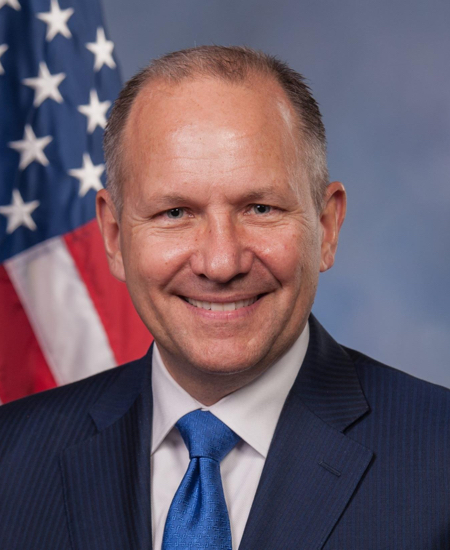
Rep. Lloyd Smucker
Sponsored bills
Maddy summaryThe Fiscal Commission Act establishes a 16-member commission to address the federal government's fiscal challenges, including reducing debt and deficit while aiming for a debt-to-GDP ratio of 100% by 2039. The commission must educate the public about fiscal issues, identify policy recommendations, and submit a detailed report with legislative language by November 2026 (with possible extension to April 2027). This report requires bipartisan approval, needing at least two Republican and two Democratic members for majority support. If approved, the recommended legislation would become an "implementing bill" considered under expedited procedures in both congressional chambers. The commission's work directly affects federal budget decisions and public awareness of fiscal policy, with hearings required to gather input from experts and government officials.
Maddy summaryHR 3228, the Constitutional Hearing Protection Act, reclassifies firearm silencers as firearms under federal tax law and eliminates their separate registration under the National Firearms Act. It requires the Attorney General to destroy all existing federal silencer registration records within one year and preempts state laws that impose taxes, registration, or recordkeeping requirements on silencers. The bill defines "firearm silencer" and specifies that manufacturers must mark silencers on a "keystone part" with a serial number. This directly affects silencer owners, manufacturers, and state governments by standardizing federal regulation and removing state-level restrictions.
Maddy summaryThis bill creates a new system for recognizing and regulating individuals who help veterans file benefit claims. It requires the VA to provide veterans with information about free assistance options and maintain a public list of accredited representatives. The bill sets a maximum fee limit of $12,500 or 5 times the monthly benefit increase for representatives, and establishes penalties for unaccredited representatives who charge improper fees. The law aims to protect veterans from unscrupulous representatives while ensuring they have access to quality assistance with their benefit claims.
Maddy summaryHR 3165, the Student Loan Tax Elimination Act, repeals origination fees charged when borrowers receive new federal direct student loans. This directly affects new borrowers taking out federal direct loans under part D of Title IV of the Higher Education Act. The bill removes an upfront fee paid at loan disbursement, reducing the initial cost for these borrowers. The change applies to loans with first disbursement or consolidation applications received on or after July 1 following the bill's enactment.
Maddy summaryThis bill requires Medicare to only cover nerve conduction studies and needle electromyography tests at facilities meeting specific quality standards. To qualify, facilities must be accredited by an organization that verifies they have a quality program, use approved equipment, ensure staff have proper training, and interpret results on-site during procedures. Starting 3-4 years after enactment, Medicare will not pay for these services at non-compliant facilities. The bill also establishes an advisory committee to help develop and update these standards, aiming to improve care quality and reduce fraud.
Maddy summaryThis bill expands access to employee ownership by modifying the Small Business Act to allow S corporations owned by employee stock ownership plans (ESOPs) to retain small business status, even when an ESOP owns over 49% of the company. It creates a new Treasury Department office to provide education and technical assistance for S corporations establishing ESOPs, and establishes a Labor Department Advocate for Employee Ownership to coordinate outreach and resolve disputes. These changes directly affect S corporations transitioning to ESOP ownership and their employees, who gain retirement benefits through ESOP accounts. The bill aims to increase employee ownership by removing eligibility barriers and improving support for businesses adopting this model.
Maddy summaryThe SALT Act (HR 2952) requires labor unions and labor relations consultants to report payments or agreements related to influencing employee organizing efforts. It directly affects unions making payments to employees or groups to persuade others about union organizing, as well as consultants hired for organizing-related activities. Key provisions mandate detailed annual reports to the Labor Department, including the amount, date, recipient's details, and full explanation of each payment or agreement. These reports must cover all payments intended to affect employees' rights to organize or bargain collectively, excluding information used solely in legal proceedings.
Maddy summaryThe Neighborhood Homes Investment Act creates a new tax credit for developers who build or rehabilitate affordable homes in distressed communities. The credit is calculated as the lesser of (1) the difference between development costs and sale price, (2) 40% of development costs, or (3) 32% of the national median home price. It applies only to homes sold to qualified homeowners with income up to 140% of area median income in designated "qualified census tracts" (areas with high poverty rates, low median home values, and low median family income). Developers must meet quality standards and repay the credit if the home is sold within 5 years of the affordable sale. This credit aims to address the "value gap" that prevents housing development in distressed communities by incentivizing affordable home construction and rehabilitation.
Maddy summaryThe Hospital Adoption Education Act of 2025 requires the Secretary of Health and Human Services to develop and distribute accessible adoption education resources for healthcare workers in hospitals and birthing centers. It mandates professional development training for care providers on sensitive adoption interactions, including digital and print materials, and establishes a committee of adoption experts to create these resources. The bill directly affects healthcare staff (like nurses and case managers) who interact with prospective birth mothers and adoptive families, aiming to improve their understanding of adoption. It authorizes $5 million (2026-2029) for implementation and requires a 3-year evaluation to track hospitals adopting the training and care providers receiving education.