

Protecting Family and Small Business Tax Cuts Act of 2022 This bill makes permanent provisions affecting individual and business taxpayers that were enacted in 2017 by the Tax Cuts and Jobs Act and are scheduled to expire at the end of 2025. The bill makes permanent provisions that reduce individual and capital gain tax rates. The bill increases the standard tax deduction for individual taxpayers. It also increases and modifies the child tax credit and raises the contribution base for the tax deduction of charitable contributions. The bill allows additional contributions to ABLE accounts (tax-exempt accounts designed to enable individuals with disabilities to save and pay for disability-related expenses). It exempts from taxation combat zone benefits of members of the Armed Forces serving in the Sinai Peninsula of Egypt and the moving expenses of servicemembers. Additionally, the bill lowers to $750,000 the amount of mortgage debt eligible for an interest expense tax deduction; excludes from the gross income of student borrowers income attributable to the discharge after 2025 of loan debt due to death or disability; makes permanent the limitation on the tax deduction for state and local taxes and denies a deduction for foreign real property taxes; makes permanent the tax deduction of the income of certain pass-through business entities; repeals the tax deduction for personal tax exemptions and the exclusion of employer-provided bicycle commuter fringe benefits; terminates certain miscellaneous itemized tax deductions; doubles the estate and gift tax exemption amount; and makes permanent the increase of the alternative minimum tax exemption amount for individual taxpayers.
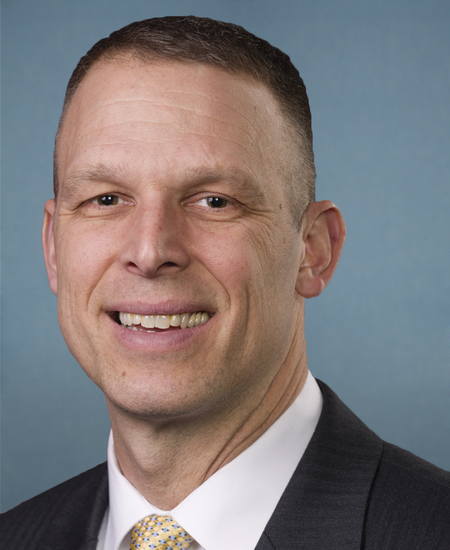
Rep. Scott Perry
Sponsored bills
Denying Regulatory Interference with Landowners and Legislatures Now Act or the DRILL Now Act This bill bars the Susquehanna River Basin Commission, the Delaware River Basin Commission, and the Interstate Commission on the Potomac River Basin from finalizing, implementing, or enforcing any regulation relating to hydraulic fracturing unless it is issued by the state in which the regulation is to be implemented or enforced.
Maddy summaryHR 6642 would repeal the existing corporate average fuel economy (CAFE) standards for vehicles. These standards, currently set by federal law, require automakers to meet specific average fuel efficiency targets for their new car and truck fleets. The bill would remove these requirements from U.S. Code, directly affecting car manufacturers by eliminating a key federal regulation governing vehicle fuel efficiency. This is a procedural repeal with no additional provisions or mechanisms described in the provided text.
Maddy summaryHR 6644 repeals two key tax credits for renewable energy producers under the Internal Revenue Code: the production tax credit (Section 45) and the investment tax credit (Section 48). This bill directly affects companies generating electricity from wind, solar, and other renewable sources that previously relied on these tax breaks. The repeal takes effect for electricity produced and sold after December 31, 2021, ending these specific tax incentives for renewable energy projects. The change removes these credits from the tax code without creating new provisions.
This bill requires the military departments to reinstate individuals (upon their request) who were involuntarily separated from the Armed Forces solely based on their refusal to receive a COVID-19 vaccination. Such individuals must be reinstated in the grade they held prior to the separation.
Close Biden's Open Border Act This bill provides $15 billion for the Department of Homeland Security to construct a border wall along the southern border of the United States. It also imposes a two-year moratorium on funding for U.S. contributions to the United Nations (U.N.). During the two-year period, funds may not be authorized or otherwise made available for contributions to the U.N.
Senior Citizens Tax Elimination Act This bill repeals the inclusion of any Social Security or tier I railroad retirement benefits in gross income for income tax purposes. The bill also (1) appropriates funds to cover reductions in transfers to the Social Security and Railroad Retirement Trust Funds resulting from the enactment of this bill, and (2) expresses the sense of Congress against using tax increases to provide revenue necessary to carry out this bill.
TSA Security Threat Assessment Application Modernization Act This bill requires the Transportation Security Administration (TSA) to standardize the enrollment and renewal system for individuals applying for or renewing multiple TSA Security Threat Assessment programs, including the Transportation Worker Identification Credential, Hazardous Materials Endorsement, and TSA PreCheck programs. The standardization shall permit an individual to (1) enroll at a TSA-designated universal enrollment center once and use the application for one of such programs to enroll in two or more of such programs,with specified exceptions for those applying for or renewing enrollment in more than one program at different times; (2) apply successful, valid clearance results from a TSA Security Threat Assessment to satisfy vetting requirements for participation in any related program without additional cost; and (3) undergo a streamlined and expeditious renewal process. Additionally, the TSA must publish on its website information relating to the standardization of the enrollment system.
Medical Equality and Discrimination Stoppage Act or the MEDS Act This bill prohibits the Department of Health and Human Services (HHS) from discriminating against or providing preferential treatment to any person or group on the basis of race, color, ethnicity, or national origin. The prohibitions also apply to the administration of HHS programs, including HHS-funded programs administered by states, territories, and private entities. An individual aggrieved by conduct prohibited under the bill may commence a civil action in the appropriate U.S. district court to obtain relief.
One Citizen One Vote Act This bill prohibits the Election Assistance Commission from making payments to any state or jurisdiction unless the state or jurisdiction certifies that it meets certain election standards, including that it (1) requires a photo identification for voting, and (2) does not allow noncitizens to vote in any election.