

TPS Reform Act of 2022 This bill changes the procedures for designating a country with temporary protected status (TPS). (Qualified nationals of a TPS-designated country shall have work authorization and may not be removed from the United States while the status is in effect.) Specifically, the bill requires an act of Congress to designate a TPS country, whereas currently the Department of Homeland Security has such authority. The initial act of designating a TPS country must include a time period for the designation of up to 18 months and also contain certain information, including an estimate of the number of individuals who would benefit from the status. Congress may also pass an act to terminate or extend a designation. The bill also establishes that an alien who lacks lawful immigration status may not receive the benefits of temporary protected status.
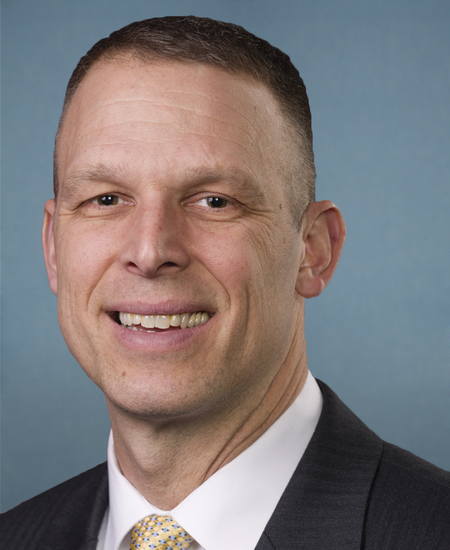
Rep. Scott Perry
Sponsored bills
Prosecutorial Remedies and Other Tools to end the Exploitation of Children Today Act or the PROTECT Act of 2022 This bill alters federal sentencing for individuals who commit certain child pornography offenses. It generally requires judges to impose a sentence that is not less than the minimum period specified in the sentencing guideline range. The bill also increases certain criminal penalties for possession of child pornography.
Countering Russian Influence in our Politics Act of 2022 This bill requires tax-exempt organizations that receive any thing of value from a Russian foreign principal (e.g., Russia's government or a Russian national) to register as an agent of a foreign principal, with certain exceptions. Such an organization must periodically report to the Department of Justice certain information relating to its relationships to the relevant Russian foreign principals. The bill also imposes additional reporting requirements on a tax-exempt organization that has (1) received any thing of value from a Russian foreign principal since February 1, 2014; and (2) engaged in political activities to discourage the U.S. production of oil, petroleum products, natural gas, or critical minerals.
Employee Rights Act This bill makes various changes with respect to the collective bargaining process and labor relations. For example, the bill permits an employer to refuse to collectively bargain with a union within 90 days prior to the expiration of a collective bargaining agreement if the employer receives evidence that the majority of the employees in the bargaining unit do not support the union. The bill requires support from a majority of the employees in the bargaining unit (not just a majority of the employees voting) when electing union representation. The bill also requires unions to provide bargaining unit employees with the right to vote by secret ballot, including when voting whether to engage in a strike or refusal to work. Further, union dues, fees, assessments, and other contributions may be used for only collective bargaining or contract administrative functions. Additionally, the bill establishes a process for nullifying executive orders that the Office of Management and Budget determines are likely to result in an employer ordering a plant closure or mass layoff.
Every Town A Border Town Act This bill requires the Department of State to designate Mara Salvatrucha (MS-13) and any successor organization as a foreign terrorist organization. Among other things, the designation allows the Department of the Treasury to require financial institutions to block transactions involving the organization. Additionally, an alien who is a member, officer, official, representative, or spokesman of MS-13 is considered to have engaged in terrorist activity and is inadmissible for entry into the United States.
No Retaining Every Gun In a System That Restricts Your Rights Act This bill modifies the retention requirements for firearm transaction records of federal firearms licensees (FFLs) that go out of business. Current law generally requires FFLs that go out of business to deliver their firearm transaction records to the Bureau of Alcohol, Tobacco, Firearms and Explosives (ATF). This bill removes the requirement for FFLs that go out of business to deliver their firearm transaction records to the ATF. Further, the bill requires the ATF to destroy all out-of-business records it has collected from FFLs.
No Backdoor Gun Control Act of 2022 This bill removes the category of any other weapon from the definition of firearm under the National Firearms Act. The bill treats persons who acquire or possess any other weapon as meeting registration or licensing requirements under the National Firearms Act. The bill requires the Department of Justice to destroy any records relating to the registration of any other weapon not later than one year after the enactment of this bill.
No Taxpayer Funds for Illegal Immigrants Act This bill prohibits using federal funds pursuant to a federal contract, grant, loan, or cooperative agreement for any organization that provides legal representation or legal orientation for non-U.S. nationals ( aliens under federal law) who are unlawfully present in the United States and are placed in removal proceedings. The bill also prohibits using any federal funds for the Legal Access at the Border program, any successor programs, or federal solicitations for commercial products or services related to such programs.
Immigration Transparency and Transit Notification Act of 2022 This bill requires notifications to certain officials before an unaccompanied alien child or a non-U.S. national ( alien under federal law) without lawful immigration status may be placed in or transported to a state or local jurisdiction. The bill also authorizes the office of the governor of the relevant state to prohibit the placement or transportation. At least seven calendar days before taking such an action, the Department of Homeland Security (DHS) or the Department of Health and Human Services (HHS) must notify (1) the relevant state governor's office, (2) the state attorney general's office, (3) the county or municipal government, (4) local law enforcement, and (5) federal and state legislators representing the relevant jurisdiction. The action may not take place if the state governor's office objects no later than three calendar days after receiving the notification. This authority to object shall not apply if the action is to place an unaccompanied child with, or transport the child to, a family member.
Securing Enfranchisement and the Rights of Voters regardless of Inoculation Status Act or the SERVIS Act This bill prohibits requiring voters to present vaccine passports or other information regarding their COVID-19 vaccination status, and also restricts masking requirements, for voting in federal elections. Specifically, the bill makes it unlawful for any state or political subdivision to require a voter to present a vaccine passport or other information regarding the voter's COVID-19 vaccination status. Further, a state or political subdivision may require a voter to wear a mask in order to enter a polling location only under certain circumstances. In particular, the state or political subdivision must (1) make masks readily available and at no cost to the voter and to an individual who accompanies the voter, and (2) provide reasonable accommodation from such masking requirement to an individual with a disability.