

Stop the Cartels Act This bill addresses various issues including matters relating to immigration, law enforcement cooperation with Mexico, and drug cartels. The bill bars federal financial assistance for state or local jurisdictions that (1) restrict compliance with immigration detainers issued by the Department of Homeland Security, or (2) have any law or policy that violates immigration laws. Furthermore, under this bill, the detention of alien minors must be governed by specified sections of the Immigration and Nationality Act and not any judicial decree or settlement. (A 1997 settlement agreement imposes requirements related to the treatment of such minors, including limits on how long they may be detained under certain conditions.) The bill also makes various changes to asylum applications, including by (1) increasing the burden that an asylum applicant must meet to establish a credible fear of persecution, and (2) establishing refugee application and processing centers in Central America. In addition, certain Department of State and U.S. Agency for International Development assistance may not be made available to Mexico's government until the State Department certifies that Mexico has removed certain barriers to law enforcement cooperation and intelligence sharing between the United States and Mexico. The bill also establishes the foreign Special Transnational Criminal Organization designation and establishes penalties related to designated organizations, such as making it a crime to knowingly provide material support to such an organization. The State Department must designate specified organizations, including the Sinaloa Cartel, with the designation, and may designate other organizations that fit criteria established in this bill.
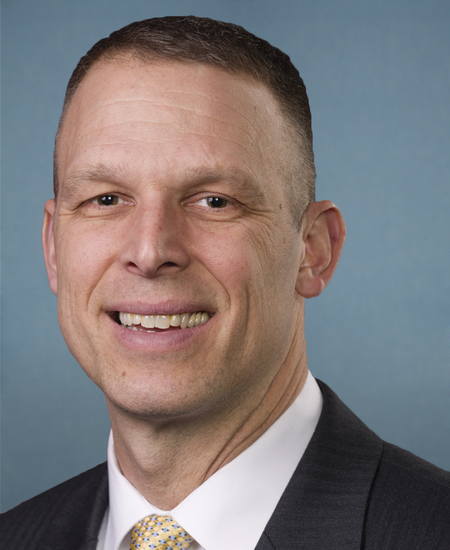
Rep. Scott Perry
Sponsored bills
Protecting Our Second Amendment Data Act This bill places conditions on certain grants by requiring certifications related to the disclosure of personally identifiable information of individuals involved in certain firearms transactions.
Shall Not Be Infringed Act This bill repeals the Bipartisan Safer Communities Act, which was signed into law on June 25, 2022. The act makes various changes to federal firearms laws, including to expand background check requirements, broaden the scope of existing restrictions, and establish new criminal offenses. The act also reauthorizes, funds, and supports various programs, grants, and activities to promote access to behavioral and mental health services, enhance school safety and security initiatives, and address gun violence in communities.
This bill nullifies the executive order that was published on March 10, 2021, and established requirements for expanding access to voter registration and election information.
Maddy summaryThis bill prohibits federal funding for any activities related to Executive Order 14074 (issued May 25, 2022), which aimed to improve policing and criminal justice practices. It directly affects federal agencies that would otherwise implement the executive order's requirements using taxpayer dollars. The key provision blocks all federal funds from being used to carry out the order's provisions, effectively halting its implementation through budgetary means. The bill does not alter the executive order itself but prevents its federal financial support.
Border Safety and Security Act of 2022 This bill requires the Department of Homeland Security (DHS) to suspend the entry of any non-U.S. nationals ( aliens under federal law) without valid entry documents during any period when DHS cannot detain such an individual or return the individual to a foreign country contiguous to the United States. A state may sue DHS to enforce this requirement. (Under current law, non-U.S. nationals who arrive at the border without entry documents are generally subject to expedited removal. However, if such an individual is found to have a credible fear of persecution, they are typically subject to detention while their asylum claim is being considered.) The bill also authorizes DHS to suspend the entry of non-U.S. nationals without entry documents at the border if DHS determines that such a suspension is necessary to achieve operational control over such a border.
Preserving Border Integrity Act This bill imposes restrictions on non-U.S. nationals (aliens under federal law) seeking asylum in the United States. Under this bill, a non-U.S. national may not, except in certain situations, seek asylum if the individual (1) entered (or attempted to enter) the United States through the northern or southern border, and (2) did not apply for protection from persecution or torture in at least one country that the individual transited through to reach the United States.
National Education Association Charter Repeal Act This bill repeals the federal charter granted to the National Education Association of the United States.
Traveler's Gun Rights Act This bill allows an individual who does not have a physical residence in a state to use the address for a private mailbox or post office box maintained by that individual for purposes of obtaining a firearm from a federally licensed dealer.
Preventing Terrorist Sympathizers from Appeasing Terrorists Act This bill prohibits the revocation of the designation of the Islamic Revolutionary Guard Corps as a foreign terrorist organization except by a joint resolution of Congress. Currently, the Department of State may revoke such a designation. Such a designation carries various legal effects. For example, it is unlawful to knowingly provide material support to such an organization. Furthermore, a member of such an organization is barred from entering the United States if the member is a non-U.S. national (an alien under federal law).