

Maddy summaryThis concurrent resolution permits the Fraternal Order of Police to hold two public events on Capitol Grounds: the 42nd Annual National Peace Officers Memorial Service on May 15, 2023 (honoring officers who died in 2022), and the National Honor Guard and Pipe Band Exhibition on May 14, 2023 (showcasing law enforcement demonstrations). The events must be free, open to the public, and not interfere with congressional operations, with the sponsors covering all costs and adhering to Capitol Grounds regulations. The resolution specifically authorizes temporary structures like stages and sound equipment under approval from the Architect of the Capitol.
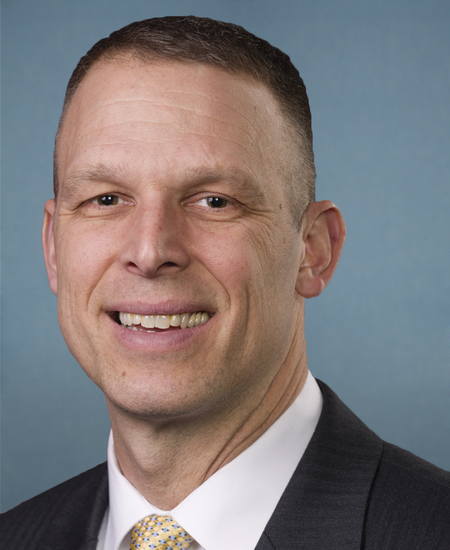
Rep. Scott Perry
Sponsored bills
Maddy summaryHJRES 47 proposes a constitutional amendment to repeal the 16th Amendment, which established Congress's authority to levy federal income taxes. If ratified, this amendment would eliminate the federal government's power to tax income from any source (except during a formally declared war by Congress) within two years of ratification. The bill directly affects the federal tax system by removing the constitutional basis for income taxation, fundamentally changing how the government would fund itself. It requires the Secretary of the Treasury to submit implementation recommendations to Congress within 180 days of ratification. This is a procedural constitutional amendment proposal, not a direct tax law change.
Let Experienced Pilots Fly Act of 2023 This bill raises the mandatory retirement age for pilots engaged in commercial aviation operations from 65 to 67 years of age, unless the operation takes place in (1) the territorial airspace of a foreign county where such operations are prohibited by the foreign country, or (2) international airspace where such operations are not in compliance with the Annexes to the Convention on International Civil Aviation. The Federal Aviation Administration must also submit a report to Congress on further increasing the age limitation for pilots engaged in commercial aviation operations.
Maddy summaryH.J. Res. 30 seeks to block a Department of Labor rule that would have required retirement plan managers (like those handling 401(k)s) to follow strict "prudence and loyalty" standards when selecting investments and voting on company matters. The rule, published in December 2022, aimed to protect retirement savings by ensuring fiduciaries prioritize participants' interests. This resolution, if passed, would prevent the rule from taking effect, avoiding new compliance requirements for retirement plan managers and sponsors. It directly affects retirement plan administrators and the millions of participants in these plans.
Maddy summaryHR 1141, the Natural Gas Tax Repeal Act, repeals a specific provision (Section 136) of the Clean Air Act that established an incentive program for reducing methane emissions and waste in natural gas systems. This bill directly affects natural gas producers and operators who previously participated in or were subject to the methane emissions reduction program. The key mechanism is the removal of this incentive program, eliminating federal requirements and financial incentives related to methane waste reduction for the natural gas industry. The bill also rescinds unobligated funds allocated for this program. This is a policy change removing a regulatory incentive, not a tax repeal.
Maddy summaryH.J. Res. 26 is a congressional disapproval resolution blocking the District of Columbia Council's approval of its Revised Criminal Code Act of 2022 (D.C. Act 24-789). It directly affects the District of Columbia by preventing the new criminal code from taking effect, as Congress disapproved the Council's action under the Home Rule Act. The resolution formally rejects the Council's enactment of the code, which was transmitted to Congress on January 27, 2023. This procedural action stops the District from implementing the revised criminal code without further congressional action.
Maddy summaryHR 1152 updates the process for water quality certifications required for energy projects under federal permits. It clarifies that certifications must be based solely on specific water quality standards (sections 301, 302, 303, 306, and 307 of the Clean Water Act) and adds strict deadlines: states must publish certification rules within 30 days of the bill’s enactment, and must provide written decisions within 90 days of receiving a request. This directly affects energy developers seeking federal permits and state environmental agencies responsible for issuing certifications. The bill streamlines the process by replacing ambiguous terms like "activity" with "discharge" and requiring clear written justifications for approval or denial.
USA Batteries Act This bill removes lead oxide, antimony, and sulfuric acid from the list of taxable chemicals subject to the environmental excise tax.
Restoring Energy Market Freedom Act This bill repeals specified business tax credits related to electricity produced from certain renewable resources and alternative energy and investment credits related to energy projects. Specifically, the bill repeals tax credits (i.e., money that can be offset against a tax liability) for businesses for (1) electricity produced from certain renewable resources (e.g., solar energy); (2) production of electricity from advanced nuclear power facilities; (3) carbon dioxide sequestration; (4) zero-emission nuclear power production; (5) production of clean hydrogen; (6) production and sale of specified components, such as solar energy components; and (7) production of clean electricity. The bill also repeals tax credits for investments related to certain energy projects, including credits for (1) geothermal energy property placed in service, (2) qualifying coal projects, (3) qualifying advanced energy projects, (4) advanced manufacturing investments, and (5) clean electricity investments.
Maddy summaryThis bill amends federal gun law to clarify definitions related to mental health and gun ownership, replacing terms like "mental defective" with "mentally incompetent" and "mental institution" with "psychiatric hospital." It creates a process for reviewing veterans' records to ensure they weren't improperly disqualified from gun ownership based on mental health determinations. The bill requires the Attorney General to annually review records and identify inaccurate disqualifications, with funds being rescinded for each record that doesn't meet the new criteria. It also prevents certain administrative decisions, like appointing representative payees for Social Security benefits, from automatically disqualifying people from gun ownership. The goal is to ensure only individuals who meet specific legal criteria are prohibited from owning firearms, while protecting the rights of those who should not be disqualified.