

Maddy summaryHR 3241, the Defense Workforce Integration Act of 2025, creates pathways for military personnel medically disqualified from service to transition into civilian defense jobs. It requires the Defense Department to establish a process within one year for entry-level service members (like those in basic training or ROTC) who can't serve due to medical reasons to qualify for civilian roles in the Department of Defense. The bill also mandates a new program to connect medically disqualified individuals with employment opportunities in the defense industrial base, cybersecurity, research, and other national security support roles. Additionally, it directs the Navy to provide career information about Military Sealift Command and shipbuilder training to personnel during transition assistance. The Secretary of Defense must report on implementation to Congress within one year.
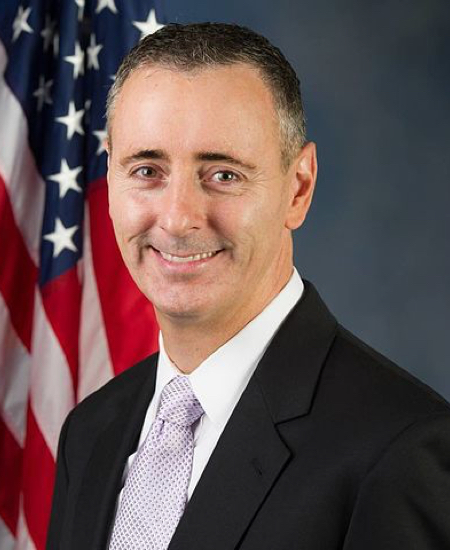
Rep. Brian K. Fitzpatrick
Sponsored bills
Maddy summaryHR 3246, "Violet’s Law," amends the Animal Welfare Act to require federal research facilities to create plans for placing eligible animals (dogs, cats, nonhuman primates, guinea pigs, hamsters, or rabbits) no longer needed for research. It directs federal departments and agencies operating such facilities to develop standards within one year of enactment to facilitate adoption or placement with qualified organizations like animal rescue groups, sanctuaries, or shelters. Animals must be certified by a licensed veterinarian as free of infectious disease or physical issues endangering health before release. This applies directly to all U.S. federal agencies conducting animal research, mandating concrete steps to transition animals out of research settings into permanent care.
Maddy summaryHRES 392 is a non-binding congressional resolution expressing support for designating May as "National Bladder Cancer Awareness Month." It does not create new laws or programs but formally urges the public, research groups, and affected individuals to promote awareness and early detection of bladder cancer during May. The resolution cites statistics showing over 84,000 new bladder cancer diagnoses and 17,420 deaths expected in the U.S. in 2025, emphasizing that early detection improves survival rates. It specifically highlights the disease's impact on veterans, firefighters, and women (who often face later diagnoses), and references ongoing efforts like the Bladder Cancer Advocacy Network's work. The resolution calls for community observances and increased focus on research, but has no direct effect on policy or funding.
Maddy summaryHR 3184, the PFAS Alternatives Act, funds research to develop turnout gear (firefighter safety clothing) without harmful PFAS chemicals, directly affecting firefighters who wear this gear. It authorizes $25 million annually (2025-2029) for grants to eligible organizations to research and test PFAS-free gear, requiring partnerships with firefighting groups to translate findings into practice. The bill also allocates $2 million yearly (2027-2031) for training programs on safe gear use and decontamination. Its goal is to reduce firefighters' exposure to chemicals linked to occupational illnesses during operations.
Maddy summaryThis bill amends the TAIPEI Act to clarify that UN Resolution 2758 does not address Taiwan's representation in international organizations or Taiwan's sovereignty. It directs U.S. officials in international bodies to actively resist China's efforts to distort policies affecting Taiwan's participation and to advocate for Taiwan's meaningful engagement. The bill also requires the U.S. government to report on China's attempts to undermine Taiwan's international partnerships and observer status. These provisions aim to strengthen Taiwan's ability to participate in global organizations without altering its political status.
Maddy summaryThis bill requires the U.S. President to identify and sanction individuals involved in "involuntary harvesting of organs" in China by blocking their U.S. property and banning their entry. It mandates an annual list of designated persons (submitted to Congress) and imposes sanctions like visa restrictions and asset freezes under the International Emergency Economic Powers Act. Exceptions cover humanitarian aid, national security activities, and UN-related travel. The sanctions expire after 5 years, and the bill also requires a report on China's organ transplant practices and whether Falun Gong persecution meets atrocity definitions. The bill directly targets Chinese officials/entities linked to organ harvesting claims, not Falun Gong practitioners.
Maddy summaryThe Albatross and Petrel Conservation Act of 2025 establishes conservation measures for albatrosses and petrels in U.S. waters and lands. It requires the Secretaries of Interior and Commerce to protect habitats, manage invasive species threatening these birds, and implement fishing regulations to minimize bycatch in commercial fisheries. The bill creates mechanisms for international cooperation with other countries that are parties to the Agreement on the Conservation of Albatrosses and Petrels. It also establishes procedures for permits and exemptions for certain activities like scientific research while maintaining favorable conservation status for these birds.
Maddy summaryHR 3199, the Captive Primate Safety Act of 2025, bans the import, export, sale, breeding, and possession of certain nonhuman primates (including chimpanzees, gorillas, and lemurs) in interstate or foreign commerce. It directly affects pet owners, breeders, zoos, and wildlife facilities that currently handle these primates. The bill allows limited exceptions for existing owners who register their primates with the U.S. Fish and Wildlife Service within 180 days, agree to stop breeding/selling, and prevent public contact. It amends the Lacey Act to implement these restrictions, with enforcement beginning immediately regardless of regulatory timelines.
Maddy summaryThis bill amends the Migratory Bird Treaty Act to require permits for incidental harm to migratory birds (e.g., from construction or energy projects), directly affecting industries that might unintentionally impact birds. It establishes civil penalties up to $10,000 per violation for unpermitted incidental take and creates the "Migratory Bird Recovery Fund" to collect fees from permit holders, using funds for bird conservation and administrative costs. The bill also mandates annual $10 million funding, requires industry-specific research programs to monitor bird populations, and demands 5-year reports to Congress on conservation progress. These changes shift enforcement from current practices to a structured permit system with clearer accountability for bird protection.
Maddy summaryHR 3204, the BASIC ACT, increases tax incentives for semiconductor manufacturing. It raises the advanced manufacturing investment credit from 25% to 35% for qualifying semiconductor production facilities and extends the deadline for claiming the credit from 2026 to 2030. The bill directly affects companies building or expanding semiconductor manufacturing plants in the U.S. The changes apply to property placed in service after the bill's enactment date. This provides longer-term financial support for domestic semiconductor investment.