

Maddy summaryThis bill authorizes a new federal grant program to help communities address children's exposure to trauma. It provides $10 million annually (2026-2029) for grants to states, local governments, tribes, and community groups to establish "adverse childhood experiences response teams." These teams would coordinate services by creating trauma-informed protocols, building partnerships with mental health providers, training first responders, and improving access to care for affected children. The program focuses on cross-system collaboration between law enforcement, schools, health services, and social programs to support children exposed to trauma.
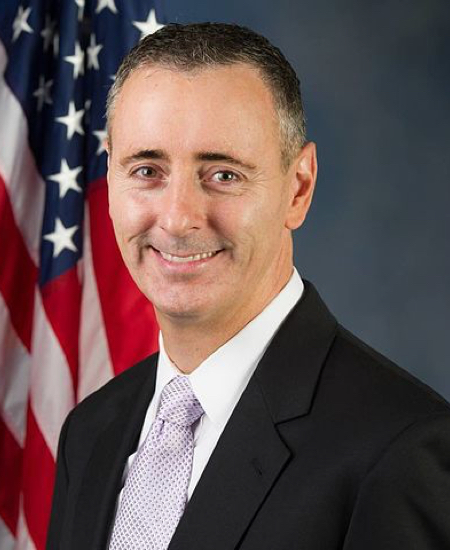
Rep. Brian K. Fitzpatrick
Sponsored bills
Maddy summaryThis resolution (HRES 438) is procedural and does not create new policy. It provides rules for the House to quickly consider H.R. 2548, which would impose sanctions on Russia under specific conditions related to Ukraine. The resolution waives standard procedural delays, sets a one-hour debate limit (split equally between supporters and opponents), and specifies how amendments would be handled. It directly affects the House's legislative process for H.R. 2548 but does not change the sanctions policy itself.
Maddy summaryHRES 441 is a symbolic House resolution expressing support for designating May 2025 as "Mental Health Awareness Month." It does not create new laws, allocate funding, or change existing policies - it solely aims to raise public awareness about mental health challenges. The resolution cites statistics on rising mental health issues (including youth depression, suicide rates, and disparities in care access) to underscore the need for greater attention. It encourages the public, schools, and organizations to use the month to promote mental well-being and reduce stigma, but contains no concrete policy changes or mandates.
Maddy summaryThe DEFIANCE Act of 2025 creates a new civil legal remedy for victims of non-consensual intimate digital forgeries (synthetic images or videos manipulating real people into sexual contexts without consent). It allows affected individuals to sue perpetrators in federal court for damages up to $250,000, injunctions to remove content, and privacy protections like pseudonyms. The bill specifically covers cases where forgeries are created or shared with intent to disclose, including scenarios involving sexual assault or harassment. It expands existing federal protections under 15 U.S.C. 6851 to address digital forgeries while ensuring state laws remain in effect.
Maddy summaryThe Flight Education Access Act increases federal student loan limits for students in eligible undergraduate flight education programs, with specific annual and aggregate limits based on student dependency status and year of study. To qualify, flight programs must meet completion rate requirements (70% minimum after 3 years of data collection) and follow specific certification standards for pilot training under FAA regulations. The bill requires the Department of Education to collect data on program completion rates (measured by students earning a private pilot's certificate) and submit annual reports to Congress. It authorizes $3 million annually for 11 years to implement these changes, without affecting existing pilot training requirements under current law.
Maddy summaryThis bill helps parents of U.S. military members obtain immigration status by removing common barriers. It exempts qualifying parents from certain inadmissibility rules, such as criminal history checks (unless related to their immigration status), and allows waivers for other issues. Parents who were previously removed from the U.S. can now apply for visas from abroad, and may temporarily enter the U.S. to reunite with their citizen child while their application is processed. To qualify, a parent must be the immediate relative of a U.S. citizen child who served in the military (active duty or honorably discharged).
Maddy summaryHR 3534, the Mental Health in Schools Excellence Program Act of 2025, creates a federal program to increase the number of school-based mental health professionals. It provides federal matching funds - covering up to 50% of tuition and fees for eligible students - in partnership with graduate schools offering accredited programs in school counseling, psychology, or social work. Participating graduate institutions must match federal contributions, and priority is given to students who received Federal Pell Grants or attended specific institutions as undergraduates. The program directly affects graduate students training to become licensed school mental health providers, aiming to expand the workforce serving K-12 schools.
Clinical Trial Modernization Act This bill authorizes a grant program and provides certain exemptions to support the participation of individuals in clinical trials. Specifically, the bill authorizes a grant program to support outreach, education, and recruitment efforts for clinical trials that may benefit certain underrepresented populations or communities in need, such as rural or tribal areas. The bill also exempts from anti-kickback laws for federal health care programs (1) remuneration that is offered to cover participants' expenses to participate in clinical trials, (2) the provision of free digital health technologies to support participation of underrepresented populations in clinical trials, and (3) payment for participants' cost-sharing obligations in relation to clinical trials. Finally, the bill exempts up to $2,000 in remuneration that is received for participating in a clinical trial from income tax.
Maddy summaryThis bill removes the statute of limitations for certain survivor benefit claims against the U.S. Government. It specifically applies to survivors of military members who died in the line of duty on or after September 11, 2001. The key change amends federal law to state that no time limit applies when filing for survivor benefits under this provision. The bill takes effect for claims filed after its enactment date.
Maddy summaryThis bill changes the legal standard for proving discrimination in employment cases. It amends the Age Discrimination in Employment Act (ADEA), Title VII of the Civil Rights Act, and the Americans with Disabilities Act to require that a plaintiff only show age, race, color, religion, sex, national origin, or disability was a "motivating factor" for an employment decision - not that it was the sole cause - to establish a violation. This applies to all workers filing discrimination claims under these laws, including federal employees. The bill also limits remedies: if an employer proves they would have taken the same action regardless of the protected factor, courts can only grant limited relief like attorney fees, not damages or reinstatement.