

Give Kids a Chance Act of 2025 This bill expands the Food and Drug Administration’s (FDA’s) authority with respect to research on rare pediatric diseases, including by permitting the FDA to take enforcement action against drug sponsors that fail to satisfy pediatric study requirements and by reauthorizing programs that support pediatric research. Specifically, the bill modifies requirements relating to molecularly targeted pediatric cancer investigations to permit research on new drugs in combination with active ingredients that have already been approved, provided certain conditions are met; permits the FDA to take enforcement action against drug sponsors that fail to comply with pediatric study requirements, if such sponsors demonstrated a lack of due diligence in satisfying the requirement; renews the FDA’s authority to award priority review vouchers to sponsors of new products intended to treat rare pediatric diseases through September 30, 2029; and reauthorizes through FY2027 certain funding for the National Institutes of Health to support priority pediatric research. The bill also provides statutory authority for the FDA’s interpretation of the orphan drug exclusivity period. The bill specifies, consistent with FDA regulations, that the seven-year market exclusivity period for drugs for rare diseases or conditions (i.e., orphan drugs) prohibits the approval of the same drug for the same approved use or indication with respect to the disease or condition. (In Catalyst Pharmaceuticals, Inc. v. Becerra , a court rejected the FDA’s interpretation and held that orphan drug exclusivity extends to all uses or indications for the disease or condition.)
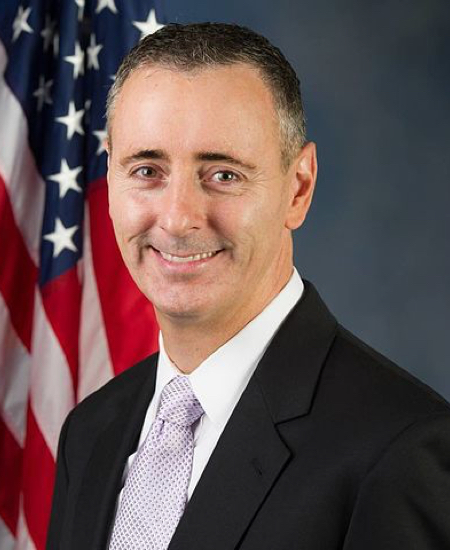
Rep. Brian K. Fitzpatrick
Sponsored bills
Maddy summaryThe Save the Green to Gold Program Act amends U.S. military law to adjust how enlisted service time is counted for officers who completed the SROTC program. It allows these officers to count their service in the Selected Reserve from either August 1, 1979, or the date the bill becomes law, regardless of which military branch they served in. This change directly affects current and future officers who served in the Selected Reserve before becoming commissioned, potentially extending their counted service time for promotion and retirement. The bill updates section 2106(c) of Title 10, U.S. Code, to provide this new option for computing service length.
Maddy summaryThe Water Preservation and Affordability Act of 2025 amends the Clean Water Act to require federal water infrastructure funding recipients to prioritize "resource preservation techniques," defined as water efficiency (reuse, conservation), energy efficiency, stormwater mitigation, sustainable design, and environmental innovation. It mandates that projects receiving loans for treatment works repairs or expansions must evaluate and use these techniques to the maximum extent practicable. The bill increases annual funding for the Clean Water Infrastructure Resiliency Program from $25 million to $50 million (2026-2031) and authorizes $40 million yearly for a wastewater efficiency pilot program (2026-2031). These changes directly affect municipal water systems and wastewater treatment facilities receiving federal grants or loans under the Clean Water Act.
Maddy summaryHR 5566, the Water Infrastructure Resilience and Sustainability Act, extends deadlines for three existing federal water infrastructure programs by five years. It amends the Clean Water Act to extend the deadline for the Clean Water Infrastructure Resiliency and Sustainability Program from 2026 to 2031, and updates the Safe Drinking Water Act to extend deadlines for both the general Drinking Water System Infrastructure Program and the Midsize/Large Drinking Water System Program from 2026 to 2031. These changes directly affect state and local governments administering these programs, giving them more time to complete eligible projects. The bill makes no new funding commitments or policy changes - only adjusts the timeline for existing program requirements.
Maddy summaryThis bill establishes a federal program to help low-income households pay for drinking water and wastewater services. It provides $500 million annually (2026-2030) in grants to states and tribes that already administer energy assistance programs, allowing them to cover past-due bills or other costs for households meeting specific income criteria (e.g., receiving certain federal benefits or earning ≤150% of the poverty level). The program prohibits using these funds to replace existing assistance and requires technical help to streamline eligibility. It directly affects low-income households in participating states and tribes, particularly those facing water affordability challenges.
Maddy summaryHRES 915 formally recognizes the 1932-1933 Ukrainian famine, known as the Holodomor, as a genocide perpetrated by the Soviet Union. The resolution directly affects Ukrainian victims, survivors, and communities by affirming historical truth and condemning Soviet policies that intentionally starved millions. Key provisions include declaring the Holodomor a genocide, commemorating its victims, and condemning ongoing Russian aggression against Ukraine, including Vladimir Putin’s denial of Ukrainian sovereignty. This symbolic resolution aims to educate the public and align U.S. policy with historical facts about Soviet repression.
Maddy summaryHR 6328, the Main Street Home Builders Act of 2025, creates a pilot program (the "505 Pilot Program") allowing the Small Business Administration to provide loans to small housing businesses for building or managing rental properties. The bill removes standard SBA loan requirements like job creation targets and restrictions on leasing, specifically for projects constructing or renovating build-to-rent multifamily housing (housing built solely for renting). It sets annual funding limits of $1 billion for 2026, $2 billion for 2027, and $3 billion each year from 2028-2030, with the program ending after five years. This directly affects small housing developers/managers who build or renovate rental units, requiring them to create at least one new rental unit per project.
Maddy summaryThis bill allows workers aged 50 or older to directly roll over employer retirement contributions (from 401(k) plans) into an individual retirement annuity without triggering immediate taxes or penalties. It requires retirement plan administrators to provide clear, plain-language written explanations about rollover rules, including a 30-day review period, tax implications (like the 10% early withdrawal penalty), and what types of distributions cannot be rolled over (such as required minimum distributions). The rules apply to taxable years starting after December 31, 2025, and aim to simplify the process for older workers changing jobs or managing retirement funds. It directly affects workers aged 50+ and retirement plan administrators who must comply with the new disclosure standards.
Maddy summaryThis bill provides $50 million annually from 2026 through 2030 to fund security measures for public transit systems in urbanized areas, removing previous population requirements that limited access. It allows transit agencies to use these funds for hiring additional officers, contracting with local police, and making physical safety upgrades like monitoring devices and operator shields. Additionally, it mandates a study by the National Academies (with input from transit workers) to evaluate crime prevention tactics, including successful and unsuccessful approaches used by transit agencies. The bill directly affects transit agencies and passengers by prioritizing safety infrastructure and data-driven crime reduction strategies.
Maddy summaryThis bill requires military child and youth programs - including military child development centers, Department of Defense youth programs, and family home day care providers receiving DoD funding - to notify parents or guardians within 24 hours of suspecting child abuse or neglect. It also mandates that these programs report such incidents to the Senate and House Committees on Armed Services, state senators representing the location, and the local House representative within 72 hours. The law directly affects military-connected families and child care providers operating under DoD programs, ensuring faster transparency for both families and oversight bodies. The policy creates a clear timeline for reporting suspected abuse, aiming to improve responsiveness without altering existing child welfare protocols.