

Maddy summaryHR 6840, the ARMENIA Security Partnership Act, requires the U.S. Secretary of Defense to annually certify whether Azerbaijan has met specific conditions related to Armenia, including withdrawing forces from Armenian territory, releasing prisoners, ending hostilities, and recognizing Armenian rights in Nagorno-Karabakh. If certification fails, the bill mandates an immediate review of U.S. security assistance to Armenia to assess gaps in Armenia’s defense capabilities and identify needed support. The review must evaluate historical U.S. security aid, threats to Armenia, and recommend steps to strengthen Armenia’s self-defense. It also blocks the use of a specific waiver (under the FREEDOM Support Act) that could bypass security aid restrictions if certification is not met. The bill directly affects U.S. security assistance decisions for Armenia based on Azerbaijan’s compliance with these conditions.
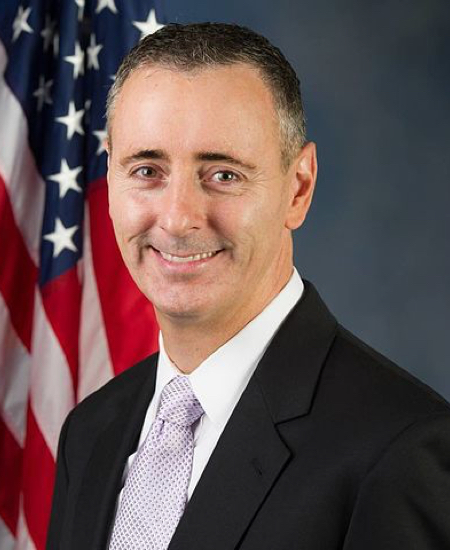
Rep. Brian K. Fitzpatrick
Sponsored bills
Maddy summaryAlyssa's Act of 2025 expands the Federal Clearinghouse on School Safety Evidence-based Practices to collect and analyze school safety data, including information on school shootings and emergency response effectiveness. The bill creates a National School Safety Data Center to track incidents, injuries, and response methods, while requiring emergency response maps for schools to meet specific digital standards for accessibility and real-time updates. It also establishes a program to develop and test panic alarm technology for schools, and mandates annual reports on school safety master plans developed by states and local educational agencies. The legislation requires coordination with the U.S. Secret Service's National Threat Assessment Center to align school safety practices with evidence-based approaches.
Maddy summaryThis bill requires states to include specific safety plans in their highway-rail grade crossing reports. It mandates that states collaborate with railroads, mental health agencies, and law enforcement to address pedestrian fatalities - including suicides - along railroad rights-of-way. States must now submit these updated safety plans every five years, replacing the previous reporting schedule. The bill directly affects state transportation agencies responsible for maintaining grade crossings and coordinating with rail operators. It focuses on concrete reporting changes rather than new funding or enforcement measures.
Maddy summaryHR 6785, the CLEAR Act of 2025, provides $100 million annually (2025-2030) in federal grants to states, territories, and tribes to establish or support resilience offices. These offices must develop five-year plans addressing climate and disaster risks across environmental hazards, economy, infrastructure, health, and housing, while prioritizing disadvantaged communities. Grantees must implement programs like technical assistance for local governments and integrate resilience into existing grant programs, with 10% of funds reserved for Indian tribes. States must report annually on how funds were used and the effectiveness of their resilience efforts. The bill directly affects state/local governments and tribal entities by requiring new planning structures to prepare for climate impacts.
Maddy summaryThe Postal Suspension Transparency Act (HR 6811) requires the U.S. Postal Service to create a public website displaying real-time details about post offices temporarily suspended under emergency policies. The site must include each affected location’s address, suspension date, reason for closure, alternative service options (like curbside delivery), nearby service locations, and estimated reopening dates. It will feature searchable tools by address or ZIP code and provide data in open, downloadable formats for public use. The website must be operational within one year of the bill’s enactment. This directly affects USPS operations and the public relying on postal services during temporary closures.
Maddy summaryThis bill requires federal agencies to improve coordination in investigating organized postal theft. Within 180 days of enactment, the Attorney General, Homeland Security Secretary, Postmaster General, and other relevant agencies must develop a strategy to share information about theft networks and assist state/local law enforcement in building cases. It defines "organized postal crime" as coordinated theft, fraud, or embezzlement of mail for resale in interstate commerce. The strategy must include better information sharing between agencies like the Postal Inspection Service, Customs, and Secret Service, and a joint report to Congress will detail the plan. The bill directly affects federal agencies involved in postal crime investigations and state/local prosecutors handling these cases.
Maddy summaryThis bill requires TRICARE to cover fertility-related care, including in vitro fertilization (IVF), for active-duty military members and their dependents starting October 2027. It mandates up to three IVF cycles per year with single embryo transfers by default (unless medically necessary), eliminates cost-sharing barriers after an infertility diagnosis, and prohibits coverage for genetic screening, cloning, or artificial wombs. The law defines "infertility" based on medical guidelines and specifies covered treatments like egg/sperm retrieval, embryo preservation, and fertility medications. It does not apply to former service members or their dependents.
Maddy summaryThis bill establishes a pilot program (the Warfighter Traumatic Brain Injury Diagnostics Project) to support the development of new diagnostic tools for traumatic brain injury (TBI) among active-duty military members, particularly during deployments and combat. The program directs the Secretary of Defense to assess diagnostic technologies' ability to distinguish TBI severity, integrate with existing medical tools, and improve military readiness, while awarding grants to eligible research entities with priority for those with proven experience in TBI diagnostics. It authorizes $5 million annually (2026-2029) for research, development, and testing, requiring a congressional report on results and recommendations by 2029. The initiative directly affects service members with potential TBI, military medical providers, and research organizations developing diagnostic technologies for military use.
Maddy summaryHR 5778 requires the Small Business Administration (SBA) to participate in federal interagency meetings about employee ownership and cooperatives. Specifically, the SBA Administrator (or a designee) must attend such meetings when invited or if there's a prior relationship with the host agency. The bill also updates outreach language for Small Business Investment Companies to include investors and mandates the SBA to implement existing outreach through its Employee Ownership Program within 180 days of enactment. This directly affects the SBA's operational procedures and indirectly supports employee-owned businesses by improving federal coordination on these models.
Essential Caregivers Act of 2025 This bill prohibits certain health care facilities from limiting the access of essential caregivers to residents of those facilities, including during designated emergency periods. Specifically, the bill generally prohibits Medicare skilled nursing facilities, Medicaid nursing facilities, Medicaid intermediate care facilities, and associated inpatient rehabilitation facilities from restricting the access of essential caregivers to residents of the facilities, including during emergency periods in which visitation rights are otherwise restricted. During emergency periods, facilities may restrict access for an initial period of up to seven days and for one additional maximum seven-day period (if the additional period is approved by the state health department). Facilities may restrict access for a total of 7 days (or 14 days with the approval of the state health department) during an emergency period. Essential caregivers must agree to comply with any safety protocols set by the facility, which may be no more stringent for caregivers compared to those for staff. Caregivers who fail to comply with these requirements may be denied access, subject to an appeals process.