

Maddy summaryHR 6587, the Veterans Earned Transportation Act (Vets ETA), clarifies the Department of Veterans Affairs' authority to provide transportation for veterans attending job training programs. It amends existing law to remove outdated language, allowing the VA Secretary to permanently cover transportation costs to and from VA facilities for vocational rehabilitation or counseling services. This directly affects veterans enrolled in VA job training programs who need transportation to access these services. The bill streamlines the legal framework without creating new benefits or changing eligibility, ensuring existing transportation support remains accessible under clear authority.
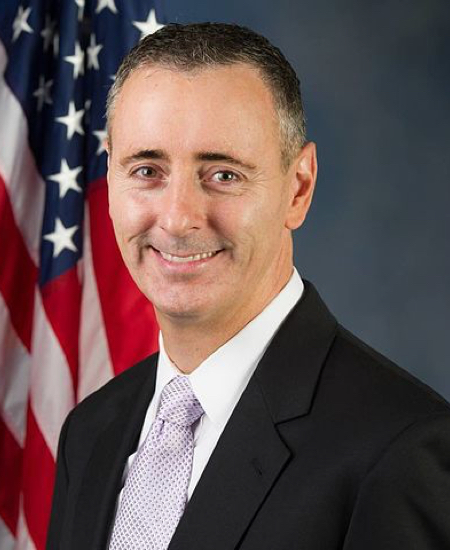
Rep. Brian K. Fitzpatrick
Sponsored bills
Maddy summaryHR 6454 establishes a 5-year pilot program at five Department of Veterans Affairs (VA) medical centers to improve suicide care for veterans. The program requires VA staff at these sites to complete a 10-week training curriculum based on the Zero Suicide Institute's model, focusing on suicide screening, risk assessment, safety planning, and care transitions. It mandates annual reports to Congress tracking staff training completion, policy alignment with the Institute's standards, and comparisons of suicide-related outcomes (like screenings and hospitalizations) between pilot sites and other VA facilities. The pilot includes one site primarily serving rural veterans and requires site selection based on factors like regional suicide rates and staff capacity. The program will conclude after five years unless the VA extends it for up to two more years.
Maddy summaryHR 4663, the Saving Vet Halls Act of 2025, authorizes the Department of Veterans Affairs to provide grants to eligible veterans service organizations for repairing existing facilities or upgrading technology at their locations. Organizations must submit detailed improvement plans, and grants are limited to $75,000 per year per organization, with recipients ineligible for another grant for five years. The bill explicitly prohibits using funds for new construction or facility acquisition and requires the VA to prioritize organizations based on need, plan quality, and capacity. This program, funded by $10 million annually, directly supports chartered veterans service organizations under 36 U.S.C. § 3621.
Maddy summaryHR 4594, the Military Learning for Credit Act of 2025, allows veterans using GI Bill benefits (Chapters 30, 33, 34, or 35) to cover costs for certain exams that grant college credit. It specifically permits using educational assistance for DSST, CLEP, National Career Readiness Certificate exams, and portfolio assessments of military training, with a $500 per exam cap. Veterans’ GI Bill entitlement is charged based on the exam cost relative to their monthly benefit rate, but this does not reduce benefits from the Department of Defense Tuition Assistance Program. The bill directly affects veterans seeking to convert military experience into college credits through approved programs.
Maddy summaryHR 6887, the Stop Crimes Against Children Act, amends the PROTECT Our Children Act of 2008 to require federal agencies to develop specific plans. These plans must coordinate with nonprofit child advocacy organizations and universities to prevent, identify, and respond to crimes against children (including abuse, trafficking, and exploitation), and provide evidence-based guidance for supporting victims. The bill also mandates federal recommendations for state, local, and tribal law enforcement on best practices for preventing child crimes and supporting victims. It directly affects federal agencies, law enforcement, and organizations working with child victims. The key change is adding these coordination and recommendation requirements to existing federal strategy.
Maddy summaryHR 6864, the SAW Act, prohibits using motor vehicles to intentionally hunt, pursue, or kill mammalian predators (like coyotes or wolves) on federal land. It directly affects hunters or recreational users operating vehicles on federal lands, with penalties including fines up to $10,000 or up to 5 years in prison for violations. An exception allows use of vehicles for self-defense or to prevent injury to others. The Secretary of the Interior enforces the law, with authority to investigate violations and coordinate with federal, state, and local law enforcement. The law excludes tribal trust lands and defines "motor vehicle" broadly to include snowmobiles, vehicles, and watercraft.
Maddy summaryThe NIH Clinical Trial Integrity Act requires sponsors of clinical trials approved by the National Institutes of Health (NIH) to set and meet specific goals for including participants from diverse racial, ethnic, age, and sex groups. This includes submitting detailed plans for recruitment and retention - such as using telemedicine for follow-ups or flexible scheduling - and reporting annual demographic data without personally identifiable information. Trials failing to meet these goals must develop a community-informed strategic plan to improve participation, which the NIH will publish. The bill also mandates a national awareness campaign to promote diverse trial participation and a study on reducing cost barriers for participants.
Maddy summaryHR 6857 requires all colleges and universities receiving federal funds to prominently display a link to the Department of Education’s civil rights complaint portal on their website homepage and to post annual Title VI awareness materials in high-traffic campus locations (like student centers) and on campus websites. The bill mandates these institutions to annually report discrimination complaints (based on race, color, or national origin) to the Department of Education’s Inspector General. It also requires the Department to provide monthly congressional briefings on complaint volumes and resolution timelines, while the Inspector General must audit institutions with the highest complaint rates and study why some complaints go to schools versus the federal office. This directly affects every federally funded higher education institution in the U.S. by changing how they handle and report civil rights complaints.
Maddy summaryThe "Peace Through Strength Against Russia Act of 2025" proposes to significantly expand and strengthen U.S. sanctions against the Russian Federation and its supporters. The bill mandates blocking property and restricting visas for Russian government officials, state-owned financial institutions, and entities supporting Russia's defense industrial base or war efforts in Ukraine, including those involved in kidnapping Ukrainian children. Key provisions prohibit U.S
Maddy summaryHR 6902, the Youth Substance Use Prevention and Awareness Act, expands a federal grant program to fund research-based public service announcement (PSA) campaigns targeting youth substance use prevention. It authorizes grants for campaigns using age-appropriate materials across TV, radio, print, outdoor, and digital media, including youth-submitted PSA contests. The bill requires the Attorney General to publish annual reports detailing each campaign's research basis, regional messaging, alignment with other prevention efforts, and evaluation of its effectiveness in reducing youth drug use. This directly affects federal grant recipients and aims to standardize and measure the impact of youth-focused prevention messaging.