

Value in Health Care Act of 2021 This bill makes a series of changes to certain methodologies and components used in the Medicare Shared Savings Program. The program enables accountable care organizations (ACOs) to receive payments for savings stemming from care coordination and management. Among other changes, the bill requires the Centers for Medicare & Medicaid Services to increase the shared savings rate for participating ACOs, as specified, and to establish a program that assists ACOs with start-up and operational costs of participation. The bill also extends certain incentive payments for health professionals who participate in eligible alternative payment models. The Government Accountability Office must report on health outcomes and racial disparities among beneficiaries who receive care from providers under alternative payment models compared to beneficiaries who receive care from providers under the traditional fee-for-service system.
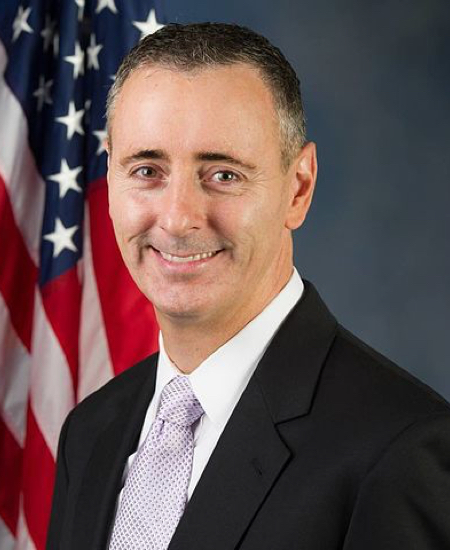
Rep. Brian K. Fitzpatrick
Sponsored bills
Supporting Medicaid in the U.S. Territories Act of 2021 This bill extends, increases, and otherwise modifies Medicaid funding for U.S. territories. Specifically, the bill extends (1) the temporarily increased Federal Medical Assistance Percentage (i.e., federal matching rate), and (2) a higher cap on Medicaid funding. Such provisions apply to Puerto Rico through FY2026 and to other territories through FY2029. The bill also requires Puerto Rico to implement an asset verification program and to report on its ability to comply with certain reporting requirements, procurement standards, and other Medicaid program integrity measures.
Maternal Health Quality Improvement Act of 2021 This bill requires the Department of Health and Human Services (HHS) to undertake activities to improve maternal health, including in rural areas. Specifically, HHS must award grants for (1) developing best practices to reduce preventable maternal mortality, and (2) training health care professionals to reduce and prevent discrimination when providing maternal health services. Additionally, HHS may award grants for integrated maternal and infant health care services. The bill also provides statutory authority for grants that support perinatal quality collaboratives, which are networks of health care and public health professionals who work to improve pregnancy outcomes. Furthermore, the bill requires a study on efforts in health professional schools and training programs to reduce and prevent discrimination in the provision of maternal health services. To address care in rural areas, the bill (1) provides statutory authority for grants that support networks of rural providers to improve and coordinate maternal care, (2) makes maternal care providers eligible for certain telehealth grants, and (3) establishes a demonstration project to improve training on maternal care in rural areas through health professional schools and training programs. The bill also expands the maternal care responsibilities of specified HHS offices and programs.
Securing America From Epidemics Act This bill authorizes the United States to participate in the Coalition for Epidemic Preparedness Innovations, an alliance of countries and private partners whose mission is to finance and coordinate the development of vaccines for high-priority, epidemic-potential threats. The President must report on certain matters concerning U.S. participation in coalition activities, including how this participation supports health security and biodefense priorities.
DHS Industrial Control Systems Capabilities Enhancement Act of 2021 This bill requires the Cybersecurity and Infrastructure Security Agency (CISA) to maintain certain capabilities to identify and address threats to industrial control systems. Specifically, the bill requires CISA's National Cybersecurity and Communications Integration Center to ensure that its activities address the security of both information and operational technology, including industrial control systems. Additionally, CISA must maintain capabilities to identify and address threats and vulnerabilities to products and technologies intended for use in the automated control of critical infrastructure processes by (1) leading efforts to identify and mitigate cybersecurity threats to industrial control systems; (2) maintaining threat hunting and incident response capabilities to respond to cybersecurity risks and incidents; (3) providing cybersecurity technical assistance to stakeholders; and (4) collecting, coordinating, and providing vulnerability information to the industrial control systems community. CISA shall provide to the homeland security committees a briefing on its industrial control systems capabilities at specified intervals. The Government Accountability Office must review and report on implementation of the bill's requirements.
This resolution calls on the United States and North Korea to begin the process of reuniting Korean Americans with their immediate relatives in North Korea. (Many families were divided after the signing of the Korean War Armistice Agreement, which divided the Korean Peninsula into North and South Korea.)
Turkey Human Rights Promotion Act of 2021 This bill directs the Department of State to provide assistance to civil society organizations in Turkey that (1) work to secure the release of prisoners of conscience and political prisoners in Turkey, or (2) provide support and post-incarceration assistance for such prisoners.
Tax Fairness for the Self-Employed Act of 2021 This bill allows the tax deduction for health insurance costs in determining net earnings from self-employment.
Administrative Law Judges Competitive Service Restoration Act This bill makes administrative law judge (ALJ) positions part of the competitive service and otherwise modifies the process for the appointment of ALJs, including by establishing certain minimum qualifications and conditions of employment.
Urban Indian Health Providers Facilities Improvement Act This bill expands the authority of the Indian Health Service (IHS) to make funds available for urban Indian organizations to renovate, construct, or expand urban Indian health facilities. Specifically, the bill authorizes the IHS to (1) make funds available for renovations even if the renovations are not minor, and (2) make funds available for purposes other than assisting the organizations in meeting certain accreditation standards.