

Maddy summaryThis bill requires the Consumer Product Safety Commission to create a safety standard that classifies and labels electric bicycles and off-road electric devices sold in the United States. The Commission must analyze past crash data, consult with manufacturers and safety experts, and establish clear definitions for different device types along with minimum age recommendations. Manufacturers will be required to permanently label their products with classification details, motor power, maximum speed, and age limits, while sales of misclassified or modified devices will be prohibited. The bill also authorizes funding for grants to help law enforcement and other agencies collect safety data and provides for ongoing analysis of accidents and injuries related to these devices.
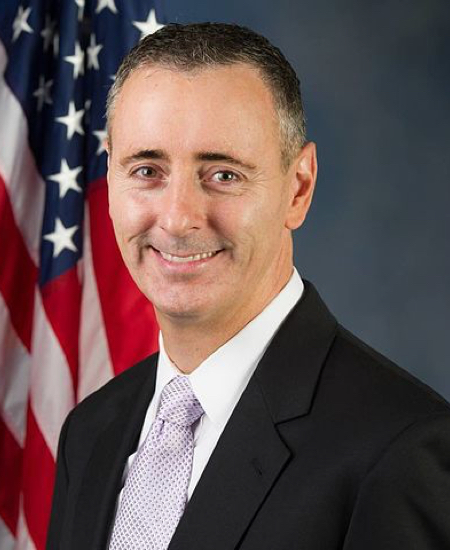
Rep. Brian K. Fitzpatrick
Sponsored bills
Maddy summaryHR 3553, the BRUSH Fires Act, requires the U.S. Forest Service to conduct a study evaluating wildfire mitigation methods in shrubland ecosystems (like chaparral and sagebrush) to reduce fire risk and damage to nearby communities. The study will assess fuel management practices, invasive species control, ember ignition prevention, and factors hindering effective wildfire management. It mandates a report within 90 days of study completion, identifying best practices, research gaps, and opportunities to improve Forest Service coordination with local entities. The bill directly affects communities near shrublands and Forest Service managers by gathering data to inform future fire prevention strategies. This is a procedural study bill, not a policy change, with no direct funding or regulatory requirements.
Maddy summaryThis bill directs the U.S. Department of Housing and Urban Development to give extra priority when awarding certain housing construction and renovation grants to projects in or benefiting low-income opportunity zones. It allows HUD officials to consider an applicant's location in a qualified opportunity zone as a positive factor during the competitive grant selection process. The legislation applies to grants related to building, modifying, or preserving housing and would affect developers and organizations seeking federal housing funding in designated areas. By giving additional weight to these projects, the bill aims to channel more federal housing resources toward communities identified as opportunity zones under existing tax law.
This bill reauthorizes through FY2031 the Young Fishermen’s Development Grant Program, which supports local and regional training, education, outreach, and technical assistance initiatives for young fishermen.
Critical Mineral Consistency Act of 2025 This bill modifies the Energy Act of 2020 to expand the definition of critical minerals to include critical materials designated by the Department of Energy (DOE). Under current law, DOE's critical materials list contains certain materials that are essential for energy, including those on the critical minerals list of the U.S. Geological Survey (USGS). The USGS's list, which contains certain minerals that are essential to the nation's economic or national security, is not required to include the materials on DOE's list. Currently, both lists include minerals with a high risk of supply chain disruptions, and both DOE and USGS must conduct a variety of efforts to ensure a secure and reliable supply chain of the minerals. By expanding the definition of critical minerals , this bill requires the USGS to include on its list the materials on DOE's list. Within 45 days of DOE adding a mineral, element, substance, or material to its critical materials list, the USGS must update its list to include such mineral, element, substance, or material.
Maddy summaryThis bill directs the Secretary of Health and Human Services to create a program focused on researching how environmental factors, such as air pollution, chemicals, and heavy metals, may contribute to neurodegenerative diseases like Alzheimer's and Parkinson's. The legislation would establish collaborative research centers at universities and medical institutions to study these environmental links, train scientists, and share findings with the public and healthcare professionals. The program includes provisions for creating a national data system and information clearinghouse to track disease patterns and environmental exposures across different communities. Funding of up to $50 million annually through 2031 is authorized to support these research efforts, with biennial reports required to Congress on progress and outcomes.
Maddy summaryThe Railway Safety Act of 2026 establishes new safety requirements for trains transporting hazardous materials, including speed limits, enhanced reporting, and stricter tank car standards. It mandates that high-hazard trains carrying flammable liquids or toxic materials be limited to 40 mph in urban areas, while requiring railroads to provide real-time information to emergency responders. The bill also increases penalties for safety violations, requires more frequent inspections of rail equipment, and creates a new emergency response assistance program to help communities affected by hazardous materials incidents. Additionally, it authorizes funding for research into safer tank cars and defect detection systems, and requires the Federal Railroad Administration to improve its safety workforce management.
Maddy summaryThis bill, known as Gwenn's Law, directs the National Institutes of Health to launch public awareness campaigns aimed at increasing women's participation in clinical trials, with a specific focus on research for rare diseases. It authorizes $10 million annually from 2027 to 2031 to fund these outreach efforts at hospitals, clinics, and other healthcare locations. The legislation also establishes a permanent interagency task force within HHS to coordinate rare disease research and requires the department to submit a public action plan within 180 days outlining how to improve treatment options for rare conditions that disproportionately affect women.
Maddy summaryThis bill increases the annual stipend for books, supplies, and educational materials under the Post-9/11 GI Bill from $1,000 to $1,400, effective immediately. It also establishes a new automatic annual adjustment starting in fiscal year 2026, tying stipend increases to inflation using the Consumer Price Index (CPI). Specifically, the stipend will rise each year by the percentage difference between the current CPI and the previous year’s CPI. This directly affects veterans using the Post-9/11 Educational Assistance Program for their education expenses.
Fair Access to Co-ops for Veterans Act of 2025 This bill revives and makes permanent the authority of the Department of Veterans Affairs (VA) home loan guarantee program to guarantee loans for a veteran’s purchase of stock or membership in a cooperative housing corporation (i.e., co-op) for the purpose of entitling the veteran to occupy a single family residential unit. For purposes of the administration of such loans, the bill establishes a fee rate of the usual fee plus 3.25% of the total amount of the loan, treats such cooperative housing units as residential property for purposes of imposing restrictions and liabilities, and guarantees up to 25% of the amount of the loan for loans exceeding $144,000. Additionally, the bill requires the VA to advertise the availability of loan guarantees for cooperative housing unit loans, including by issuing guidance and notifying eligible veterans.