

Maddy summaryThis bill exempts H-1B visa holders working in healthcare from a presidential restriction that requires a $100,000 payment for entry into the United States. It directly affects foreign medical professionals and healthcare workers who hold H-1B nonimmigrant visas. The legislation removes the additional fee requirement for these workers while limiting any fees that may be charged to the standard amount already established under immigration law. The bill defines healthcare workers using the existing definition from the Affordable Care Act and was introduced in the 119th Congress in March 2026.
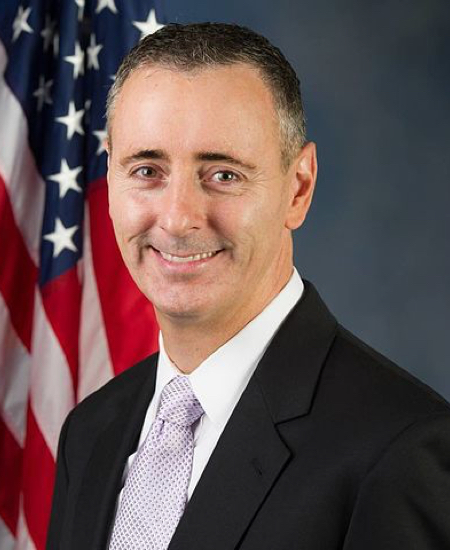
Rep. Brian K. Fitzpatrick
Sponsored bills
Enhanced Iran Sanctions Act of 2025 This bill imposes sanctions on certain foreign persons (individuals and entities) that are involved in Iran's petroleum sector as well as certain associated persons. The bill also requires or authorizes actions to facilitate the enforcement of sanctions on Iran. Specifically, the bill requires the President to impose visa- and property-blocking sanctions on any foreign person that, after the bill's enactment, knowingly engages in any transaction related to the processing, export, or sale of oil, condensates, gas, liquefied natural gas, or other petrochemical products in whole or in part from Iran. The President must also impose sanctions on certain foreign persons associated with a sanctioned individual or entity. For example, the President must sanction the subsidiaries and corporate officers of a sanctioned business. The bill provides certain exceptions to these sanctions, including specifying that sanctions do not apply to the importation of goods or to conducting or facilitating transactions for humanitarian assistance. The Department of State must establish an interagency working group that shall seek to establish a multilateral contact group to coordinate international efforts to enforce sanctions on Iran. The bill expands the State Department rewards program to authorize a reward payment to any individual who furnishes information leading to the identification of a person (1) subject to sanctions under this bill, or (2) that has attempted or is attempting to evade sanctions under this bill.
Post-Disaster Reforestation and Restoration Act of 2025 This bill directs the Department of the Interior to carry out a program for post-disaster reforestation and restoration. Interior must identify covered lands requiring reforestation and restoration following unplanned disturbances that are unlikely to experience natural regeneration without assistance. Covered land means (1) any federal land or interest in land administered by the National Park Service, the U.S. Fish and Wildlife Service, the Bureau of Land Management, the Bureau of Reclamation, the Forest Service, or the Bureau of Indian Affairs; and (2) any Indian Forest Land or Rangeland. Interior must propose a list that prioritizes projects for reforestation and restoration for each fiscal year. Interior may (1) carry out priority projects through grants, contracts, or cooperative agreements; and (2) support any grant contract or cooperative agreement that may be necessary to ensure adequate and appropriate seed and seedling availability to further the objectives of priority projects.
Maddy summaryHRES 1114 is a ceremonial resolution recognizing the 114th anniversary of the Girl Scouts of the United States of America (founded March 12, 1912). It formally celebrates the organization’s mission of building girls’ courage, confidence, and character through programs focused on leadership, STEM, community service, and inclusive spaces. The resolution specifically honors Girl Scouts who earned the Gold Award in 2025 and encourages continued support for their work in developing future women leaders. As a non-binding resolution, it has no legal effect but serves as a symbolic expression of congressional appreciation for the Girl Scouts’ community impact.
Maddy summaryThis bill, known as the Diabetes Foot Health Access and Modernization Act of 2026, makes two main changes to federal healthcare programs. First, it allows Medicaid to cover foot and ankle care services provided by podiatric physicians, ensuring patients have access to this specialized care. Second, it updates Medicare rules to clarify documentation requirements for diabetic shoes, specifying conditions under which patients can receive extra-depth or custom-molded footwear. The changes take effect on January 1, 2026, for Medicaid services and January 1, 2028, for Medicare shoe coverage.
Maddy summaryThis bill would require infant formula manufacturers to conduct standardized testing for specific pathogens and microorganisms in both their facilities and finished products. It mandates that companies report positive test results to the FDA within one business day and retain records of these findings for inspections. The legislation also requires the FDA to notify congressional committees within one business day of receiving positive test results or issuing certain inspection classifications. Additionally, the bill establishes clear inspection standards that apply to all infant formula products regardless of where they are made.
Maddy summaryThis bill establishes a federal grant program to help States, Indian Tribes, and Tribal organizations provide services to people struggling with gambling addiction. The program would fund prevention efforts, screening, treatment, and support services including training for healthcare providers, public awareness campaigns, and access to help lines and peer support groups. Grants would be awarded competitively, with priority given to programs serving vulnerable populations such as Native Americans, veterans, youth, and those in rural or underserved areas. Funding would come from a portion of the federal excise tax on gambling, with amounts adjusted annually for inflation.
Maddy summaryThis bill directs the Secretary of State to create a strategy for international cooperation on developing medical products to fight infectious diseases and antibiotic-resistant pathogens. The plan would involve foreign governments, global organizations, and private companies to share resources and expertise for creating vaccines, treatments, and diagnostics. It aims to strengthen public health systems in partner countries to prevent outbreaks from spreading to the United States. The strategy must be submitted to Congress within 18 months and must ensure fair contributions from participating nations based on their budgets and technical capabilities. The bill focuses on aligning these efforts with existing U.S. pandemic preparedness plans and avoiding duplication of work.
Maddy summaryThis bill creates the Extraordinary Protection Reimbursement Program within the Department of Homeland Security to provide financial reimbursement to state, local, Tribal, and territorial law enforcement agencies for costs related to protecting designated non-governmental properties of high-profile individuals. The program allows agencies to receive grants specifically for man-hours spent on protection duties and equipment purchases directly tied to securing these properties, with funds only usable when protected persons are physically present or traveling to and from the locations. To ensure accountability, the bill requires annual audits by the Department's Inspector General and mandates detailed reports on grant amounts, usage, and equipment acquisitions submitted to congressional committees. The legislation authorizes $61 million annually for fiscal years 2026 through 2028 to fund these reimbursement activities.
Maddy summaryHR 7856, the Fair Housing for Survivors Act of 2026, amends the Fair Housing Act to explicitly prohibit housing discrimination based on being a survivor of domestic violence, sexual assault, or severe trafficking in persons. It adds "survivor of domestic violence, sexual assault, or severe trafficking" as a protected class in the law, alongside existing categories like race or national origin. This means landlords, housing providers, and programs cannot deny housing, evict, or otherwise discriminate against individuals due to their status as a survivor. The bill directly affects survivors who face housing barriers, including those with protective orders, shelter histories, or past evictions linked to abuse.