

Head start Education And Development Workforce Advancement and Yield Act or the HEADWAY Act This bill allows some teachers in Early Head Start programs to teach while in the process of earning their Child Development Associate (CDA) credential and completing training. Currently, the Department of Health and Human Services (HHS) must ensure that all teachers providing direct services to children and families in Early Head Start centers (1) have a minimum of a CDA credential and have been trained in early childhood development, and (2) have been trained in early childhood development with a focus on infant and toddler development. The bill revises this requirement by requiring at least one teacher per classroom (instead of all teachers) to have a CDA credential and training. In particular, the bill requires HHS to ensure that (1) each additional teacher providing direct services to children and families is in the process of earning a CDA credential and completing training, and (2) the Early Head Start agency provides a mentor to oversee the progress and guide the work of a teacher who is in the process of earning a CDA credential and completing training.
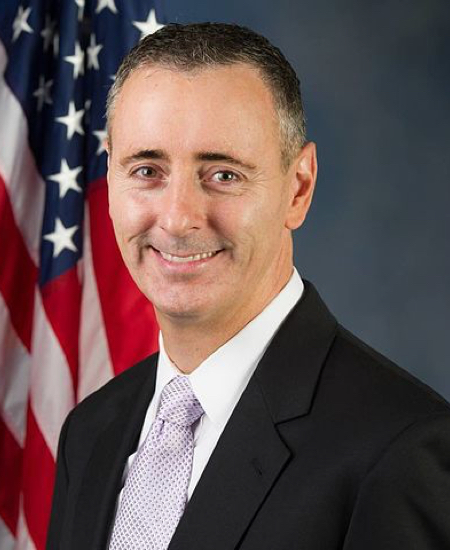
Rep. Brian K. Fitzpatrick
Sponsored bills
Maddy summaryThis bill reauthorizes the Great Lakes Restoration Initiative (GLRI) through fiscal year 2031, providing $500 million annually for Great Lakes cleanup and restoration projects. It directly affects federal agencies (like the EPA), state governments, tribes, and environmental groups working on Great Lakes water quality, habitat restoration, and pollution prevention. The key provision extends existing funding levels for five additional years (2027-2031), ensuring continued support for projects addressing invasive species, toxic pollutants, and coastal wetlands restoration across the Great Lakes region. This is a funding authorization bill, not a policy change to the program's scope.
Maddy summaryThe Proxy Voting for New Parents Resolution (HRES 23) would allow U.S. House Members who have given birth or whose spouse has given birth to appoint another Member as a proxy to cast their vote or record their presence in the House and committees for up to 12 weeks after childbirth. To use this, the new parent must submit a signed letter to the Clerk detailing the birth or medical condition and naming the proxy; the proxy must vote exactly as instructed and announce the vote as "by proxy." The proxy vote does not count toward quorum, and the new parent can revoke the proxy at any time by submitting a new letter or casting their own vote. This resolution applies to all House Members, including Delegates and the Resident Commissioner, though they cannot cast votes for the House itself.
This resolution honors the life, achievements, legacy, and distinguished public service of former President Jimmy Carter. The resolution also (1) acknowledges President Carter's contributions to the state of Georgia, the United States, and the world; and (2) establishes his legacy as one of the great leaders and statesmen of the United States.
Maddy summaryHR 269, the Secretary General Jens Stoltenberg Congressional Gold Medal Act, authorizes a single gold medal to be awarded to Jens Stoltenberg in recognition of his service as NATO Secretary General from 2014 to 2024. The bill cites his leadership in expanding NATO membership, increasing defense spending by member nations (including 23 countries meeting the 2% target by 2024), strengthening partnerships with Indo-Pacific nations, and coordinating international support for Ukraine after Russia’s 2022 invasion. This commemorative act does not create new policy or affect any laws, as it solely provides a symbolic honor through a gold medal. The medal will be struck by the U.S. Mint, with bronze duplicates available for sale to cover costs.
Maddy summaryHR 253, the Bipartisan Restoring Faith in Government Act, prohibits members of Congress, their spouses, and dependents from owning or trading most stocks, bonds, commodities, and derivatives. Covered individuals must divest such investments within 90 days of the bill’s enactment or when becoming covered, with exceptions for U.S. Treasury securities, state/local government bonds, and Thrift Savings Plan investments. The law requires divestment through sale or placement in a qualified blind trust (approved by the ethics office), mandates annual compliance certificates, and imposes civil penalties up to $50,000 for violations. It directly affects congressional staff and family members with financial holdings, aiming to prevent conflicts of interest in legislative decision-making.
Maddy summaryHR 296, the "Justice for 9/11 Act," modifies legal procedures for three specific defendants accused of the September 11, 2001, attacks: Khalid Shaikh Mohammad, Walid Muhammad Salih Mubarak Bin ‘Attash, and Mustafa Ahmed Adam al Hawsawi. The bill ensures their plea agreements for the 9/11 attacks cannot block military commission trials under Title 10, makes the death penalty available in those trials, and mandates they remain in solitary confinement at Guantanamo Bay under strict conditions - no contact with foreigners, limited psychological care, and no transfer to the U.S. or other countries. It directly affects only these three individuals and their legal proceedings, not the general public. The bill changes existing legal pathways for their trial and confinement, not broader policy.
Maddy summaryThis bill amends the tax code to create a special rule for deducting losses of uncut timber (timber not yet cut for sale) from disasters like fires, storms, pests, or drought. It requires taxpayers to base deductions on the timber's pre-loss appraised value minus salvage value, using a certified appraiser's assessment within one year. Crucially, taxpayers must reforest the affected area with hardwoods or softwoods within five years to keep the tax benefit; failure to reforest results in recapturing the deduction. The rule applies only to timber held for sale in an active business, excluding passive activities. This changes how businesses can claim tax deductions after timber losses while linking the benefit to reforestation efforts.
Maddy summaryThe ESCRA Act (HR 306) targets fraudulent credit repair practices by prohibiting credit repair organizations from charging upfront fees before delivering results, requiring them to provide consumers with a credit report showing successful changes at least six months after service. It bans misleading claims about services and mandates clear disclosures (e.g., "credit repair organizations don’t provide services you can’t do yourself for free") while requiring written contracts detailing all communications. The bill also sets strict rules for submitting disputes to credit bureaus, including labeling communications as "submitted by a credit repair organization" and preventing "jamming" (repeated disputes without justification). These changes directly affect credit repair companies and consumers, aiming to reduce scams in the credit repair industry.
Maddy summaryThe Sustainable Budget Act of 2025 would establish a 18-member National Commission on Fiscal Responsibility and Reform to develop budget recommendations. The Commission would include members appointed by the President and congressional leadership, with specific requirements for approval of its reports (requiring 12 members, including 4 from each major party). The Commission would need to propose policies to balance the budget within 10 years (excluding interest payments) and address entitlement spending and revenue gaps. After submitting reports to Congress, the President would transmit a proposed joint resolution implementing the recommendations, which would then undergo expedited consideration in both houses with limited debate and no amendments allowed. This bill creates a process for developing budget recommendations but does not directly change current fiscal policies.