

Maddy summaryHR 766, the SEWER Act, establishes a federal National Wastewater Surveillance System led by the CDC to monitor pathogens like SARS-CoV-2, influenza, and mpox in sewage. It authorizes $150 million annually (2026-2030) to expand this system for early disease outbreak detection. The bill explicitly states wastewater utilities are not required to comply with surveillance requests. This system aims to provide public health officials with data to track community-level disease spread through wastewater analysis.
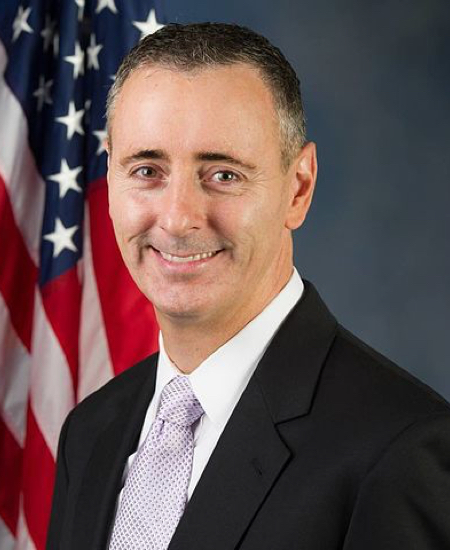
Rep. Brian K. Fitzpatrick
Sponsored bills
Maddy summaryHRES 66 is a non-binding resolution affirming the U.S. government's leadership in global education. It calls on the State Department and USAID to prioritize quality, inclusive public education for girls, children with disabilities, and children in crisis settings, while integrating education into humanitarian responses. The resolution urges these agencies to meet existing commitments to international education programs and advance learning outcomes for marginalized youth worldwide. It does not create new laws or funding but emphasizes coordination across U.S. government agencies to support global education efforts.
Maddy summaryThis resolution celebrates the historical and ongoing contributions of Hindu Americans to the U.S. economy, culture, and society, including their roles in fields like Ayurveda, yoga, and the arts. It specifically condemns Hinduphobia, anti-Hindu bigotry, hate, and intolerance, addressing rising hate crimes against Hindu places of worship (mandirs) and individuals. As a non-binding symbolic resolution, it does not create new laws or policies but serves to affirm support for Hindu Americans' religious freedom and community.
Maddy summaryHRES 67 is a symbolic House resolution recognizing Certified Registered Nurse Anesthetists (CRNAs) for their 150+ years of service in providing anesthesia care across the U.S. health system. It highlights CRNAs' critical role in administering over 58 million anesthetics annually, enabling rural healthcare access, supporting military and VA facilities, and responding to public health emergencies. The resolution specifically encourages the public, healthcare providers, and policymakers to fully utilize CRNAs' expertise during National CRNA Week (January 19-25, 2025). As a non-binding acknowledgment, it directly honors the 65,000+ CRNAs and student anesthetists without creating new policy or funding.
Maddy summaryHR 733 requires the President to review U.S. sanctions against 48 specific Hong Kong officials within 180 days of the bill's enactment. The review must determine if these officials - such as top government leaders (e.g., Chief Executive John Lee) and judicial figures (e.g., Chief Justice Andrew Cheung) - still meet criteria under four existing sanctions laws. The President must submit a detailed justification to congressional committees, including the Foreign Relations and Financial Services committees. This bill mandates a formal review process but does not alter current sanctions or guarantee any changes. The focus is solely on evaluating whether existing sanctions remain appropriate.
Maddy summaryThis bill creates a new above-the-line tax deduction for performing artists (like musicians, actors, and dancers) to deduct work-related expenses directly from their gross income, rather than itemizing deductions. It sets a $100,000 income threshold (adjusted annually for inflation), phasing out the deduction by 10% for every $2,000 earned above this amount. The bill also explicitly includes commissions paid to an artist’s manager or agent as deductible expenses and raises the $200 "nominal employer" threshold for expense deductions to $500 (with inflation adjustments). These changes apply to tax years beginning after December 31, 2024.
Maddy summaryHR 703, the Main Street Tax Certainty Act, makes a key tax deduction permanent for small business owners. It removes the temporary sunset provision (subsection (i)) from Section 199A of the tax code, ensuring the qualified business income deduction remains available for eligible small businesses. This change directly affects pass-through business owners (like S-corps, partnerships, and sole proprietorships) who currently qualify for this deduction. The permanent change takes effect for tax years starting after December 31, 2025.
Maddy summaryHR 705 establishes a Military Firefighters Compensation Fund within two years of enactment to provide compensation for current and former military firefighters (including some contractors) who develop illnesses due to PFAS exposure during their duties. It presumes exposure occurred if they worked at military installations or National Guard facilities during periods when PFAS was present. Compensation covers disabilities or death from such illnesses, with payments prioritized to surviving spouses, then children, parents, and other relatives as specified. The fund also covers related medical benefits, transportation, and supplies for qualifying individuals.
Maddy summaryThe Protecting First Responders from Secondary Exposure Act of 2025 requires federal funding to provide training and containment devices for first responders, specifically to prevent exposure to fentanyl and other dangerous substances during emergencies. This bill directly affects police, firefighters, and emergency medical personnel who face accidental exposure risks while responding to drug-related incidents. The key provision amends existing federal law to mandate both training resources and the purchase of specialized containment equipment for first responder use. The policy change aims to reduce health risks from secondary exposure without altering drug enforcement or criminal law.
Supporting Accurate Views of Emergency Services Act of 2025 or the 911 SAVES Act This bill requires the Office of Management and Budget to categorize public safety telecommunicators as a protective service occupation under the Standard Occupational Classification system no later than 30 days after the enactment of this bill. (The Standard Occupational Classification system is a federal statistical standard used by federal agencies to classify workers into occupational categories for the purpose of collecting, calculating, or disseminating data.)