

Maddy summaryHR 2859, the Child Care Nutrition Enhancement Act of 2025, adds a 10-cent per meal reimbursement to the Child and Adult Care Food Program (CACFP) for meals served to children in licensed childcare settings. This change directly affects childcare providers, including family and group day care homes and centers participating in CACFP, starting after the bill's enactment. The bill amends existing law to require this additional payment for every meal and supplement served under the program. The increase applies to all qualifying meals served after the effective date, without altering existing reimbursement tiers or eligibility rules.
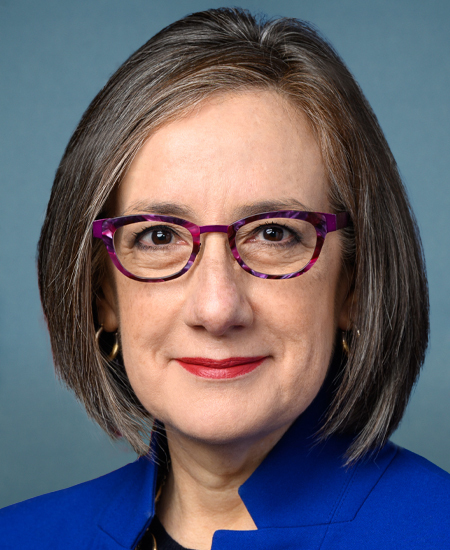
Rep. Andrea Salinas
Sponsored bills
Maddy summaryHR 2818, the Early Childhood Nutrition Improvement Act, updates federal child care nutrition program rules to improve administration and reduce burdens. It requires annual eligibility reviews for for-profit child care centers (Section 2), overhauls how "serious deficiency" findings are handled (Section 3), and allows up to 3 meals per day for children in extended care (Section 4), including a study on third-meal reimbursement. The bill also creates an advisory committee (Section 6) to reduce paperwork for providers, parents, and states, focusing on streamlining applications, digital documentation, and eliminating duplicative State requirements. These changes directly affect child care centers, family day care homes, and state agencies administering the program.
Maddy summaryHR 2881, the COAST Anti-Drilling Act of 2025, prohibits the federal government from issuing new oil and gas leases in four specific coastal planning areas: the North Atlantic, Mid-Atlantic, South Atlantic, and Straits of Florida. This directly affects the Department of the Interior (specifically the Secretary) and oil and gas companies seeking to explore or develop resources in these regions. The bill amends the Outer Continental Shelf Lands Act to ban all new leasing authorizations in these areas, as defined by the 2024-2029 leasing program notice. It does not affect existing leases or operations but prevents future development in these designated coastal zones.
Maddy summaryThe Vote at Home Act of 2025 requires states to mail ballots to all registered voters for federal elections at least two weeks before Election Day, eliminating unnecessary barriers like notary requirements or excuses for voting by mail. It ensures ballots are accessible to voters with disabilities and provides free postage for all mail-in ballots, making voting more convenient for rural voters, those with disabilities, and people with scheduling conflicts. The bill also expands automatic voter registration through motor vehicle offices, streamlining the process while protecting against errors in registration. These changes aim to increase accessibility and participation in federal elections while reducing election administration costs, with states required to comply for elections beginning in 2026.
Maddy summaryHR 2849, the West Coast Ocean Protection Act of 2025, prohibits federal oil and gas exploration, development, and production on the outer Continental Shelf off the coasts of California, Oregon, and Washington. It directly affects oil and gas companies seeking leases in four specific planning areas: Washington/Oregon, Northern California, Central California, and Southern California. The bill amends existing law to block the Secretary from issuing any leases or authorizations for these activities in those designated zones. This creates a permanent ban on offshore drilling in these regions, replacing previous federal leasing plans.
Maddy summaryHR 2848, the Stop Arctic Ocean Drilling Act of 2025, prohibits the federal government from issuing new oil and gas leases in Arctic federal waters. It amends the Outer Continental Shelf Lands Act to ban the Secretary of the Interior from authorizing exploration, development, or production of oil, natural gas, or minerals in designated Arctic areas, overriding all other federal laws. The bill defines "Arctic" using the 1984 Arctic Research Act, focusing on federal waters off Alaska. This directly affects federal leasing decisions and prevents new drilling permits in the region.
Maddy summaryHRES 321 is a symbolic resolution supporting the "Rise Up for LGBTQI+ Youth in Schools Initiative," which calls for communities to demand equal educational opportunities, civil rights protections, and inclusion for LGBTQI+ students in K-12 schools. It urges states and localities to adopt policies prohibiting bias-based discrimination, exclusion, and erasure of LGBTQI+ students - particularly transgender, nonbinary, Black, Indigenous, and disabled youth - while recognizing existing efforts like National Day of Silence. The resolution does not create new laws or allocate funds but formally endorses community-led advocacy to address hostile school environments documented in studies showing discrimination correlates with higher absenteeism, lower grades, and mental health challenges among LGBTQI+ students. It directly affects state education policies and school climates, encouraging local action without federal enforcement.
Maddy summaryHRES 317 is a non-binding resolution urging the U.S. government to lead global efforts to halt and reverse the nuclear arms race. It calls on the President to pursue negotiations with nuclear-armed states to reduce arsenals, end the U.S. policy allowing first use of nuclear weapons, eliminate immediate launch readiness, stop developing new weapons, and support communities affected by nuclear programs. The resolution emphasizes diplomatic action over military modernization to reduce nuclear risks and prevent catastrophic conflict.
Maddy summaryThe GOSAFE Act prohibits the sale, manufacture, transfer, and possession of gas-operated semi-automatic firearms and large capacity ammunition feeding devices (those holding more than 10 rounds). It defines gas-operated firearms as those that use gas from fired cartridges to cycle the action, requiring the Attorney General to publish a list of prohibited firearms within 180 days. The bill establishes a process for manufacturers to seek approval for new firearm designs before selling to civilians and creates a "Firearm Safety Trust Fund" to cover related costs. Certain firearms are exempt, including single-shot, muzzle-loading, and firearms with permanently fixed magazines holding 10 or fewer rounds. Violations could result in fines up to $5,000 or up to 12 months in prison.
Maddy summaryThe American Family Act (HR 2763) establishes a new refundable child tax credit that provides monthly payments to eligible families with children. It would pay $300 per month for each child under age 6 and $360 per month (120% of $300) for each child age 6 or older, with income limits of $150,000 for joint filers and $112,500 for other filers. The bill creates a "period of presumptive eligibility" to determine eligibility for monthly payments, allowing families to receive advance payments based on information from previous tax returns. This would directly affect millions of families with children who meet the income requirements, providing more consistent financial support throughout the year rather than an annual tax credit.