

Maddy summaryThis bill removes a previous exclusion that prevented temporary federal employees (including U.S. Postal Service staff and Members of Congress) from counting service after January 1, 1988, toward their retirement benefits. It allows these workers to have their post-1988 temporary service counted toward retirement eligibility if they pay a deposit to the retirement system. The change applies to anyone employed by the federal government on or after the bill's enactment date. The Office of Personnel Management must notify affected employees and create rules to implement this change.
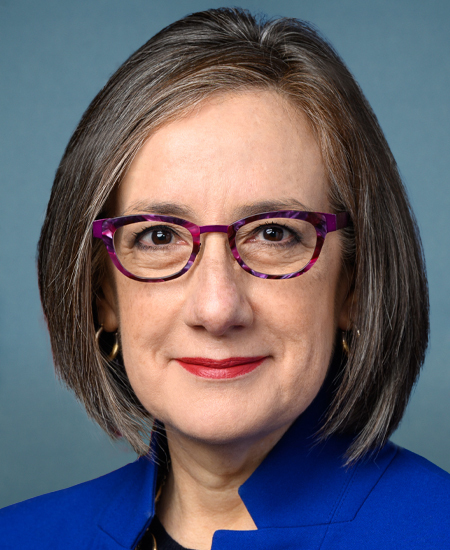
Rep. Andrea Salinas
Sponsored bills
Maddy summaryHR 6006 establishes a 3-year pilot program to improve summer meal access for children by providing grants to eligible community organizations (like schools or service institutions) to purchase or retrofit vehicles for delivering noncongregate meals. Grants of up to $100,000 per year prioritize entities serving high numbers of students eligible for free/reduced-price lunches and those with many children from socially disadvantaged backgrounds, while ensuring geographic diversity. Participants must use no more than 10% of funds for administrative costs and report annually on meals served and beneficiaries. The program is funded at $1 million annually for three years, with the Secretary required to submit a final report to Congress on its outcomes.
Keeping Drugs Out of Schools Act of 2023 This bill allows the Office of National Drug Control Policy to award grants for eligible entities to implement school-community partnerships for preventing and reducing substance use and misuse among youth. Eligible entity refers to a coalition that (1) is a Drug-Free Communities funded coalition on or before the date on which the coalition submits a grant application, and (2) has a memorandum of understanding in effect with not less than one local school to establish a school-community partnership.
Maddy summaryThe Reforming Disaster Recovery Act establishes a Long-Term Disaster Recovery Fund to improve federal assistance for communities recovering from major disasters, with a focus on helping low- and moderate-income households and distressed areas. It creates a new Community Development Block Grant Disaster Recovery Program that allocates funds based on unmet needs in the most impacted areas, requires at least 70% of funds to benefit low- and moderate-income persons, and allows preliminary funding of up to $5 million before full disaster assessment. The law mandates detailed grantee plans addressing housing, economic revitalization, infrastructure, and disaster mitigation, with requirements for public input, transparency, and coordination with FEMA and other agencies. It aims to strengthen long-term recovery by addressing pre-disaster challenges, reducing future risks through mitigation, and ensuring resources reach vulnerable communities most affected by disasters.
Maddy summaryHR 5950, the Quantum Instrumentation for Science and Engineering Act, establishes a new grant program under the National Science Foundation to upgrade research facilities and improve access to equipment for quantum information science. The bill directs the NSF to fund institutions of higher education, nonprofit organizations, or consortia to accelerate quantum technology development by upgrading research resources, enhancing equipment sharing across institutions, and providing hands-on training for students, including at community colleges. Key provisions require grantees to address materials and supply chain needs while facilitating coordination and professional staff support for quantum research operations. This legislation directly affects research institutions and students by expanding access to critical quantum research infrastructure and training opportunities.
Maddy summaryThe Rail Worker and Community Safety Act establishes a minimum 2-person crew requirement for most freight trains (with exceptions for smaller carriers or specific low-risk operations), mandates new safety regulations for hazardous materials transportation including advance notification to emergency response agencies, and requires rail carriers to provide employees with earned paid sick time (1 hour for every 30 hours worked). The bill also sets a minimum requirement of 425 federal rail safety inspectors with specialized expertise across various safety domains, along with additional funding for hiring and compensation. These provisions directly affect rail carriers, rail workers, and communities near rail operations, aiming to enhance rail safety and worker protections through concrete policy changes.
Maddy summaryHRES 754 is a symbolic House resolution recognizing the heritage, culture, and contributions of Latinas in the United States. It highlights Latinas' roles in business (owning over 2 million businesses), military service (45,710 active duty), arts (Oscar-winning artists like Rita Moreno), and public service, while noting persistent challenges like the 57-cent pay gap. The resolution does not create new laws or policies but formally honors these contributions and acknowledges the need for further progress toward equality. It was introduced by multiple representatives and referred to the Committee on Oversight and Accountability.
Maddy summaryThe Mental Health Infrastructure Improvement Act of 2023 provides federal loans and loan guarantees to help build or improve mental health and substance use disorder treatment facilities. It prioritizes projects that increase psychiatric bed capacity in underserved areas, serve rural communities, or provide integrated care, with 25% of funds reserved specifically for pediatric facilities. Borrowers must contribute 25% of project costs from non-federal sources, and the program allocates up to $200 million annually for fiscal years 2024-2028. The bill includes specific terms for loan repayment, guarantee coverage, and requirements for eligible facility types that qualify for funding.
Maddy summaryHR 5667, the Pay Our Military Act, ensures continued pay and allowances for active-duty military members, reservists, Department of Defense civilians, and qualifying contractors during any government funding gap in fiscal year 2024. It appropriates funds from the Treasury to cover these payments if regular appropriations bills aren't passed before the end of the fiscal year. The funding automatically terminates once regular appropriations are enacted or by January 1, 2025, whichever comes first.
Maddy summaryThe Feed Our Families Act of 2023 ensures SNAP (Supplemental Nutrition Assistance Program) benefits continue for 90 days during the first government shutdown in any fiscal year after 2023. It appropriates emergency funds from the Treasury to cover SNAP operations without requiring new congressional approval during this period. The funds are held in reserve and used solely for SNAP program needs, such as food assistance payments. This directly affects low-income households relying on SNAP for food security during funding gaps.