

Maddy summaryThe Neighborhood Homes Investment Act creates a new tax credit for developers who rehabilitate or build affordable homes in distressed communities. The credit is calculated based on the difference between rehabilitation costs and the sale price, with homes required to be sold at affordable prices to qualified homeowners with incomes up to 140% of the local median family income. The bill targets specific "qualified census tracts" defined by high poverty rates, low homeownership, and below-average home values. Developers must ensure homes are sold to qualified homeowners who use them as primary residences for at least five years, with additional safeguards to prevent program abuse and ensure fair housing practices.
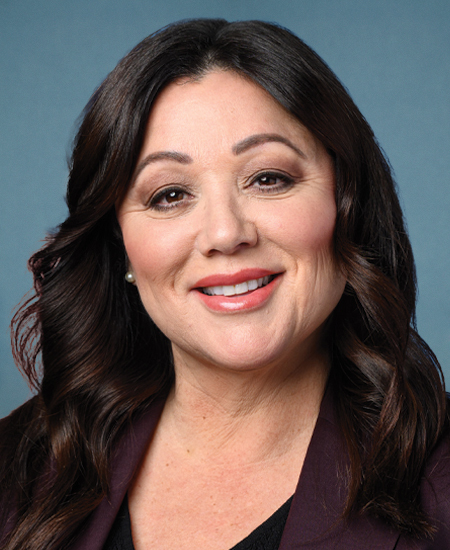
Rep. Lori Chavez-DeRemer
Sponsored bills
Maddy summaryThis resolution (HRES 462) is a symbolic House of Representatives measure commemorating the 1989 Tiananmen Square events as described in the resolution and condemning China's government for "continued and intensifying crackdown on human rights" in mainland China and Hong Kong. It specifically calls on China to end censorship about the events, allow a UN investigation, uphold Hong Kong's autonomy under the Joint Declaration, and permit exiled activists to return safely. The resolution makes no binding policy changes but expresses support for human rights movements in China, Hong Kong, Tibet, and Xinjiang. As a non-binding resolution, it does not alter U.S. law or policy.
Maddy summaryThis resolution recognizes the need for improved access to rural and agricultural media programming, such as agricultural weather reports, market news, and western lifestyle content, which directly affects farmers, ranchers, and rural communities. It highlights that media consolidation has reduced availability of this programming, which informs the public about food supply chains, agricultural research, and rural life. The resolution urges media companies to prioritize delivering such content but does not create new laws, funding, or mandates. As a non-binding recognition, it has no direct policy impact on legislative or regulatory changes.
Maddy summaryThe ACPAC Modernization Act (HR 3780) updates the Aviation Consumer Protection Advisory Committee (ACPAC) by adding "ticket agents" as a new member category and extending the committee's term from 2023 to 2028. This change directly affects ACPAC's composition, which advises the Department of Transportation on airline consumer issues. The bill modifies existing membership rules to include representatives from the ticket purchasing industry - such as travel agencies and online booking platforms - who help consumers buy flights. The update ensures ACPAC's structure better reflects current airline industry stakeholders without altering the committee's core advisory role.
Maddy summaryThe SHOPP Act (HR 3127) expands the types of healthy foods SNAP participants can buy with their benefits. It allows fresh frozen fruits and vegetables to count toward nutrition incentives year-round and adds legumes (like beans and lentils) to the list of eligible items. This directly affects SNAP recipients by increasing access to affordable, nutritious options beyond just fresh produce. The changes take effect March 6, 2024, modifying the 2008 Food, Conservation, and Energy Act.
Maddy summaryThis bill amends the Supplemental Nutrition Assistance Program (SNAP) to exclude income earned through specific job training programs from being counted toward household income limits. It adds a new provision (paragraph 20) that excludes earnings from vocational rehabilitation programs, refugee employment programs, and other defined training initiatives. This change directly affects SNAP households where members participate in these programs, as the income from such participation will no longer reduce their food assistance benefits. The policy update simplifies eligibility by ensuring these earnings do not trigger benefit reductions under SNAP rules.
Maddy summaryHR 3773, the Stop Anti-Semitism on College Campuses Act, requires colleges and universities receiving federal funding to prohibit any event promoting antisemitism on campus. This includes not hosting, facilitating, funding, or supporting such events. The bill adopts the International Holocaust Remembrance Alliance's 2016 definition of antisemitism - including contemporary examples - as the standard for determining prohibited conduct. The law directly affects all institutions covered by the Higher Education Act of 1965.
Maddy summaryThe HALT Fentanyl Act expands the definition of fentanyl-related substances in the Controlled Substances Act to include many structurally similar compounds, making it easier to regulate new fentanyl analogs without individual listing. It defines these substances based on specific chemical modifications to fentanyl, with limited exceptions for substances already controlled or listed elsewhere. The bill also streamlines research procedures for schedule I substances by creating expedited registration processes and allowing multiple studies under one registration, while requiring the Attorney General to publish a list of substances meeting the new definition.
This resolution condemns all manifestations of expressions of racism and anti-Asian, Native Hawaiian, and Pacific Islander or ethnic intolerance. The resolution calls on federal law enforcement officials, working with state and local officials, to expeditiously and vigorously investigate all reports of hate crimes and threats against Asian Americans, Native Hawaiians, and Pacific Islanders in the United States; work to improve the reporting of such hate crimes; and hold the perpetrators of those crimes, incidents, or threats accountable and bring the perpetrators to justice.
Healthy Air Travel Act This bill directs the Federal Aviation Administration to establish an interagency task force to develop and implement a strategy to identify and advance research on communicable diseases in air travel. The task force must consult with representatives from the aviation industry, health experts, and labor stakeholders in developing the strategy. Under the bill, the term communicable disease refers to certain diseases that have the potential to cause a future epidemic or pandemic of infectious disease that would constitute a public health emergency of international concern as declared, after the date of the bill's enactment, by the Secretary of Health and Human Services.