

Maddy summaryThis bill prohibits federal involvement in commercial greyhound racing, live lure training, and open field coursing by banning interstate activities related to these practices. It makes it unlawful to conduct betting on greyhound races (including remote gambling), use live animals as bait, or transport animals for these purposes. The law specifically targets the declining greyhound racing industry (now operating at only two tracks in West Virginia), banning federal facilitation of betting, live bait use, and interstate transport of animals for racing or training. It does not affect horse racing or state laws already prohibiting these activities in most states.
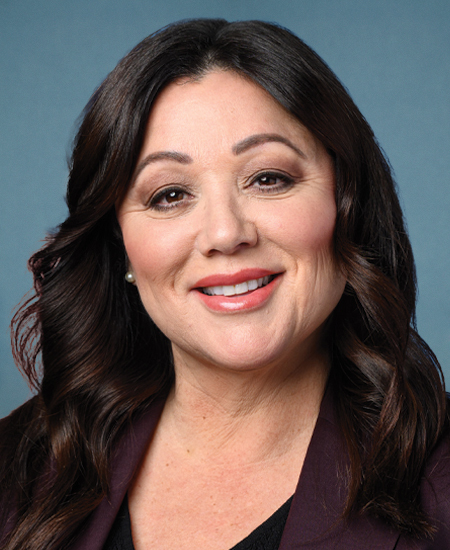
Rep. Lori Chavez-DeRemer
Sponsored bills
Maddy summaryThis bill establishes a USDA initiative (2024-2028) to prioritize funding for childcare improvements in rural and agricultural communities. It directs existing USDA programs - like the Essential Community Facilities program and RISE grants - to give priority to projects addressing childcare availability, quality, or cost in farming-dependent counties (using 2015 ERS county codes). Qualified applicants must be licensed childcare providers meeting state health/safety standards. The USDA must evaluate funded projects and report on impacts within three years.
This resolution condemns Iran for the 1988 massacre of political prisoners. It also urges the Biden Administration and U.S. allies to publicly condemn the massacre and to pressure Iran to provide information to the families of the victims.
Maddy summaryHR 5064, the Public Housing Fire Safety Act, requires the Department of Housing and Urban Development (HUD) to inspect public housing for automatic sprinkler systems and report findings to Congress within three years. It establishes a competitive grant program using $25 million annually (2024-2033) from the Capital Fund to retrofit older public housing projects without sprinklers, excluding newly rebuilt properties. The bill directly affects public housing agencies managing buildings that lack sprinklers, providing funding to install them while clarifying that inspections and grants do not mandate retrofits for all properties. Key provisions include mandatory reporting on fire safety gaps and targeted funding to improve safety in older housing units.
Maddy summaryHR 4963, the Tax Fairness for Workers Act, would restore tax deductions for certain employee expenses. It creates an above-the-line deduction for union dues and expenses paid by wage-earning employees, and allows miscellaneous itemized deductions for other work-related expenses (like uniforms or supplies) that were previously disallowed after 2017 tax law changes. These provisions directly affect employees who pay union dues or incur qualifying job-related costs. The bill amends specific sections of the Internal Revenue Code to make these deductions available for taxable years beginning after December 31, 2022. It does not change tax rates or provide new benefits, only reinstating previously eliminated deductions for eligible workers.
Protect Innocent Victims Of Taxation After Fire Act This bill excludes from gross income, for income tax purposes, any amount received after 2019 and before 2026 by an individual taxpayer as a qualified wildfire relief payment. The bill defines such payment as compensation for expenses or losses incurred as a result of a federally declared forest or range fire disaster.
Maddy summaryHR 4911 establishes a 3-year pilot program to improve law enforcement responses to mental health crises. It provides grants of up to $300,000 each to community mental health centers (in each of four U.S. census regions) to place licensed social workers with small law enforcement agencies (under 100 officers). These social workers will coordinate on calls involving mental health issues, aiming to enhance safety for both officers and community members. The program, funded by $2.5 million over three years, expires after three years, requiring the Attorney General to report on outcomes to Congress.
Maddy summaryHR 3933, the TAP Promotion Act, requires standardized presentations about Veterans Affairs (VA) benefits during military transition counseling for service members separating from the armed forces. These presentations must be approved by the VA, delivered by authorized veterans service organizations (VSOs), and include information on how VSOs assist with VA claims - without encouraging membership in specific organizations. The bill mandates a one-hour limit per presentation and requires the VA to submit annual reports to Congress detailing which VSOs presented, attendance numbers, and recommendations for improvement. This policy directly affects service members preparing for civilian life and the VSOs providing these transition resources.
Maddy summaryThis bill directs the U.S. Treasury to mint commemorative coins marking the Marine Corps' 250th anniversary in 2025. It authorizes three coin types: $5 gold coins (max 50,000), $1 silver coins (max 400,000), and half-dollar coins (max 750,000), with surcharges of $35, $10, and $5 respectively. The surcharge proceeds will fund the Marine Corps Heritage Center's educational programs, with no net cost to taxpayers as the Treasury must recover all minting costs through the surcharges. The coins can only be issued during 2025, and the Treasury must ensure all costs are covered before distributing funds to the Heritage Foundation.
Maddy summaryHR 984, the Commitment to Veteran Support and Outreach Act, authorizes $50 million annually (2024-2028) for grants to states and tribes to improve outreach to veterans and their families. The bill provides funding to hire more county/Tribal veterans service officers, expand existing outreach programs, and ensure equitable access to benefits for vulnerable groups like American Indian veterans, elderly veterans, and women veterans. States and tribes must submit detailed plans, track how quickly veterans receive benefits, and report annually on progress toward outcome measures set by the Veterans Affairs Secretary. Grants must supplement, not replace, existing state/local funding and prioritize areas with critical officer shortages or high veteran suicide rates.