Maddy summaryHR 4800, the GATES Act, modifies a provision in the Food Security Act of 1985 to create a new exception for agricultural income. It allows farmers, ranchers, and forestry businesses to receive certain payments or benefits without being subject to income limits if 75% or more of their average adjusted gross income comes from these activities. To qualify, these entities must provide documentation to the Secretary (typically the USDA) proving their income source. This change directly affects agricultural producers receiving federal payments by expanding eligibility for those primarily engaged in farming, ranching, or forestry.
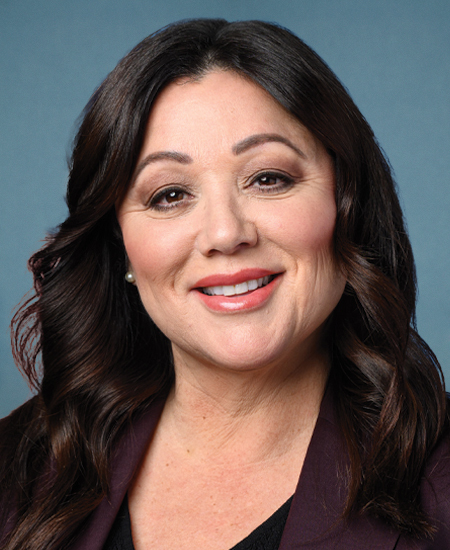
Rep. Lori Chavez-DeRemer
Sponsored bills
Investing in Rural America Act This bill allows Farm Credit System (FCS) institutions to provide financing and technical assistance for essential community facility projects as part of the Department of Agriculture's Community Facilities Direct Loan & Grant Program. (This program provides funding to develop essential community facilities in rural areas.) The FCS financing and technical assistance may be provided in order to make capital available to develop, build, maintain, improve, or provide other support for essential community facilities in rural communities (e.g., certain facilities that provide healthcare, community support, public safety, educational, or utility services). Under the bill, the financing provided by an FCS institution may not exceed 15% of the institution’s total assets unless the FCS institution offers at least one non-FCS lending institution an interest in the financing under reasonable terms and conditions acceptable to the borrower. The FCS institution must also report the offer to the Farm Credit Administration (FCA). The FCA must submit an annual report to Congress on the activities undertaken by FCS institutions under this bill, including through the partnerships between FCS institutions and other lending institutions. The FCA must post the report on the agency's website.
Advancing Automation Research and Development in Agriculture Act This bill directs the Department of Agriculture (USDA) to establish within USDA a stand-alone competitive research and extension grant program to increase the competitiveness of specialty crops in the United States through the advancement and acceleration of mechanization and automation. Specialty crops are fruits and vegetables, tree nuts, dried fruits, and horticulture and nursery crops (including floriculture). The bill provides specified funds for FY2024 and each succeeding year to carry out the program. The grant program includes projects that create or improve cost-effective technologies to reduce a specialty crop grower's manual labor requirements and increase the efficiency of crop production, resource management, harvesting, processing, post-harvest technologies, and packaging; increase adoption of mechanization and automation technologies; and accelerate automation and mechanization through prototype development, in-field trial testing, ongoing industry engagement, and rapid commercialization. Entities eligible for the grant program are federal agencies, national laboratories, colleges and universities, research institutions and organizations, private organizations and corporations, state agricultural experiment stations, individuals, and organizations representing specialty crop growers.
This bill requires various changes to the passport application process and addresses related issues. The bill requires all U.S. regular passports to contain a written notice advising travelers (1) to check travel.state.gov for updated travel warnings, (2) to register with the Department of State prior to overseas travel, (3) that many countries deny entry to travelers whose passport expires within six months, and (4) to renew their passports within at least one year of the expiration date. Further, the bill makes permanent existing State Department authority to assess a surcharge on the passport application fee to cover the costs of increased demand prompted by certain legal requirements. This authority currently expires on September 30, 2026. For three years starting from this bill's enactment, the State Department may use direct hire authority to expedite the hiring of individuals into Passport and Visa Examining positions (Series 0967). Finally, the bill requires the Department of State to report to Congress about passport processing wait times, agency plans for a public outreach campaign, and related information.
Supporting Equity for Aquaculture and Seafood Act or the SEAS Act This bill directs the Department of Agriculture (USDA) to increase support for aquaculture grants and assistance. (Aquaculture is the controlled breeding, rearing, and harvesting of fish, shellfish, and sea vegetables.) Specifically, the bill directs USDA to give aquaculture producers the same consideration as animal agriculture producers in awarding grants or other assistance. Further, USDA must ensure adequate and fair funding levels for aquaculture producers under USDA programs. USDA must also provide its staff with specific education and trainings on aquaculture. USDA must submit to Congress (1) an annual report that includes information on USDA seafood and aquaculture purchases and grants, and (2) a report on USDA's role in supporting aquaculture and the seafood industry. USDA must make competitive grants (e.g., to regional aquaculture centers or nonprofit organizations) to develop next generation technology to reduce pollution and fuel usage in the seafood and aquaculture industries. Further, Agriculture and Food Research Initiative program grants must address methods of increasing the survival rate and adaptability of shellfish, including resistance to heat, disease, salinity, and acidification. In addition, the federal crop insurance program (FCIP) must research and develop a policy to insure aquaculture products and the Federal Crop Insurance Corporation (the agency that finances FCIP operations) must establish a policy to insure aquaculture products.

Maddy summaryHR 4981, the No Tolls on Oregon Roads Act of 2023, prohibits the use of federal funds for tolling on Interstate 5 and Interstate 205 in Oregon. The bill amends federal transportation law to block the Secretary of Transportation from approving tolls on these specific highways using grant money or federal participation. This directly affects Oregon drivers using these major routes and federal transportation programs managing highway funding. The key provision explicitly bans tolling on I-5 and I-205 in Oregon through amendments to the U.S. Code governing highway projects and pilot programs.
Maddy summaryHR 4982, the Tolling Transparency Act of 2023, requires federal agencies to conduct an economic impact study before new toll facilities or toll-based projects can begin collecting tolls. This study examines effects on local businesses, traffic shifts to city/county roads, mitigation effectiveness, modeling reliability, and impacts on low-income residents and seniors. Public authorities operating toll projects must complete this study as part of the National Environmental Policy Act (NEPA) review process. The Secretary of Transportation can block tolling if the study shows unreasonable adverse impacts, giving communities a formal review step before tolls are implemented.
Smoke Exposure Crop Insurance Act of 2023 This bill requires the federal crop insurance program (FCIP) to provide for the research and development of a policy to insure wine grapes (including wine grapes produced in California, Oregon, and Washington) against losses due to wildfire smoke exposure. (The term policy means an insurance policy, plan of insurance, provision of a policy or plan of insurance, and related materials.) The Federal Crop Insurance Corporation, the agency that finances FCIP operations, must make any resulting policy available that meets specified FCIP requirements. The FCIP must also submit a report to Congress on the research and any resulting policy. The report must include the feasibility of a policy that allows producers to claim an indemnity through post-harvest, post-vinification testing if such testing demonstrates smoke damage that was not detectable prior to harvest.
Fair Access to Agriculture Disaster Programs Act This bill waives the adjusted gross income limitations for payments or benefits under specific Department of Agriculture (USDA) disaster assistance programs for a person or legal entity that derives a portion of their income from agriculture. (Currently, a person or entity is not eligible to receive certain benefits during a crop, fiscal, or program year if their average gross income exceeds $900,000.) Specifically, in the case of an excepted payment or benefit, the adjusted gross income limitation is waived if 75% or more of the average adjusted gross income for the person or entity is derived from farming, ranching, or silviculture activities. These activities include agritourism, direct-to-consumer marketing of agricultural products, and the sale of agricultural equipment owned by such person or entity. The bill applies to the USDA Livestock Indemnity Program; Livestock Forage Disaster Program; Emergency Assistance for Livestock, Honey Bees, and Farm-Raised Fish Program; Tree Assistance Program; and Noninsured Crop Disaster Assistance Program.
Maddy summaryHR 3904, the "Crop Insurance for Future Farmers Act," increases federal crop insurance subsidies for beginning farmers and ranchers. It revises the definition of a "beginning farmer" from 5 to 10 crop years of experience, allowing more new operators to qualify. The bill also establishes a tiered subsidy system: new farmers receive 15 percentage points higher subsidies for their first two years, 13 points for the third year, 11 points for the fourth year, and 10 points for years five through ten. This directly affects new agricultural producers by making crop insurance more affordable during their early years of operation.