

Federal Firefighters Fairness Act of 2022 This bill makes it easier for federally employed firefighters who contract certain illnesses to qualify for federal workers' compensation. Specifically, the bill provides that chronic obstructive pulmonary disease, mesothelioma, and specified other cancers of those employed in fire protection activities for at least five years are presumed to be proximately caused by such employment for purposes of a disability or death claim under the federal workers' compensation program. This presumption also applies to federal employees employed in fire protection activities for at least five years who experience a sudden cardiac event or stroke within 24 hours of performing a fire protection activity. The bill also requires the Department of Labor to conduct a review to determine whether breast cancer, gynecological cancer, and rhabdomyolysis should be included under the presumption and to conduct periodic reviews to determine whether other diseases should be included. In addition, a person may petition Labor to include another disease under the presumption. An employee in fire protection activities is a firefighter, paramedic, emergency medical technician, rescue worker, ambulance personnel, or hazardous material worker who (1) is trained in fire suppression; (2) has the legal authority and responsibility to engage in fire suppression; (3) is engaged in the prevention, control, and extinguishing of fires or response to emergency situations where life, property, or the environment is at risk, including the prevention, control, suppression, or management of wildland fires; and (4) performs such activities as a primary responsibility.
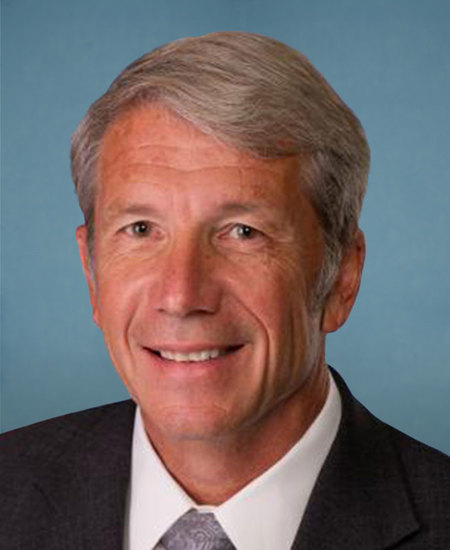
Rep. Kurt Schrader
Sponsored bills
New Era of Preventing End-Stage Kidney Disease Act This bill addresses rare kidney diseases through research, training for health professionals, and other means. It also modifies requirements for Medicare drug plan formularies that include drugs for rare diseases or conditions. The Department of Health and Human Services (HHS) must convene a conference focused on diagnosis and treatment of rare kidney diseases; study risk factors, access to care (including to genetic and genomic testing), and other matters related to rare kidney diseases; and establish grants for supporting kidney disease education and referrals in communities of color. HHS may award grants to educate and train health professionals about kidney disease and nephrology. Additionally, health professional schools that receive certain HHS funding for educating underrepresented minority individuals must support postgraduate nephrology training. The National Institutes of Health (NIH) must report on diversity in its kidney disease research. The NIH may also (1) support research on rare kidney diseases that, among other requirements, includes persons of color in study populations; and (2) establish regional centers of excellence for rare kidney diseases. The Centers for Medicare & Medicaid Services must evaluate methods for (1) treating rare kidney diseases, with a focus on delaying dialysis and transplant; and (2) raising awareness about rare kidney diseases, including in communities of color. Furthermore, if a Medicare drug plan formulary includes a drug to treat a rare disease or condition, at least two members of the committee that develops or reviews the formulary must have expertise in the field of medicine related to that drug.
Maddy summaryHRES 1048 is a symbolic resolution recognizing small businesses for their role in climate action. It acknowledges that small businesses (comprising 90% of global businesses and supporting millions of U.S. jobs in clean energy sectors) are critical to addressing climate change. The resolution states the House’s commitment to empowering small businesses to reduce emissions and build environmental resilience, but it contains no binding policy changes, funding, or new requirements. As a non-binding resolution, it does not create enforceable obligations or alter existing laws.
Medicaid VBPs for Patients Act or the MVP Act This bill provides statutory authority for regulations that allow for the use of varying best price points under value-based purchasing arrangements for purposes of the Medicaid Drug Rebate Program. ( Value-based purchasing arrangements refer to arrangements in which the price of a drug is linked to clinical outcomes; such arrangements are particularly used for new high-cost treatments, such as gene therapies.) The Government Accountability Office must study the impact of value-based purchasing arrangements on federal health care programs, including with respect to the bill's changes.
Supply Chain Disruptions Relief Act This bill modifies the treatment of liquidations of new motor vehicle inventory as qualified LIFO (last in first out accounting method) inventory. It allows new motor vehicle dealers to elect to wait until the end of 2025 to replace their inventory for purposes of determining income attributable to the sale of such inventory during 2020 and 2021.
Emmett Till Antilynching Act This bill makes lynching a federal hate crime offense. Specifically, the bill imposes criminal penalties—a fine, a prison term of up to 30 years, or both—on an individual who conspires to commit a hate crime offense that results in death or serious bodily injury or that includes kidnapping or an attempt to kidnap, aggravated sexual abuse or an attempt to commit aggravated sexual abuse, or an attempt to kill.
Equitable Community Access to Pharmacist Services Act This bill expands Medicare coverage to permanently include services provided by a pharmacist, including incidental services and supplies, related to testing, drug regimens, and vaccines for COVID-19, influenza, and certain other illnesses. Specifically, the bill provides for continued coverage of pharmacist services relating to testing and vaccines for COVID-19 and influenza, as well as coverage of testing for respiratory syncytial virus and streptococcal pharyngitis (i.e., strep throat) and the initiation of drug regimens that are used to treat COVID-19, influenza, or strep throat. It also generally provides for coverage of pharmacist services during a public health emergency or to address health equity. A pharmacist, or the facility with which the pharmacist is contracted or employed, may present a claim for reimbursement of 85% (or 100% during a declared emergency) of the applicable amount. A pharmacist may not bill an individual for such a service other than for the applicable deductible or coinsurance amounts.
Creating a Respectful and Open World for Natural Hair Act of 2022 or the CROWN Act of 2022 This bill prohibits discrimination based on a person's hair texture or hairstyle if that style or texture is commonly associated with a particular race or national origin. Specifically, the bill prohibits this type of discrimination against those participating in federally assisted programs, housing programs, public accommodations, and employment. Persons shall not be deprived of equal rights under the law and shall not be subjected to prohibited practices based on their hair texture or style. The bill provides for enforcement procedures under the applicable laws.
Forced Arbitration Injustice Repeal Act of 2022 or the FAIR Act of 2022 This bill prohibits a predispute arbitration agreement from being valid or enforceable if it requires arbitration of an employment, consumer, antitrust, or civil rights dispute.
Dr. Lorna Breen Health Care Provider Protection Act This bill establishes grants and requires other activities to improve mental and behavioral health among health care providers. Specifically, the Department of Health and Human Services (HHS) must award grants to hospitals, medical professional associations, and other health care entities for programs to promote mental health and resiliency among health care providers. In addition, HHS may award grants for relevant mental and behavioral health training for health care students, residents, or professionals. Additionally, HHS must conduct a campaign to (1) encourage health care providers to seek support and treatment for mental and behavioral health concerns, and (2) disseminate best practices to prevent suicide and improve mental health and resiliency among health care providers. HHS must also study and develop policy recommendations on improving mental and behavioral health among health care providers, removing barriers to accessing care and treatment, and identifying strategies to promote resiliency. Furthermore, the Government Accountability Office must report on the extent to which relevant federal grant programs address the prevalence and severity of mental health conditions and substance use disorders among health care providers.