This resolution supports the designation of National Clean Energy Week.
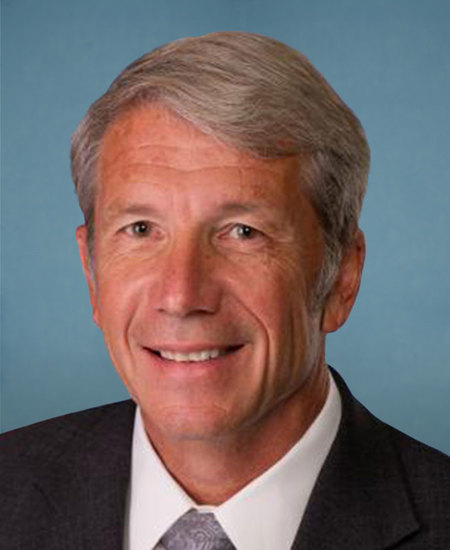
Rep. Kurt Schrader
Sponsored bills
Commonsense Reporting Act of 2021 This bill addresses the eligibility verification process for the premium assistance tax credit and cost-sharing subsidy under the Patient Protection and Affordable Care Act (PPACA). It requires the Department of the Treasury to develop and implement a reporting system that allows employers to voluntarily report information about their health plans for the current plan year prior to the beginning of open enrollment. The bill also allows electronic transmission of employee and enrollee statements and permits Treasury to accept full names and dates of birth in lieu of dependents' and spouses' Social Security numbers. The bill also allows certain large employers who do not offer their employees minimum health care coverage 90 days to appeal an assessment for not providing such coverage. The Government Accountability Office must evaluate (1) for the period beginning on January 1, 2015, and ending on December 31, 2020, the notification of employers by PPACA exchanges of the eligibility of employees for advance payments of the premium assistance tax credit or cost-sharing subsidies; and (2) for calendar year 2022, the functionality of the prospective reporting system established by this bill, including the accuracy of information collected.
2020 WHIP+ Reauthorization Act This bill expands disaster indemnity programs through which the Department of Agriculture provides payments to agricultural producers for crop and milk losses resulting from hurricanes, wildfires, and other qualifying natural disasters. In particular, the bill extends the Wildfire and Hurricane Indemnity Program Plus (WHIP+), the On-Farm Storage Loss Program, and the Milk Loss Program to make losses that occurred in the 2021 and 2022 calendar years eligible for payments. Under current law, these programs provide disaster payments to agricultural producers with crop and milk losses resulting from qualifying natural disasters that occurred in the 2018 and 2019 calendar years.

Supporting Early-childhood Educators' Deductions Act or the SEED Act This bill expands the tax deduction for the expenses of elementary and secondary school teachers to include early childhood educators.
John R. Lewis Voting Rights Advancement Act of 2021 This bill establishes new criteria for determining which states and political subdivisions must obtain preclearance before changes to voting practices may take effect. Preclearance is the process of receiving preapproval from the Department of Justice (DOJ) or the U.S. District Court for the District of Columbia before making legal changes that would affect voting rights. A state and all of its political subdivisions shall be subject to preclearance of voting practice changes for a 10-year period if 15 or more voting rights violations occurred in the state during the previous 25 years; 10 or more violations occurred during the previous 25 years, at least 1 of which was committed by the state itself; or 3 or more violations occurred during the previous 25 years and the state administers the elections. A political subdivision as a separate unit shall also be subject to preclearance for a 10-year period if three or more voting rights violations occurred there during the previous 25 years. States and political subdivisions that meet certain thresholds regarding minority groups must preclear covered practices before implementation, such as changes to methods of election and redistricting. Further, states and political subdivisions must notify the public of changes to voting practices. Next, the bill authorizes DOJ to require states or political subdivisions to provide certain documents or answers to questions for enforcing voting rights. The bill also outlines factors courts must consider when hearing challenges to voting practices, such as the extent of any history of official voting discrimination in the state or political subdivision.
This resolution expresses the sense of the House of Representatives that the United States shall recognize kind actions in our country, encourage kindness, spread love, and foster a culture of being kind to one another.
Harlem Hellfighters Congressional Gold Medal Act This bill provides for the award of a Congressional Gold Medal to the 369th Infantry Regiment, commonly known as the Harlem Hellfighters, in recognition of their bravery and outstanding service during World War I.
Puppies Assisting Wounded Servicemembers for Veterans Therapy Act or the PAWS for Veterans Therapy Act This bill implements a program and a policy related to service dog therapy for veterans. Specifically, the bill requires the Department of Veterans Affairs (VA) to implement a five-year pilot program to provide canine training to eligible veterans diagnosed with post-traumatic stress disorder as an element of a complementary and integrative health program. Eligible veterans are those who are enrolled in the VA health care system and have been recommended for participation by a qualified mental health care provider or clinical team. The VA must seek to enter agreements containing specified elements with accredited nongovernmental entities that have demonstrated ability to provide canine training. Veterans who participate in the program are authorized to adopt the dog they assisted in training if their health provider determines it is in the best interest of the veteran. The VA must establish processes to document and track the progress of participating veterans with respect to health benefits and improvements. The Government Accountability Office must brief Congress and submit a report on the program. The bill also authorizes the VA to provide service dogs to veterans with mental illnesses, regardless of whether they have a mobility impairment.
This concurrent resolution expresses the sense of Congress that the President should seek the elimination of all subsidies benefiting the production or export of sugar by certain foreign countries.
Forest Improvements through Research and Emergency Stewardship for Healthy Ecosystem Development and Sustainability Act or the FIRESHEDS Act This bill directs the Department of Agriculture (USDA), with respect to National Forest System lands, and the Department of the Interior, with respect to public lands, no later than 90 days after receiving a request from a state, to enter into an agreement with such state to jointly designate one or more fireshed management areas within such state, and conduct fireshed management projects in such fireshed management areas. Not later than 90 days after entering into an agreement, the USDA or Interior, as appropriate, and such state shall jointly conduct a stewardship and fireshed assessment. The USDA and Interior shall carry out fireshed management projects in accordance with the timeline and project size limitations included in the stewardship and fireshed assessment. Fireshed management projects shall be categorically excluded from the preparation of an environmental assessment or an environmental impact statement and exempt from the special administrative review process. The bill makes permanent the authority for a state to use revenue from timber sales under a good neighbor agreement for forest, rangeland, and watershed restoration services.