

Maddy summaryThis bill would add pharmacist services to Medicare Part B coverage for beneficiaries, specifically covering pharmacist-led testing and treatment for illnesses like flu, COVID-19, or strep throat during public health emergencies. It defines covered services as those performed under state law, often requiring collaboration with a physician, and sets payment at 80% of the lesser of the actual charge or 85% of physician payment rates. Pharmacists would be prohibited from balance billing for these services, ensuring Medicare beneficiaries pay only their standard copayment. The changes would take effect January 1, 2026.
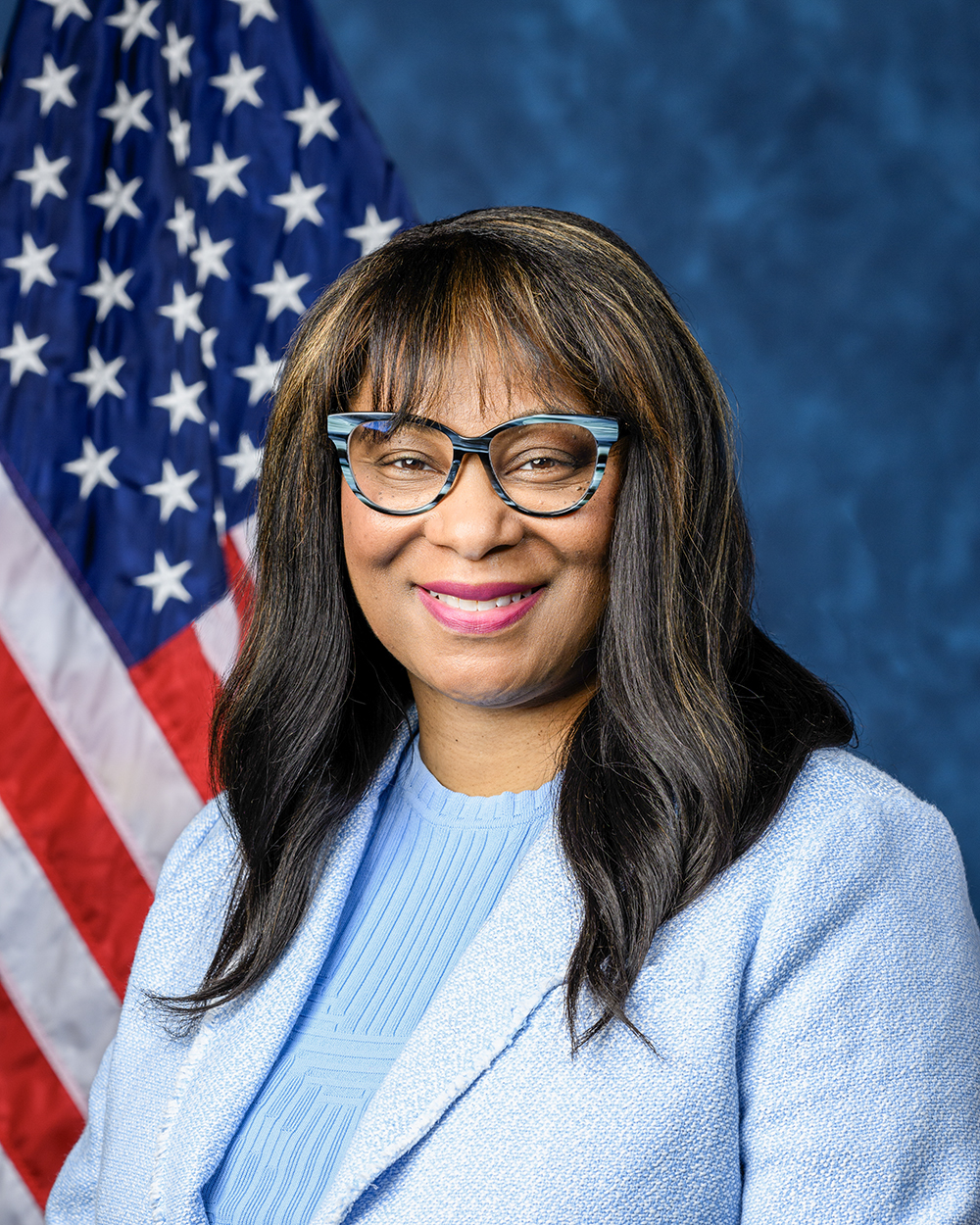
Rep. Janelle S. Bynum
Sponsored bills
Maddy summaryThis bill authorizes the U.S. Mint to produce commemorative $5 gold and $1 silver coins marking the 25th anniversary of the September 11, 2001, terrorist attacks. The coins must feature designs honoring victims and first responders (including the inscription "Never Forget") and will be sold only during 2027-2028. All surcharges ($35 per gold coin, $10 per silver coin) collected from sales will fund the National September 11 Memorial and Museum at the World Trade Center, with no net cost to the federal government. The coins are legal tender but primarily intended for collectors, not circulation.
Maddy summaryThe Smithsonian American Women’s History Museum Act authorizes the creation of a new Smithsonian museum dedicated to women’s history, to be located within the National Mall Reserve in Washington, D.C. If the site is managed by another federal agency, the bill requires that agency to transfer the land after notifying Congress and relevant committees. The museum must ensure exhibits and programs accurately represent diverse women’s experiences by consulting a broad range of experts and community voices. The Smithsonian will submit biennial reports to Congress detailing how the museum meets these representation standards.
Maddy summaryThe Closing the HPV Testing Gap Act directs the National Institutes of Health to conduct a comprehensive study on developing a standardized, noninvasive test for human papillomavirus in men. This research must be completed within 24 months and will involve coordination with federal agencies like the CDC and the FDA, as well as scientific experts and community stakeholders. The study aims to evaluate various testing methods, assess feasibility across diverse populations, and provide recommendations for future implementation and regulatory approval. Additionally, the bill requires an interagency working group to oversee the process and mandates a final report to Congress within 30 months outlining findings and strategies for improving cancer prevention and health equity.
Dental Care for Veterans Act This bill expands eligibility for veterans for dental care provided by the Department of Veterans Affairs (VA). Specifically, the bill makes all veterans who are enrolled in the VA health care system eligible for VA-provided dental services. Currently, only veterans who have a service-connected dental issue or meet other narrow criteria are eligible for certain dental services. The bill phases in eligibility over four years based upon existing eligibility, degree of service-connected disability or other disability, prisoner of war status, award of a Purple Heart, financial need, or VA health care eligibility.
Maddy summaryThis bill designates May 2026 as National Electrical Safety Month to raise public awareness about electrical hazards in homes, schools, and workplaces. It encourages citizens to adopt safety habits, such as inspecting for hazards and installing protective devices like smoke alarms and ground-fault circuit interrupters. The resolution also supports the work of the Electrical Safety Foundation International and requests that the President issue a proclamation to promote safety programs during the designated month.
Maddy summaryThe Incentivizing Local Solutions to Homelessness Act allows local organizations receiving federal homeless assistance funds to request an exemption from spending limits for the years 2027 through 2030. To qualify, these organizations must demonstrate local needs, submit a detailed spending plan, and gather public input before asking the Department of Housing and Urban Development for approval. The Department must publish all requests and decisions online and will deny any waiver if the organization plans to move people without first offering emergency or permanent housing options. If a local group later wants to cancel its waiver, it must inform the Department and share public feedback with subrecipients before the change takes effect.
Maddy summaryThe IGNITE HBCU Excellence Act authorizes federal grants to Historically Black Colleges and Universities (HBCUs) to fund long-term improvements to their campus facilities and infrastructure. These grants are awarded competitively to eligible HBCUs based on criteria such as the age of their facilities, deferred maintenance needs, financial capacity, and student enrollment levels. Recipients may use the funds to construct or renovate buildings, upgrade technology and broadband systems, improve safety measures, and develop workforce training hubs, while being prohibited from using the money for routine maintenance or athletic facilities. The legislation also includes provisions for reporting on project outcomes and requires institutions to create comprehensive master plans that involve consultation with diverse campus and community stakeholders.
This resolution expresses support for police officers and other law enforcement personnel. The resolution further recognizes law enforcement officers across the United States in the pursuit of preserving safe and secure communities; the need to ensure that such officers have the equipment, training, and resources necessary to protect their health and safety while they are protecting the public; and the law enforcement community for acts of sacrifice and heroism. The resolution expresses condolences and appreciation to the loved ones of each law enforcement officer who has made the ultimate sacrifice in the line of duty.
Maddy summaryThis bill would amend federal law to strengthen penalties for organized retail crime by expanding definitions of theft to include digital goods, gift cards, and setting a $5,000 aggregate value threshold for charges over a 12-month period. It would establish a new "Organized Retail and Supply Chain Crime Coordination Center" under Homeland Security to coordinate Federal, State, local, and Tribal law enforcement efforts against cross-jurisdictional theft groups. The Center would share information with retailers, transportation companies, and law enforcement agencies, track crime trends, and produce annual reports on organized retail crime. This legislation directly affects retailers, supply chain businesses, and law enforcement agencies, while targeting organized crime groups responsible for a 93% increase in larceny incidents and rising safety concerns for retail employees. The bill aims to address significant financial losses and supply chain disruptions noted in the National Retail Federation's 2023 data.