

Veteran Deportation Prevention and Reform Act This bill provides protections from deportation for noncitizen veterans and contains other related provisions. U.S. Immigration and Customs Enforcement (ICE) must identify each individual in removal proceedings who is a member of the Armed Forces, a veteran, or a noncitizen spouse or minor child of such an individual. That individual may not be removed until (1) ICE has transferred that individual's case files to an advisory committee created under this bill, and (2) that committee has provided recommendations as to the outcome of the case. The Department of Homeland Security (DHS) shall create a system to share information across various agencies about noncitizen veterans who may be subject to removal to ensure that such a veteran's military service is taken into consideration in immigration-related cases. DHS shall also create a system for (1) identifying noncitizens who are or may be veterans, and (2) collecting data relating to such noncitizens who are in removal proceedings or may have been removed. DHS and the Department of Defense must jointly carry out a program to naturalize a noncitizen (and the noncitizen's spouse and minor children) who serves on active duty in the Armed Forces and is not otherwise ineligible for citizenship if that noncitizen submits an application. DHS shall also establish a program for eligible noncitizen veterans (generally those not convicted for certain serious crimes) to obtain permanent resident status. Similarly, the Department of Justice shall provide permanent resident status to such an eligible veteran in removal proceedings or subject to a final order of removal.
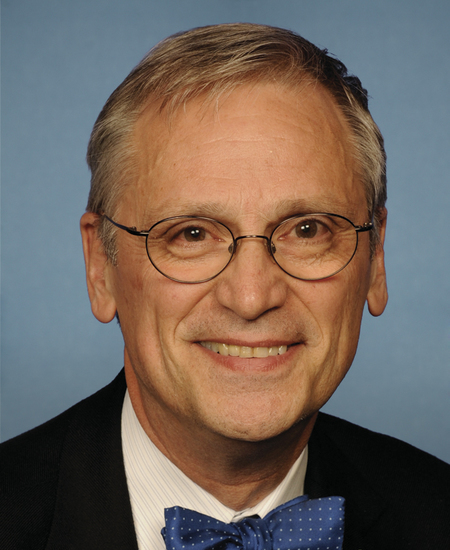
Rep. Earl Blumenauer
Sponsored bills
Emmett Till Antilynching Act This bill makes lynching a federal hate crime offense. Specifically, the bill imposes criminal penalties—a fine, a prison term of up to 30 years, or both—on an individual who conspires to commit a hate crime offense that results in death or serious bodily injury or that includes kidnapping or an attempt to kidnap, aggravated sexual abuse or an attempt to commit aggravated sexual abuse, or an attempt to kill.
Equitable Community Access to Pharmacist Services Act This bill expands Medicare coverage to permanently include services provided by a pharmacist, including incidental services and supplies, related to testing, drug regimens, and vaccines for COVID-19, influenza, and certain other illnesses. Specifically, the bill provides for continued coverage of pharmacist services relating to testing and vaccines for COVID-19 and influenza, as well as coverage of testing for respiratory syncytial virus and streptococcal pharyngitis (i.e., strep throat) and the initiation of drug regimens that are used to treat COVID-19, influenza, or strep throat. It also generally provides for coverage of pharmacist services during a public health emergency or to address health equity. A pharmacist, or the facility with which the pharmacist is contracted or employed, may present a claim for reimbursement of 85% (or 100% during a declared emergency) of the applicable amount. A pharmacist may not bill an individual for such a service other than for the applicable deductible or coinsurance amounts.
Homes for All Act of 2021 This bill provides funding for the construction of new public housing units, authorizes additional assistance for the construction of new affordable housing units, and otherwise addresses housing affordability. Specifically, the bill provides permanent, mandatory funding for the capital and operating funds available to public housing agencies (PHAs) and allows PHAs to use such funds to construct new public housing units. Under current law, a PHA generally may not use such funds to construct public housing units if doing so would result in a net increase of the number of public housing units owned, assisted, or operated by the PHA. The bill also (1) provides annual funding through FY2032 for the construction of new public housing units; and (2) authorizes additional assistance through FY2032 from the Housing Trust Fund for the construction of new, private-market, affordable housing units. A PHA may not discriminate, with respect to the rental of a unit developed with assistance under the bill, based on an individual's criminal record or immigration status. Additionally, a PHA receiving such assistance must meet specified requirements with respect to the new units regarding other forms of discrimination, supportive services, environmental standards, and accessibility. Finally, the bill requires the Department of Housing and Urban Development to establish a Community Control and Anti-Displacement Fund to award grants to local governments for the purpose of combatting gentrification and neighborhood destabilization.
Creating a Respectful and Open World for Natural Hair Act of 2022 or the CROWN Act of 2022 This bill prohibits discrimination based on a person's hair texture or hairstyle if that style or texture is commonly associated with a particular race or national origin. Specifically, the bill prohibits this type of discrimination against those participating in federally assisted programs, housing programs, public accommodations, and employment. Persons shall not be deprived of equal rights under the law and shall not be subjected to prohibited practices based on their hair texture or style. The bill provides for enforcement procedures under the applicable laws.
Forced Arbitration Injustice Repeal Act of 2022 or the FAIR Act of 2022 This bill prohibits a predispute arbitration agreement from being valid or enforceable if it requires arbitration of an employment, consumer, antitrust, or civil rights dispute.
This resolution recognizes the important role of local nutrition programs supported through the Older Americans Act of 1965 in addressing senior hunger, malnutrition, and isolation.
Dr. Lorna Breen Health Care Provider Protection Act This bill establishes grants and requires other activities to improve mental and behavioral health among health care providers. Specifically, the Department of Health and Human Services (HHS) must award grants to hospitals, medical professional associations, and other health care entities for programs to promote mental health and resiliency among health care providers. In addition, HHS may award grants for relevant mental and behavioral health training for health care students, residents, or professionals. Additionally, HHS must conduct a campaign to (1) encourage health care providers to seek support and treatment for mental and behavioral health concerns, and (2) disseminate best practices to prevent suicide and improve mental health and resiliency among health care providers. HHS must also study and develop policy recommendations on improving mental and behavioral health among health care providers, removing barriers to accessing care and treatment, and identifying strategies to promote resiliency. Furthermore, the Government Accountability Office must report on the extent to which relevant federal grant programs address the prevalence and severity of mental health conditions and substance use disorders among health care providers.
Cost of War Act of 2022 This bill directs the Department of Defense (DOD) to post on its public website information relating to the cost to U.S. taxpayers of any overseas contingency operation conducted by the U.S. Armed Forces on or after September 18, 2001. DOD must update such information not later than 90 days after the end of each fiscal year.
Sober Truth on Preventing Underage Drinking Reauthorization Act or the STOP Act This bill reauthorizes through FY2027 and revises grants and other activities for reducing underage drinking. In particular, the bill modifies the scope of certain activities to incorporate a focus on the adoption and enforcement of state laws and policies for preventing and reducing underage drinking. This includes (1) assessing in annual reports whether states have adopted best practices related to laws, regulations, and enforcement practices; and (2) establishing a pilot program to collect uniform data from states and localities about their enforcement of underage drinking laws. In addition, the Substance Abuse and Mental Health Services Administration must contract with the National Academy of Sciences to review the research literature regarding the influence of drinking on adolescent brain development.