

Maddy summaryHR 9602, the Forest Legacy Management Flexibility Act, allows states to authorize qualified conservation organizations to acquire, hold, and manage conservation easements under the Forest Legacy Program. This directly affects states administering the program and conservation groups meeting specific criteria, such as IRS-defined conservation status and Land Trust Accreditation Commission accreditation. Key provisions let states approve these organizations to manage easements, require them to meet program standards, and mandate that easements revert to the state or another approved organization if the organization fails to meet responsibilities or modifies easements improperly. The bill updates the Cooperative Forestry Assistance Act to clarify these processes and accountability measures.
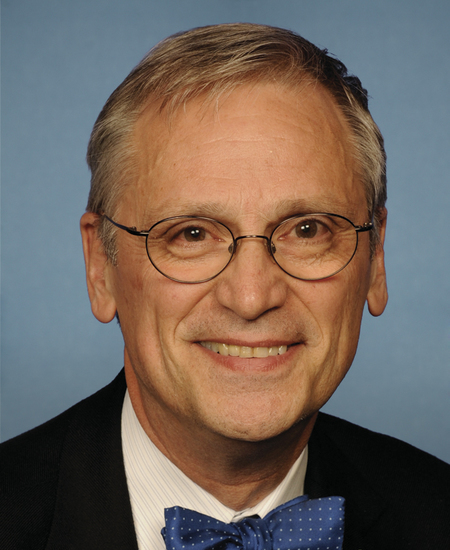
Rep. Earl Blumenauer
Sponsored bills
Maddy summaryHR 7032, the Congressional Budget Office Data Sharing Act, amends the 1974 Congressional Budget Act to give the Congressional Budget Office (CBO) clearer authority to quickly obtain data from executive branch agencies. The bill removes barriers to CBO requests by allowing data sharing "with or without written agreement," while requiring the CBO to maintain required confidentiality levels. It also prevents future laws from limiting this authority unless specifically referenced. The law directly affects the CBO and federal agencies that provide budget-related data, aiming to improve the CBO's ability to analyze government spending.
Maddy summaryThis bill creates a voluntary buyout program for properties that repeatedly flood, allowing the National Flood Insurance Program to purchase homes from owners to prevent future claims. It targets properties identified as repetitive loss or severe repetitive loss properties, or those that would file maximum coverage claims, and permits buyouts even for properties not in special flood hazard areas. The program allows buyout amounts to exceed claim amounts, with the Administrator using National Flood Insurance Fund resources to cover costs while ensuring no delay to existing claim payments. Communities with repetitive flooding issues must develop and implement flood mitigation plans, and the bill provides additional assistance for underserved and high-risk communities to address flooding problems. The goal is to reduce long-term costs to the National Flood Insurance Fund while helping families affected by repeated flooding.
Maddy summaryHR 1719, the Honoring Our Fallen Heroes Act of 2023, establishes a presumption that certain cancers diagnosed in public safety officers (like police and firefighters) are work-related if linked to their duties. It defines 22 specific cancers (including lung, mesothelioma, and WTC-related cancers) as "exposure-related," allowing officers or their families to receive benefits without proving direct work connection, provided they were diagnosed within 15 years of leaving active service. The bill also creates a process for adding new cancers to the list based on scientific evidence, requiring the Bureau to review petitions and make decisions within 180 days. This applies to deaths or disabilities occurring on or after January 1, 2023, directly affecting officers who developed covered cancers during service.
Maddy summaryThe PROGRESS Act creates two new tax credits to support small businesses that hire their first employee. The Small Business Investor Tax Credit allows investors to claim up to 10% of their investment (capped at $10,000 annually) in qualifying businesses that meet specific wage and ownership requirements. The First Employee Business Wage Credit provides a 25% credit on wages paid to the business's first employee, also capped at $10,000 annually. Both credits require businesses to certify they have at least one full-time employee and meet income limits for investors. These provisions apply to taxable years beginning after December 31, 2024.
Maddy summaryHRES 1489 is a symbolic House resolution designating the week of September 23-27, 2024, as "National Clean Energy Week." It expresses congressional support for recognizing clean energy's role in economic growth (citing 8.35 million jobs in the sector) and encourages voluntary actions like public awareness, investment in clean energy technologies, and supporting local clean energy jobs. The resolution does not create new laws, funding, or obligations - it only formally endorses the week-long observance to highlight clean energy’s economic and environmental benefits. It directly affects no specific group but aims to raise national awareness of the clean energy sector.
Maddy summaryHRES 1491 is a ceremonial resolution designating October 23, 2024, as "Public Radio Music Day" to honor public radio music stations. It expresses the House's appreciation for these stations' role in serving listeners, musicians, and communities across all 50 states, the District of Columbia, and Puerto Rico. The resolution highlights how these noncommercial stations provide unique access to diverse music genres, support local artists, and foster community cultural engagement. As a symbolic gesture with no legal or financial impact, it does not change any policies or directly affect specific groups beyond recognizing the stations' contributions.
Maddy summaryHRES 1473 is a non-binding resolution passed by the U.S. House of Representatives that condemns racism, bigotry, and misinformation targeting Haitian people and their descendants. It celebrates the historical contributions of Haitian Americans to U.S. society, including founding cities (like Chicago via Jean Baptiste Point du Sable), advancing civil rights (W.E.B. Du Bois), and enriching healthcare, education, and culture. The resolution specifically calls on all Americans to reject racist tropes and misinformation, and urges elected officials to promote inclusivity and responsible communication. It was introduced in response to recent false claims that fueled threats against Haitian communities, such as the bomb threats in Springfield, Ohio.
Maddy summaryThis bill directs the U.S. government to immediately restore funding to the United Nations Relief and Works Agency for Palestine Refugees (UNRWA), reversing a temporary funding pause. It repeals two appropriations acts that halted payments and requires the Secretary of State to resume UNRWA funding under existing authorities. The legislation specifically aims to support UNRWA’s critical humanitarian work - providing shelter, education, healthcare, and aid to Palestinian refugees across Gaza, the West Bank, Syria, Lebanon, and Jordan - during an acute famine risk in Gaza. It also mandates quarterly reports to Congress on UNRWA’s implementation of reforms from an independent review, ensuring accountability for its humanitarian mission.
Maddy summaryHR 3800, the Chronic Disease Flexible Coverage Act, clarifies that certain services for chronic conditions (like diabetes or heart disease) listed in IRS Notice 2019-45 must be treated as preventive care under federal tax rules. This means health insurance plans covering these services must provide them without cost-sharing (like copays) for enrollees, directly affecting individuals with chronic conditions and their insurance providers. The bill’s key mechanism simply aligns existing IRS guidance with the tax code, ensuring these specific services are consistently classified as preventive care without altering other IRS rules. It does not create new benefits or change coverage requirements beyond this administrative clarification.