

Revitalizing the Economy of Coal Communities by Leveraging Local Activities and Investing More Act of 2021 or the RECLAIM Act of 2021 This bill revises requirements concerning the Abandoned Mine Reclamation Fund, including by expanding the eligible uses of the fund. Specifically, the bill allows the fund to be used to provide support for economic revitalization, diversification, and development in economically distressed mining communities through the reclamation and restoration of land and water resources adversely affected by abandoned coal mines. In addition, it requires specified amounts to be annually distributed from the fund through FY2026 to states and Indian tribes for reclaiming and restoring lands and waters so affected.
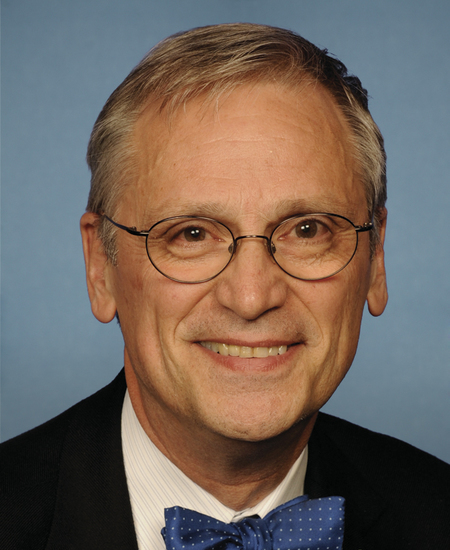
Rep. Earl Blumenauer
Sponsored bills
Driftnet Modernization and Bycatch Reduction Act This bill addresses certain driftnet fishing. Driftnet fishing is a method of fishing in which a gillnet composed of a panel or panels of webbing, or a series of such gillnets, is placed in the water and allowed to drift with the currents and winds for the purpose of entangling fish in the webbing. Currently, the use of large-scale drift gillnets with a total length of 2.5 kilometers or more is prohibited in the United States.The bill expands the definition of large-scale driftnet fishing to prohibit the use of gillnets with a mesh size of 14 inches or greater. This expanded prohibition does not apply within the U.S. exclusive economic zone for five years. The Department of Commerce must conduct a transition program to facilitate the phase out of large-scale driftnet fishing and to promote the adoption of alternative fishing practices that minimize the incidental catch of living marine resources. Commerce must award grants to program participants. Further, the North Pacific Fishery Management Council may recommend and Commerce may approve regulations to collect fees from charter vessel operators that guide recreational anglers who harvest Pacific halibut.
Prevent All Soring Tactics Act of 2022 or the PAST Act of 2022 This bill addresses the practice of soring horses. The soring of horses includes various actions taken on horses' limbs to produce higher gaits that may cause pain, distress, inflammation, or lameness. Specifically, the bill expands soring regulation and enforcement at horse shows, exhibitions, sales, and auctions, including by establishing a new system for inspecting horses for soring. In addition, the bill increases penalties for violations.
Norman Y. Mineta Japanese American Confinement Education Act This bill increases the authorization of appropriations for the Japanese American Confinement Sites (JACS) grant program, which supports the preservation of U.S. confinement sites that were used to detain Japanese Americans during World War II (i.e., internment camps). It also establishes a program within JACS to provide grants to Japanese American nonprofits to educate individuals about the historical significance of these events.
Healthy Meals, Healthy Kids Act This bill reauthorizes and expands (1) child nutrition programs, including the National School Lunch Program (NSLP) and other institutional food service programs; and (2) the Special Supplemental Nutrition Program for Women, Infants, and Children (WIC).
Asunción Valdivia Heat Illness and Fatality Prevention Act of 2022 This bill directs the Occupational Safety and Health Administration to promulgate a standard that requires employers to implement certain measures for protecting workers from heat stress and related illnesses or injuries. Heat stress refers to the load of heat that a person experiences due to sources of heat or heat retention (including metabolic heat, environmental factors, and clothing or personal protective equipment) or the presence of heat in a work setting. Further, if an employer cannot reduce exposure to heat stress below hazardous levels through engineering controls (e.g., heat shields and insulation) or personal protective equipment (e.g., heat reflective clothing), the employer must implement a program that mitigates such exposure through access to appropriate hydration and cool-down spaces, acclimatization policies, and periodic paid rest breaks. Additionally, the bill establishes requirements concerning judicial review, implementation, enforcement, recordkeeping, and whistle-blower protections related to the standard. The bill also requires the Department of Labor to include questions about heat-related illness and injury in the National Agricultural Workers Survey (an employment-based, random-sample survey of U.S. crop workers that collects demographic, employment, and health information).
This concurrent resolution expresses opposition to the application of criminal laws to pregnancy outcomes and affirms that people deserve access to high-quality health care without fear of reprisal or punishment.
This concurrent resolution supports the goals and ideals of the National Day of Silence (during which students vow to remain silent to bring attention to the harassment and discrimination faced by lesbian, gay, bisexual, transgender, queer, nonbinary, Two-Spirit, intersex, and questioning individuals in schools).
This concurrent resolution expresses the sense of Congress for ensuring the speediest end of the COVID-19 pandemic the United States and European governments should unite to enact a World Trade Organization Agreement on Trade-Related Aspects of Intellectual Property Rights waiver, require technology transfer, and otherwise facilitate access in low- and middle-income countries to high-quality COVID-19 mRNA vaccines; and vital U.S. partners, with shared values who also prioritize global cooperation and saving lives and livelihoods worldwide, should unite to remove all obstacles to global access to COVID-19 vaccines, diagnostics, treatments, oxygen, and other medical products to advance the common goal of quickly ending the COVID-19 pandemic. The resolution states that the U.S. government has an obligation to the American people, whose taxpayer funds helped to develop lifesaving COVID-19 vaccines, to ensure that doses are ultimately delivered to those most in need around the world so as to ensure the global COVID-19 vaccination necessary to end the pandemic.
This joint resolution proposes a constitutional amendment related to the fundamental right to vote. Specifically, it grants every U.S. citizen of legal voting age the fundamental right to vote in any public election held in the jurisdiction in which the citizen resides.