

Maddy summaryThe New Deal for New Americans Act of 2023 establishes a National Office of New Americans within the Executive Office of the President to coordinate federal efforts supporting immigrant and refugee integration. It creates several grant programs to provide legal assistance, English language training, and workforce development for immigrants, with specific provisions to reduce financial barriers to citizenship through fee waivers and modifications to English language requirements for seniors. The bill also establishes a "Proud to Be a United States Citizen Program" to promote naturalization and creates automatic voter registration for newly naturalized citizens. These provisions directly affect immigrants and refugees seeking citizenship and integration support, as well as federal agencies responsible for immigration services. The bill aims to improve access to citizenship, enhance integration into American society, and support refugees through comprehensive federal coordination.
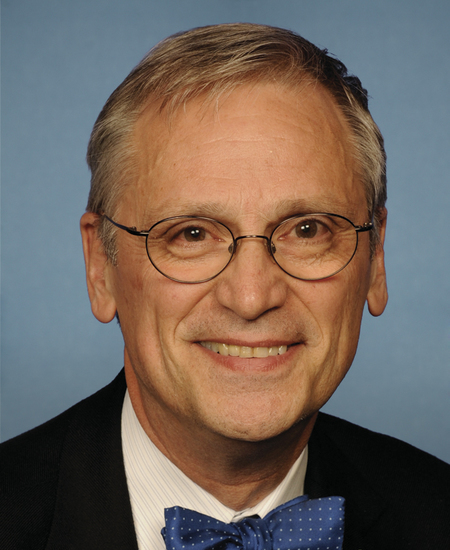
Rep. Earl Blumenauer
Sponsored bills
Maddy summaryHR 1423, the 911 Community Crisis Responders Act of 2023, provides federal grants to states, tribes, and local governments to establish unarmed mobile crisis response teams. These teams respond to nonviolent 911 calls involving mental health, substance use, homelessness, or disabilities - instead of sending police - offering services like de-escalation, referrals to treatment, and transportation. The bill requires teams to operate in groups of two or more, avoid law enforcement oversight, and coordinate with 911 systems to triage calls. Grantees must collect data on call volumes, demographics, and outcomes like reduced ER visits, with reports submitted biannually to the Secretary and Congress.
Maddy summaryThis bill creates a new definition for "currently accepted medical use with severe restrictions" under the Controlled Substances Act, specifically for certain investigational drugs. It applies to drugs designated as breakthrough therapies by the FDA or authorized for expanded patient access under specific emergency protocols for serious diseases with no other treatment options. The definition excludes drugs that are already fully approved under standard FDA pathways or that lose their expanded access status. If a drug no longer meets these strict criteria, the Attorney General must reclassify it into the highest restriction category (Schedule I) within 90 days of notification from the Health Secretary. This changes how certain experimental treatments are classified under federal drug laws.
Maddy summaryHR 1595 establishes a federal grant program to help states improve their licensing systems for firearms dealers. It authorizes annual competitive grants (up to $2.5 million per state per year) for states to develop, implement, or evaluate their dealer licensing programs, provided they already meet minimum standards like requiring 3-year licenses, conducting inspections, and imposing penalties for violations. States receiving grants must report annually on inspections, violations, license status, and other metrics, with the Attorney General also submitting annual reports to Congress. This bill directly affects state governments that operate firearms dealer licensing programs, providing funding to strengthen oversight without changing existing state laws.
Maddy summaryThe PHIT Act of 2023 allows individuals and families to deduct certain fitness expenses as medical costs on their federal taxes. It covers gym memberships, fitness classes, and specific equipment used exclusively for exercise (like home workout gear), with a yearly limit of $1,000 ($2,000 for joint returns). Expenses for activities like golf, hunting, or non-exercise-focused facilities (e.g., private clubs) are excluded, and equipment must be used solely for physical activity. This directly affects taxpayers who pay for qualifying fitness programs, making these costs partially tax-deductible under revised IRS rules.
Maddy summaryThe SVB Act (HR 1602) repeals Title IV of the 2018 Economic Growth, Regulatory Relief, and Consumer Protection Act, which had relaxed banking regulations. It directly affects banks previously subject to those relaxed rules, particularly smaller institutions that benefited from the 2018 changes. The bill’s key mechanism is restoring the pre-2018 regulatory framework, reversing the specific provisions that eased oversight. This returns banking oversight to the structure that existed before the 2018 law took effect, without creating new rules.
Maddy summaryThis bill requires the Department of Veterans Affairs (VA) to study how cannabis affects veterans with chronic pain or PTSD. It mandates an observational study using VA health records and interviews with enrolled veterans (those using VA healthcare) to measure outcomes like pain levels, opioid use, mental health symptoms, and hospital visits. If the study shows promise, the VA may later conduct clinical trials on cannabis for these conditions. The bill does not change veterans' access to cannabis or VA benefits - it only authorizes research to understand potential effects.
Maddy summaryHRES 219 is a symbolic resolution (not a binding bill) expressing the House’s support for inclusive public schools. It urges schools to adopt historically accurate, diverse educational materials that reflect the nation’s diversity, foster parent-educator partnerships, and eliminate discrimination based on race, disability, LGBTQ+ identity, or other factors. The resolution emphasizes creating safe, well-rounded learning environments that prepare all students for success while protecting students’ civil rights. It directly affects public school districts, educators, families, and students by encouraging practices that promote equity and inclusion.
This resolution expresses support for the designation of COVID-19 Victims and Survivors Memorial Day to memorialize the lives lost to the COVID-19 pandemic.
Mental Health in International Development and Humanitarian Settings Act or the MINDS Act This bill authorizes and requires certain actions by the U.S. Agency for International Development (USAID) to integrate mental health and psychosocial support (MHPSS) activities across U.S. development and humanitarian assistance programs. The bill authorizes USAID to designate an MHPSS coordinator. The coordinator's duties include (1) guiding, overseeing, and directing MHPSS programming and integration across U.S. development and humanitarian assistance programs; and (2) promoting best practices, coordination, and reporting in MHPSS across such programs. Focus populations for the coordinator include adult caretakers, children separated from a family unit, and displaced populations. In addition, the bill establishes a working group comprised of representatives from relevant USAID bureaus, the Department of State, and other federal agencies. The purpose of the working group is to ensure continuity and integration of MHPSS across U.S. development and humanitarian assistance programs. The provisions of the bill expire five years after enactment.