

Maddy summaryHR 7127, the FAIR Act, establishes pay adjustments for federal employees in 2025. It increases base pay by 4% for most federal workers under statutory pay systems and for "prevailing rate" employees (like those in specific geographic areas), while raising locality pay rates by 3.4%. The bill directly affects all federal employees receiving pay under these systems, as it modifies their 2025 salary calculations. These changes are based on statutory formulas under Title 5 of the U.S. Code, with no new policy mechanisms beyond the specified percentage increases. The adjustments apply to pay rates in effect as of the end of fiscal year 2024.
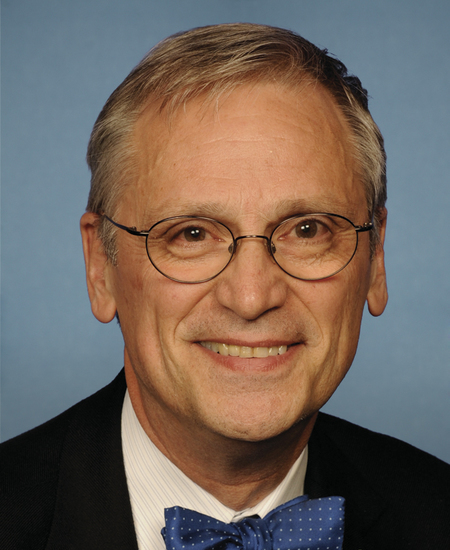
Rep. Earl Blumenauer
Sponsored bills
Maddy summaryThe SWIMS Act of 2024 bans the captivity of orcas, beluga whales, false killer whales, and pilot whales for public display in the United States. It prohibits exporting, importing, or taking these animals for display - except for relocation to a sanctuary meeting specific welfare standards or release into the wild. The bill also makes it illegal to breed these species for public display. This directly affects marine parks and aquariums that currently display these animals, preventing them from acquiring new animals for exhibits or breeding them for that purpose.
Marijuana in Federally Assisted Housing Parity Act of 202 4 This bill specifies that (1) an individual may not be denied occupancy of federally assisted housing on the basis of using, distributing, possessing, selling, or manufacturing marijuana in compliance with state law; and (2) the Department of Housing and Urban Development may not prohibit or discourage the use, distribution, possession, sale, or manufacture of marijuana in federally assisted housing if the activity is in compliance with state law.
Maddy summaryThe Complete Streets Act of 2024 requires states to establish programs that help local governments, transit agencies, and other eligible entities design and build transportation infrastructure accommodating all users, including pedestrians, cyclists, and public transit riders. States must provide technical assistance and grants for complete streets projects, with 5% of certain transportation funds allocated to these programs. The bill establishes design standards requiring features like protected bike lanes, accessible sidewalks, and appropriate lighting for all transportation projects, applying to new projects on Federal-aid highways within metropolitan areas. It mandates that states develop complete streets policies and prioritization plans to improve safety and accessibility, particularly in underserved communities, with compliance required by 2026 or 2029 for different project types.
Maddy summary# Summary of the Clean Electricity and Transmission Acceleration Act of 2023 This comprehensive legislation establishes significant reforms across environmental policy, energy infrastructure, and community engagement frameworks. Key provisions include: 1. **Environmental Justice Framework**: - Creates an Office of Environmental Justice and External Civil Rights at EPA - Establishes a White House Environmental Justice Interagency Council - Prohibits disparate impact discrimination under Title VI of the Civil Rights Act - Requires community impact reports for Federal actions affecting environmental justice communities 2. **NEPA Reforms**: - Mandates 90-day public comment periods for environmental justice communities - Requires translation of documents into languages spoken by 5%+ of affected communities - Requires assessment of cumulative impacts, including historical pollution - Requires climate change impact assessments using social cost of carbon - Establishes searchable digital archives of NEPA documents 3. **Community Engagement Requirements**: - Creates "Senior Community Engagement Officers" and "Tribal Community Engagement Officers" at all federal agencies - Requires community benefits agreements for major projects - Establishes grants for capacity building in environmental justice communities - Creates an E-NEPA permitting portal for public access to documents 4. **Energy Policy Provisions**: - Includes reforms for FERC (Federal Energy Regulatory Commission) environmental justice liaison - Establishes requirements for intervenor funding at FERC - Contains provisions for transmission planning and infrastructure 5. **Tribal Consultation**: - Strengthens tribal consultation requirements for projects affecting tribal lands - Requires government-to-government relationships with tribal nations The legislation represents a significant shift toward integrating environmental justice considerations throughout the federal permitting and review process, with specific requirements for meaningful community engagement, transparency, and consideration of cumulative impacts on vulnerable populations. It also establishes new funding mechanisms and administrative structures to support these environmental justice goals.
Maddy summaryHR 6569, the EFFECTIVE Food Procurement Act, requires the U.S. Department of Agriculture (USDA) to prioritize specific food purchases in its procurement programs. The bill mandates that USDA spending must include a minimum percentage of foods supporting: equity (from beginning, veteran, or socially disadvantaged farmers/fishermen/ranchers), resilient supply chains (small/mid-sized farms, organic, animal welfare certified), worker well-being (unionized or certified vendors), and climate-friendly practices (low emissions, deforestation policies). It establishes annual reporting requirements on procurement spending, greenhouse gas emissions, and targets to increase these categories by 2032. The bill also creates a pilot program for "best value" procurement (20% of spending) and provides $25 million in grants to help small and underrepresented producers meet USDA vendor requirements.
Maddy summaryHR 3667, the Social Security Child Protection Act of 2023, allows the Social Security Administration to reissue a child's Social Security number if it was compromised before the child turned 14. Specifically, it enables parents or guardians to request a new number by submitting verified evidence (under penalty of perjury) that the original card was stolen during delivery. The bill directly affects children under 14 whose SSN was issued under specific provisions and whose confidentiality was breached via stolen cards. The key mechanism requires the Commissioner to issue a new number and document the theft in the child's records upon verified request.
Maddy summaryHR 7056, the Access to Family Building Act, establishes federal rights for individuals to access assisted reproductive technology (ART) like IVF without unreasonable restrictions, directly affecting patients seeking fertility treatments and health care providers offering ART services. The bill prohibits states from imposing limitations on ART that are more burdensome than those for comparable medical procedures, fail to advance safety, or unduly restrict access, while allowing health and safety regulations that are necessary and least restrictive. It creates federal enforcement mechanisms, including lawsuits by the Attorney General or affected individuals to challenge violating state laws, and preempts conflicting state regulations. The bill explicitly preserves state authority over health/safety regulations and does not alter existing state insurance coverage laws for ART.
Maddy summaryHR 7029, the Bubble Tax Modernization Act of 2024, simplifies tax rules for certain alcoholic beverages by removing a separate tax classification for mead (honey wine). It defines "low alcohol by volume wine" to include all still wines (non-sparkling) with less than 8.5% alcohol and under 0.64g carbon dioxide per 100ml, treating them the same as mead for tax purposes. This change directly affects winemakers and beverage producers who previously faced different tax treatments for mead versus low-alcohol wine. The bill takes effect for wine produced after December 31, 2024.
Maddy summaryThe Stronger Communities through Better Transit Act establishes a new federal grant program to improve public transportation service. It provides funding to urban areas, states, and Indian tribes to cover up to 50% of public transit operating costs (up to 80% in persistent poverty areas and 100% for Indian tribes), with requirements to report on service frequency, access to jobs, and conduct community surveys. The program mandates that a majority of funds must benefit underserved communities and areas of persistent poverty, defined as census tracts with high poverty rates or minority populations. Recipients must maintain their transit funding levels and report on improvements in access to essential services. The bill authorizes $20 billion annually for fiscal years 2024-2027.