

Maddy summaryThe American High-Speed Rail Act authorizes $35 billion annually for high-speed rail corridor development (with $3 billion for corridor planning), requiring at least 20% of project costs to come from non-Federal sources. It defines "high-speed rail" as services reaching 186+ mph and "higher-speed rail" as 110-186 mph, with no more than 20% of funds allocated to higher-speed rail projects. Key provisions include allowing advance acquisition of rail corridors before environmental reviews, creating tax exclusions for rail carriers selling property to high-speed rail projects, and requiring consideration of equity, sustainability, and economic development impacts in planning. The bill affects federal agencies, state and local governments, rail carriers, and communities along proposed rail corridors.
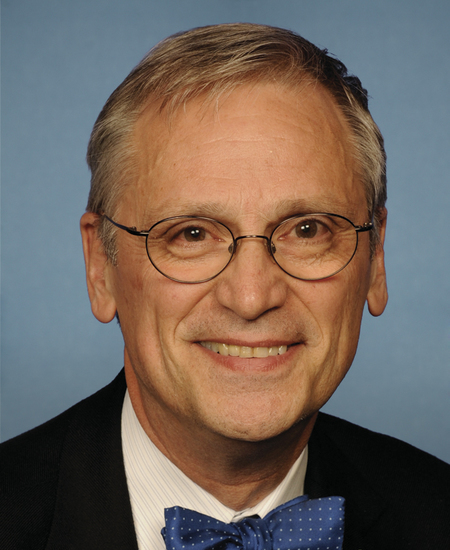
Rep. Earl Blumenauer
Sponsored bills
Maddy summaryThis bill allows states to use fixed-fee primary care arrangements under Medicaid, where patients pay a set monthly fee for basic primary care services (like check-ups and preventive care) instead of traditional billing. It directly affects Medicaid programs, primary care providers (doctors and clinics), and enrollees receiving primary care. Key provisions remove barriers to states contracting directly with providers for this model and require the HHS Secretary to issue implementation guidance and submit a report on cost and quality outcomes within a year. The bill does not change Medicaid eligibility, cost-sharing rules, or limit services to only this payment model.
Maddy summaryThe Tribal Cultural Areas Protection Act would establish a system to permanently protect Tribal cultural sites on public land by designating them as Tribal cultural areas, directly affecting Indian Tribes, federal land management agencies (Interior and Agriculture), and the public. Federal agencies must manage these areas in consultation with Tribal commissions, limiting new development that would disturb the land while preserving existing traditional practices like religious ceremonies and gathering of medicinal plants. The law requires management plans that incorporate Native knowledge and traditional practices, with special protections for sacred sites including restrictions on public disclosure of their locations. This bill ensures existing treaty rights are preserved while preventing commercial development that would harm cultural resources, without affecting existing water rights or federal environmental laws.
Maddy summaryHRES 1040 is a ceremonial House resolution recognizing February as Black History Month. It formally acknowledges the achievements of Black Americans throughout U.S. history and encourages continued celebration of this observance. The resolution highlights the cultural and artistic contributions of Black Americans, including historical figures and movements like the Harlem Renaissance and hip-hop. As a non-binding resolution, it does not create new programs or affect any specific group, but serves to affirm the importance of commemorating Black history.
Maddy summaryThe Bipartisan HSA Improvement Act of 2023 simplifies Health Savings Account (HSA) usage by clarifying tax treatment for specific healthcare arrangements. It allows direct primary care service fees (a fixed monthly payment for primary care, without insurance) to be paid using HSA funds, while setting a monthly fee limit ($150, or $300 for family coverage) and excluding certain services like prescription drugs. The bill also permits individuals to contribute to an HSA even if their spouse has a health flexible spending arrangement (FSA), and creates a process for transferring funds from a health flexible spending arrangement (FSA) or health reimbursement arrangement (HRA) to an HSA when switching to a high-deductible health plan. These changes primarily affect individuals enrolled in HSAs, direct primary care patients, and employees with employer-run clinics or FSA coverage.
Maddy summaryHR 7329, the Election Day Holiday Act of 2024, would designate November 5, 2024 (and subsequent general elections) as a federal public holiday. This change would require federal offices to close and provide federal employees a paid day off on Election Day. The bill amends Title 5 of the U.S. Code to add "Election Day" to the list of designated federal holidays, following Columbus Day. This directly affects federal employees and operations, ensuring they have a day off during general elections.
Maddy summaryThis bill restricts how credit reporting companies share homebuyers' credit reports during mortgage applications. It prevents companies from sending these reports to third parties (like marketers) just because a lender requested them for a mortgage. Only specific entities can receive the reports: the mortgage lender who originated the loan, the company servicing the loan, or the bank holding the homebuyer's account. This directly protects homebuyers' privacy by limiting unauthorized sharing of their financial data.
This resolution honors the life and legacy of Rosa Parks by nationally recognizing Transit Equity Day. The resolution also encourages the use of public transportation and the continued work to make public transit accessible for all.
Maddy summaryHR 7252, the Child and Dependent Care Tax Credit Enhancement Act of 2024, increases the maximum credit amounts for child and dependent care expenses to $8,000 for one child and $16,000 for two or more children. It adjusts income thresholds so the credit begins phasing out at $125,000 of adjusted gross income and slows the phaseout rate above $400,000. The bill also makes the credit refundable for eligible taxpayers (allowing refunds even if no tax is owed) and adds automatic annual inflation adjustments to the credit limits starting in 2025. These changes directly affect families paying for childcare or dependent care to work or seek employment.
Maddy summaryThis bill amends the McKinney-Vento Homeless Assistance Act to allow federal funding through the Emergency Solutions Grant Program to cover "safe parking" initiatives. It defines "safe parking" as providing homeless individuals living in vehicles (including RVs) with overnight parking alongside re-housing and supportive services to transition to stable housing. The key change makes safe parking programs eligible for federal grant funding that previously did not cover this specific activity. This directly affects homeless individuals residing in vehicles and the service providers operating these programs.