

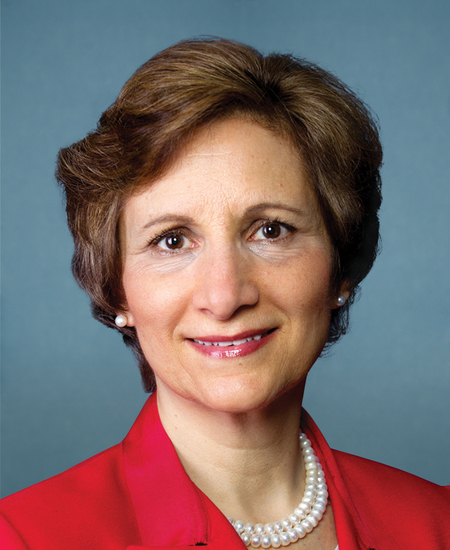
Photo of Suzanne Bonamici
D United States House · District 1 · Oregon On the 2026 ballot

Rep. Suzanne Bonamici

Compare
Total votes
2,837
all sessions
Attendance
97%
72 missed
Near the chamber average
With party
98%
of cast votes
Near the chamber average
Bipartisan score
1%
crosses aisle rarely
Near the chamber average
Sponsored
2,314
bills & resolutions
Higher than 94% of chamber peers
Committees
6
assignments
2,314 bills and resolutions

Sponsored bills

Total
2,314
Primary
182
Co-sponsor
2,132
This page
2,314
matching current filters
Co-sponsor HRES 1074
In committee · United States House · Co-sponsor
Reaffirming the House of Representatives support of a two-state solution.

Maddy summaryHRES 1074 is a symbolic House resolution reaffirming congressional support for a two-state solution to the Israel-Palestine conflict. It explicitly states the House supports Israel's right to exist as a Jewish, democratic state and recognizes Palestinians' right to sovereignty through a separate state. The resolution identifies a two-state solution as the best path to lasting peace and condemns efforts opposing this approach. As a non-binding resolution, it does not create new law or policy but formally expresses the House's position on this issue. It was introduced by multiple House members on March 12, 2024.

In committee Mar 12, 2024 1 co-sponsor
Primary HR 7621
In committee · United States House · Lead sponsor
No Robot Bosses Act

Maddy summaryThe No Robot Bosses Act (HR 7621) prohibits employers from using automated decision systems (like AI) exclusively for employment decisions such as hiring, firing, promotions, or scheduling. Employers must conduct pre-deployment and annual independent testing for discrimination, provide transparent disclosures about how these systems work, and allow employees to opt out of AI management and have human managers. The bill creates a new Technology and Worker Protection Division within the Department of Labor to enforce these requirements. It affects most private employers (those with 11+ covered employees) and certain government entities, with whistleblower protections for employees reporting violations.

In committee Mar 12, 2024 0 co-sponsors
Primary HR 886
Passed · United States House · Lead sponsor
Save Our Seas 2.0 Amendments Act

Maddy summaryHR 886, the Save Our Seas 2.0 Amendments Act, updates administrative and structural provisions of the Marine Debris Foundation and its programs. It clarifies that "tribal organization" refers to entities defined under the Indian Self-Determination Act, enabling direct tribal participation in marine debris initiatives. The bill modifies board appointment rules (requiring Commerce Secretary approval for some roles), reclassifies the Foundation as a corporation, and sets a 24-month limit on using federal funds for salaries. It also expands eligible grant recipients to include Indian tribes, international NGOs, and foreign governments, while requiring the Foundation to develop tribal outreach best practices. These changes streamline operations and broaden collaboration without altering core marine debris reduction programs.

Passed Mar 12, 2024 0 co-sponsors
Co-sponsor HR 7600
In committee · United States House · Co-sponsor
American High-Speed Rail Act

Maddy summaryThe American High-Speed Rail Act authorizes $35 billion annually for high-speed rail corridor development (with $3 billion for corridor planning), requiring at least 20% of project costs to come from non-Federal sources. It defines "high-speed rail" as services reaching 186+ mph and "higher-speed rail" as 110-186 mph, with no more than 20% of funds allocated to higher-speed rail projects. Key provisions include allowing advance acquisition of rail corridors before environmental reviews, creating tax exclusions for rail carriers selling property to high-speed rail projects, and requiring consideration of equity, sustainability, and economic development impacts in planning. The bill affects federal agencies, state and local governments, rail carriers, and communities along proposed rail corridors.

In committee Mar 9, 2024 1 co-sponsor
Co-sponsor HCONRES 96
In committee · United States House · Co-sponsor
Expressing the sense of Congress regarding the public health, safety, and welfare implications of licensure of design professionals.

Maddy summaryThis non-binding resolution expresses Congress's view that state licensing of design professionals (including architecture, engineering, surveying, and mapping) is essential for public health, safety, and welfare. It states that such licensing protects infrastructure integrity and public safety, citing historical state licensing practices and past congressional recognition of this need. The resolution urges states to maintain these licensing requirements, emphasizing their role in ensuring safe construction, infrastructure development, and environmental protection. It does not create new laws but affirms that state licensing of these professions serves the public interest.

In committee Mar 8, 2024 1 co-sponsor
Co-sponsor HR 7481
In committee · United States House · Co-sponsor
Improving Social Determinants of Health Act of 2024

Maddy summaryHR 7481 establishes a new CDC program to address social determinants of health - such as housing, food access, and transportation - that impact community health outcomes. It authorizes $100 million annually (2025-2029) to fund grants for state/local health agencies, nonprofits, and universities to design and implement community-based strategies tackling unmet health needs. Grantees must collaborate with health systems, housing organizations, and local stakeholders to collect data, develop evidence-based solutions, and monitor impacts on health equity and healthcare costs. The bill requires annual reporting and a national evaluation after five years to assess program effectiveness.

In committee Mar 8, 2024 1 co-sponsor
Co-sponsor HR 7498
In committee · United States House · Co-sponsor
ZEVs Act of 2024

Maddy summaryThe ZEVs Act of 2024 requires automakers selling over 100 new passenger vehicles annually in the U.S. to gradually increase sales of zero-emission vehicles (ZEVs), starting with 43% of new passenger vehicle sales in 2027 and reaching 100% by 2035. Manufacturers must meet these targets using a credit system: they earn credits for each ZEV sold or can purchase credits from others, with unused credits bankable for up to five years. The bill sets annual, increasing percentage targets (e.g., 51% in 2028, 88% in 2033) and imposes civil penalties for noncompliance, including fines equal to twice the value of missing credits. After 2035, manufacturers must sell only ZEVs, with the EPA enforcing these requirements through penalties and potential injunctions.

In committee Mar 8, 2024 1 co-sponsor
Co-sponsor HR 7583
In committee · United States House · Co-sponsor
Manufacturing Jobs for Veterans Act of 2024

Maddy summaryThis bill establishes a 5-year pilot program to connect eligible veterans with manufacturing careers. It authorizes $10 million annually (2025-2029) to award competitive grants to three states, which will then provide funding to manufacturing employers. The program reimburses employers for training costs related to covered manufacturing-specific skills (like on-the-job training or apprenticeships), exclusively for eligible veterans. States must demonstrate sufficient veteran populations, a strong manufacturing sector, and plans for sustainable high-wage employment. The program requires quarterly reporting on participant pay rates and annual evaluations to Congress.

In committee Mar 7, 2024 1 co-sponsor
Co-sponsor HR 7517
In committee · United States House · Co-sponsor
Skills Investment Act of 2023

Maddy summaryHR 7517, the Skills Investment Act of 2023, renames "Coverdell education savings accounts" to "Coverdell lifelong learning accounts" in tax law and expands their eligible uses beyond traditional education to include career training programs. The bill allows funds to cover workforce training under the Workforce Innovation and Opportunity Act, career technical education, and adult literacy programs, directly affecting beneficiaries (typically young adults and workers) and employers who contribute. Key changes include raising the contribution age limit to 70, increasing the account balance limit to $10,000 after age 30, creating a new 25% tax credit for employer contributions, and allowing tax deductions for beneficiary contributions. These provisions take effect for contributions after December 2023 and distributions after December 2023.

In committee Mar 1, 2024 1 co-sponsor
Co-sponsor HR 6232
In committee · United States House · Co-sponsor
Coordination for Soil Carbon Research and Monitoring Act

Maddy summaryThis bill establishes a federal interagency committee led by the Office of Science and Technology Policy to coordinate soil carbon research and monitoring across 11 agencies, including Agriculture, Energy, EPA, and NOAA. The committee must develop a strategic plan, create standardized measurement protocols, submit regular reports to Congress, and engage agricultural communities - especially historically underserved groups - in research design. It also creates working groups focused on monitoring standards, data management, research gaps, and community outreach. The bill authorizes $10 million in funding to implement these coordination efforts.

In committee Mar 1, 2024 1 co-sponsor
Showing 931 to 940 of 2,314 bills
Previous 1 … 93 94 95 … 232 Next