

Maddy summaryHR 6841 creates a new Coastal and Estuarine Resilience and Restoration Program under the Coastal Zone Management Act, authorizing the Secretary of Commerce to protect and restore coastal and estuarine areas. The program prioritizes lands with ecological, recreational, or community value that face development threats or climate impacts, with special focus on low-income communities and climate mitigation. It requires non-governmental organizations applying for grants to demonstrate public access or ecological protection, and includes $47 million annually (2024-2028) for these efforts. This directly affects coastal states, local communities, and conservation groups managing vulnerable coastal lands.
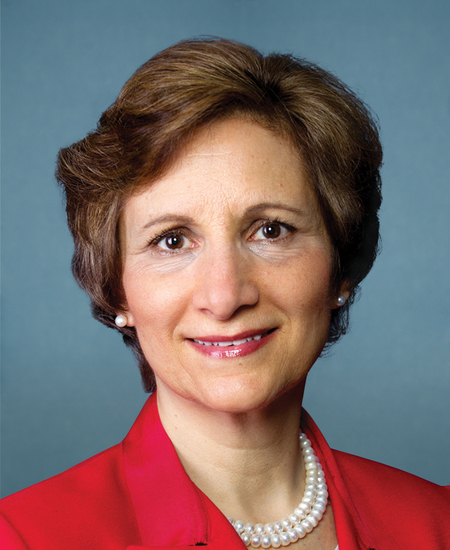
Rep. Suzanne Bonamici
Sponsored bills
Maddy summaryThis bill creates a federal framework for "extreme risk protection orders" (ERPOs) that temporarily remove firearms from individuals who pose a risk of harming themselves or others. Family members or law enforcement officers can petition a federal court for a temporary order (up to 14 days) based on probable cause, followed by a hearing within 72 hours to determine if a longer-term order (up to 180 days) is warranted. The bill requires clear and convincing evidence of risk at the hearing and mandates respondents to surrender firearms to law enforcement within 48 hours. It also includes provisions for reporting, training law enforcement on ERPOs, and a federal grant program to support state ERPO implementation, without preempting state laws.
Maddy summaryThis resolution expresses the U.S. House of Representatives' support for designating June 28, 2024, as "Stonewall Day" to commemorate the anniversary of the 1969 Stonewall Uprising in New York City, a pivotal event in LGBTQ+ rights history. It recognizes the significance of the uprising in sparking the modern LGBTQ+ civil rights movement and acknowledges the upcoming opening of the Stonewall National Monument Visitor Center on Christopher Street. The resolution does not create new laws or policies but formally supports the commemorative designation and the Visitor Center's role in honoring this history. It directly affects no individuals or groups, as it is a symbolic gesture of recognition. The resolution was introduced by multiple House members and referred to the Judiciary Committee.
Maddy summaryHRES 901 is a U.S. House resolution expressing support for democracy and human rights in Pakistan. It calls on the U.S. President and Secretary of State to collaborate with Pakistan to uphold democratic processes, human rights, and the rule of law. The resolution urges Pakistan to protect freedoms of speech, assembly, and press, and to avoid arbitrary detention or suppression of political participation. It also condemns efforts to undermine Pakistan's electoral or judicial systems, including harassment of citizens during protests or interference with elections.
Maddy summaryThis resolution, introduced around World Refugee Day, expresses congressional support for U.S. efforts to protect refugees and displaced persons globally and within the United States. It highlights that over 117 million people are displaced worldwide, references the U.S. resettling 60,000 refugees in fiscal year 2024, and calls on federal agencies to maintain the Refugee Admissions Program, uphold asylum protections, and support host countries. The resolution does not create new laws but reaffirms existing commitments to refugee resettlement, safety, and integration through current programs.
Maddy summaryThe Pell Grant Preservation and Expansion Act of 2024 would double Federal Pell Grants, increasing the maximum award to $10,000 for the 2025-2026 academic year with annual inflation adjustments, and make Pell Grants a fully mandatory program rather than requiring annual appropriations. It would expand eligibility for students with negative student aid indexes (those with the lowest expected family contributions), provide Pell Grant eligibility for "Dreamer" students protected under DACA, and restore eligibility for students who previously lost it due to academic progress issues. The bill would also increase the total semesters of Pell Grant eligibility from 12 to 18. These changes would directly affect millions of undergraduate students, particularly students of color who currently rely on Pell Grants, with 3 in 5 African American students and half of Latino students depending on these grants. The bill would take effect for the 2025-2026 academic year.
Maddy summaryThis resolution recognizes June 19, 2024, as Juneteenth Independence Day, acknowledging its historical significance as the anniversary of the end of slavery in the U.S. (specifically referencing Union soldiers' announcement in Galveston, Texas, on June 19, 1865). It does not create new policy but formally encourages all Americans to observe the day through ceremonies and educational activities. The resolution emphasizes Juneteenth's role in honoring African American freedom and its importance to U.S. history and cultural heritage. It follows the 2022 law that established Juneteenth as a federal holiday, focusing solely on symbolic recognition and annual observance.
Maddy summaryHR 8768, the Restoring Trust in Public Safety Act, provides $15 million annually (2025-2030) for federal grants to state, tribal, and local governments to safely destroy firearms. Eligible entities must use funds to fully destroy firearms (including all parts and accessories) through methods like shredding or crushing, maintain detailed records, and provide documented proof of destruction. The bill requires grantees to use no more than 10% of funds for administration and prioritizes funding for rural areas and Metropolitan Statistical Areas. It directly affects local law enforcement agencies and governments seeking to eliminate firearms through certified destruction programs.
Maddy summaryThis bill amends the Occupational Safety and Health Act to explicitly include public employees - such as those working for federal, state, or local government agencies - under OSHA's coverage. It changes the definition of "employee" to specify that public sector workers are protected, removing previous exclusions. The law takes effect 90 days after enactment for most workplaces, but gives states and local governments without OSHA-approved plans up to 36 months to comply. This directly affects public service workers in government roles by bringing their workplace safety protections under the same federal OSHA framework as private-sector employees.
Maddy summaryHR 8732, the Domestic Workers Bill of Rights Act, would establish new labor protections for domestic workers including nannies, housekeepers, and caregivers who work in private homes. The bill requires written agreements between employers and domestic employees, provides earned sick days, ensures fair scheduling practices, and prohibits unfair wage deductions for cash shortages or communications. It also creates a Domestic Employee Standards Board to recommend workplace standards and establishes a National Domestic Employee Hotline for assistance. The bill specifically targets domestic workers who have historically been excluded from labor protections under the Fair Labor Standards Act and Civil Rights Act, benefiting an estimated 2.2 million domestic workers in the U.S. who are disproportionately women of color and immigrants.