

Maddy summaryHRES 1355 is a non-binding resolution supporting the designation of July 10 as Journeyman Lineworkers Recognition Day. It honors lineworkers who maintain electrical infrastructure under hazardous conditions, including during disasters, and commemorates Henry Miller, the first president of the International Brotherhood of Electrical Workers, who died on July 10, 1896, while troubleshooting an electrical outage. The resolution encourages public recognition of these workers' contributions but does not create new laws or policies.
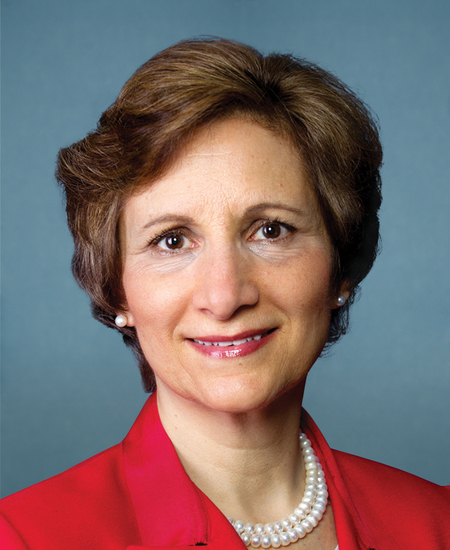
Rep. Suzanne Bonamici
Sponsored bills
Maddy summaryHR 8990, the ATF DATA Act, requires the Bureau of Alcohol, Tobacco, Firearms and Explosives (ATF) to publicly publish detailed firearm trace data annually. It mandates reporting specific information including the top 200 source licensees (with details on recovered firearms, crime types, and time-to-crime), trace distribution patterns by state and firearm type, data on lost/stolen firearms, and trafficking investigation patterns. This affects ATF (which must publish the data), law enforcement agencies (which request traces), and firearm licensees (whose data is reported). The bill focuses on increasing transparency around gun trace data without changing gun laws, requiring the ATF to make this information available electronically to the public.
Maddy summaryHCONRES 118 is a symbolic congressional resolution recognizing the wage disparity faced by Black women in the U.S. It specifically highlights that Black women earn 69 cents for every dollar earned by White, non-Hispanic men, as noted in Census Bureau data. The resolution marks July 9, 2024, as Black Women’s Equal Pay Day to symbolize how long into 2024 Black women must work to earn what White men earned in 2023. It does not create new laws or policies but formally acknowledges this disparity and reaffirms congressional support for equal pay for equal work.
Maddy summaryHR 8943, the Equitable Arts Education Enhancement Act, would provide federal grants to minority-serving institutions (MSIs) to expand arts education access for underrepresented students. The bill directs grant funds toward specific uses, including student financial aid, outreach programs, exhibitions of BIPOC artists' work, mentorship initiatives, and preserving minority art collections. It requires MSIs to prioritize funding that directly benefits minority students in arts education programs. The legislation aims to address documented diversity gaps in arts leadership and funding shortfalls for arts departments, as highlighted in congressional findings.
Maddy summaryThis bill amends the Federal Employees' Compensation Act to include physician assistants and nurse practitioners as eligible providers for injured federal workers. It defines "other eligible provider" as a nurse practitioner or physician assistant within their state-authorized scope of practice. The law updates key sections to replace "physician" with "physician or other eligible provider" for treatment, certification, and claim processes. The Secretary must finalize implementing regulations within six months of enactment.
Maddy summaryThis bill (HR 2365, Public Law 118-66) directs the U.S. Department of Health and Human Services (HHS) to establish the National Parkinson’s Project. It requires HHS to create and update a coordinated national plan for preventing, diagnosing, treating, and researching Parkinson’s disease and related disorders (including multiple system atrophy and progressive supranuclear palsy), while coordinating federal research and care efforts across agencies like the NIH, CDC, and VA. The law mandates annual progress assessments, an advisory council with patient advocates and diverse experts, and annual reports to Congress on federal Parkinson’s programs and recommendations for improvement. It affects federal agencies managing Parkinson’s-related programs and aims to improve care coordination and research efficiency for patients and caregivers, with the law sunsetting in 2035.
Maddy summaryThis bill requires the National Oceanic and Atmospheric Administration (NOAA) to review whether its Weather Radio coverage reaches populated coastal areas at risk of tsunamis and make the results public. It also directs the Federal Emergency Management Agency (FEMA), NOAA, and the Federal Communications Commission to clarify their roles in using the emergency alert system (IPAWS) to deliver tsunami warnings through the Emergency Alert System. The key provisions focus on improving coverage mapping and ensuring clear interagency coordination for alert distribution. This directly affects coastal communities vulnerable to tsunamis and the federal agencies responsible for emergency alerts.
Maddy summaryHRES 1330 is a non-binding resolution supporting Alzheimer’s and Brain Awareness Month in June. It recognizes the significant impact of Alzheimer’s disease on millions of Americans, including high prevalence among women and racial/ethnic minorities. The resolution encourages the public to educate themselves about Alzheimer’s, advocate for research and support services, and offer assistance to affected individuals, families, and caregivers. It does not create new programs, funding, or legal obligations. The resolution is directed at raising public awareness and fostering community support during the designated month.
Maddy summaryHRES 1332 is a symbolic resolution recognizing June as LGBTQIA+ Pride Month. It encourages the celebration of Pride Month to honor the historical struggles and achievements of LGBTQIA+ people in the United States, while acknowledging the ongoing challenges they face. This resolution does not create new laws or policies, but serves as a formal recognition of LGBTQIA+ rights as human rights and highlights their integral role in American history. The resolution was introduced by multiple members of Congress and passed by the House of Representatives.
Maddy summaryThe CHARTER Act prohibits charter schools receiving federal education funds under the Elementary and Secondary Education Act (ESEA) or Individuals with Disabilities Education Act (IDEA) from contracting with for-profit entities to manage school operations - including curriculum, budgets, or staff decisions. It directly affects public charter schools and their charter management organizations that receive these federal funds. The bill allows contracts with for-profits for specific services like food, payroll, or facilities maintenance but bans profit-driven management arrangements. The law takes effect 3 years after enactment and applies only to new or renewed contracts after that date, closing a loophole identified in a 2006 court case where for-profit schools reorganized as nonprofits to retain federal funding.