

Maddy summaryThis bill amends the Older Americans Act of 1965 to better serve LGBTQI older adults (ages 60+). It adds specific definitions for "LGBTQI" and "HIV" in the law, redesignates "minority" to explicitly include LGBTQI individuals, and creates an Office of LGBTQI Inclusion within the Administration on Aging. The bill establishes a National Resource Center on LGBTQI Aging to provide training, technical assistance, and educational resources to organizations serving this community. It also requires the collection and analysis of data on discrimination against LGBTQI older adults in long-term care settings.
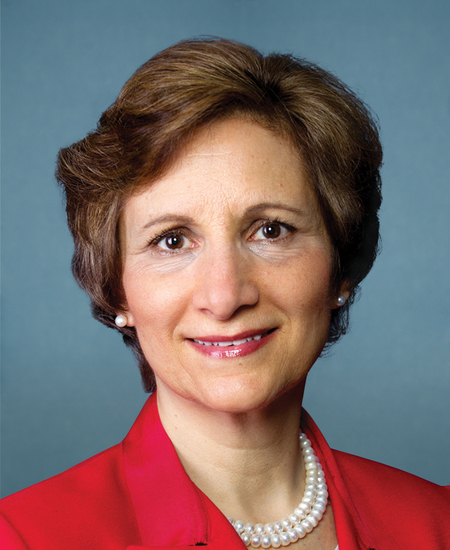
Rep. Suzanne Bonamici
Sponsored bills
Maddy summaryThis bill prohibits defendants in federal criminal cases from using a victim's LGBTQ identity (sexual orientation, gender identity, or expression) as a defense to excuse or reduce punishment for violent crimes. It amends federal law to ban arguments that claim a "nonviolent sexual advance" or inaccurate perception of someone's LGBTQ status justified the defendant's actions. The law allows limited admission of past trauma evidence under standard federal rules but requires the Attorney General to annually report on federal prosecutions involving bias-motivated violence against LGBTQ individuals. This directly affects defendants in federal court cases where such defenses were previously used, aiming to end the practice of treating LGBTQ victims' identities as justification for violence.
Maddy summaryHR 4120, the *Supporting the Mental Health of Educators and Staff Act of 2025*, provides federal funding to improve mental health support for school staff. It allocates $35 million annually (2026-2028) for grants to schools, colleges, and state agencies to create or expand proven programs - like peer support networks, suicide prevention training, and telehealth access - to address mental health and substance use concerns among educators. The bill also authorizes $10 million for a national awareness campaign to reduce stigma and encourage staff to seek care. It requires annual reporting on program outcomes and a federal review of mental health barriers, but does not directly affect students or parents.
Maddy summaryHR 4150, the Advancing Maternal Health Equity Under Medicaid Act, increases federal Medicaid funding for states that expand maternal health services. It requires states to spend more on specific maternal care (like prenatal/postpartum visits, telehealth, home visits, and mental health support) than they did in 2019, with the federal government covering 90% of the additional cost starting in 2025. The bill directly affects pregnant and postpartum individuals covered by Medicaid by expanding access to defined maternal health services. States must use the extra funds to improve service quality and capacity without reducing existing state funding for these services.
Maddy summaryThe Women's Health Protection Act of 2025 would protect access to abortion services across the United States by prohibiting states from imposing restrictions that are more burdensome than those on comparable medical procedures. The bill directly affects people seeking abortion care and health care providers by banning restrictions such as mandatory in-person visits, requirements for specific tests, limitations on telemedicine, and rules based on a patient's reason for seeking abortion. It prohibits state laws that single out abortion for unnecessary restrictions while allowing post-viability abortions when necessary to protect a patient's life or health. The bill preempts conflicting state laws and provides enforcement mechanisms through private lawsuits and actions by the Attorney General.
Maddy summaryHR 4101, the Cancer Drug Parity Act of 2025, requires group health plans and insurance plans to provide equal cost-sharing (like deductibles and copays) for oral anticancer drugs as for intravenous or injected cancer drugs. This directly affects insured cancer patients prescribed oral medications, ensuring they face no higher out-of-pocket costs than for IV treatments when medically necessary. The law prohibits plans from changing benefits to increase costs for oral drugs or applying stricter limits on them compared to IV drugs. It takes effect for plan years starting January 1, 2026, and mandates a GAO study to assess the law’s impact on patient costs within two years of enactment.
Maddy summaryThis bill prohibits state officials from blocking abortion access for patients traveling from other states, including restricting providers who offer legal abortions in their state to out-of-state patients. It protects people traveling across state lines for legal abortions, those assisting such travel, and the interstate transport of FDA-approved abortion medication. Violations can be challenged by the Justice Department or affected individuals through civil lawsuits seeking injunctions and damages. The law applies broadly across all states, territories, and tribal nations, defining "abortion service" to include both medical procedures and related care.
Maddy summaryHR 4104 would expand access to Medicaid, CHIP, and Affordable Care Act (ACA) health coverage for immigrants lawfully present in the U.S., including those with deferred action or pending immigration applications. It removes state-level barriers to Medicaid/CHIP eligibility for lawfully present individuals, treats Federally authorized presence as "lawfully present" for ACA subsidies, and allows states to choose to cover undocumented individuals through Medicaid or CHIP. The bill also extends these changes to Medicare Part A and Part B, ensuring lawfully present immigrants qualify for coverage and subsidies under existing programs. These provisions apply to all federally funded health programs and take effect in 2026 for most ACA-related changes.
Maddy summaryThis bill creates federal funding for community-based violence intervention programs in high-violence areas, targeting communities with 35+ homicides annually or 20+ homicides with rates double the national average. It establishes grants for community organizations to implement trauma-informed violence interruption strategies, hospital-based programs for injured patients, and job training for "opportunity youth" (16-25 year olds not in school or work). The legislation authorizes $300 million in 2026, increasing to $700 million annually through 2033, with requirements for evidence-based approaches that reduce violence without contributing to mass incarceration. It creates a National Community Violence Response Center to coordinate data collection, research, and best practices for these programs. The focus is on prevention through economic opportunity, trauma care, and community-driven interventions rather than traditional law enforcement approaches.
Maddy summaryHR 4073 reauthorizes and updates the Tsunami Warning and Education Act to modernize U.S. tsunami warning systems. It requires NOAA to improve data management (including real-time GNSS network data), update inundation maps, evaluate alert terminology with communities, and integrate tsunami warnings into the USGS Earthquake Early Warning System. The bill mandates $32 million annually (2026-2030) for these efforts, with 27% funding state-level tsunami hazard mitigation programs and 8% supporting tsunami research. This directly affects coastal communities at risk, NOAA warning centers, and federal agencies like USGS and NASA through enhanced forecasting, data sharing, and standardized warning protocols.