

Providing Access to Treatment and Housing Act of 2023 or the PATH Act of 2023 This bill establishes a specific office and authorizes grants to support the provision of mental and behavioral health services for unhoused individuals. Specifically, the bill establishes the Center for Unhoused Individuals in the Substance Abuse and Mental Health Services Administration (SAMHSA). The center must develop policies and coordinate federal, state, and local action to expand unhoused individuals' access to mental, behavioral health, and housing services. The center may award grants to public and nonprofit entities to support these activities. SAMHSA must also award grants to state, local, and tribal governments to improve these services for unhoused individuals, with priority given to areas with high rates of housing instability and above-average housing costs.
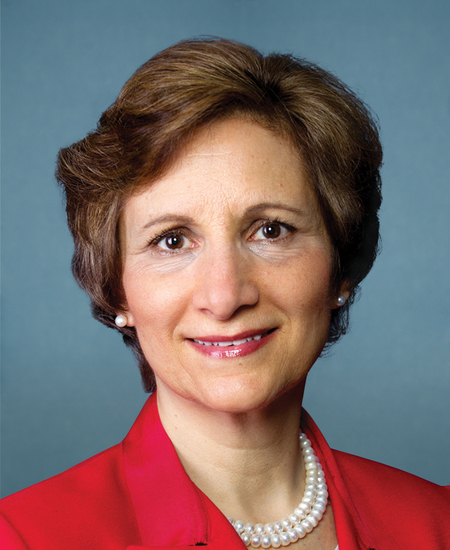
Rep. Suzanne Bonamici
Sponsored bills
Smoke Exposure Crop Insurance Act of 2023 This bill requires the federal crop insurance program (FCIP) to provide for the research and development of a policy to insure wine grapes (including wine grapes produced in California, Oregon, and Washington) against losses due to wildfire smoke exposure. (The term policy means an insurance policy, plan of insurance, provision of a policy or plan of insurance, and related materials.) The Federal Crop Insurance Corporation, the agency that finances FCIP operations, must make any resulting policy available that meets specified FCIP requirements. The FCIP must also submit a report to Congress on the research and any resulting policy. The report must include the feasibility of a policy that allows producers to claim an indemnity through post-harvest, post-vinification testing if such testing demonstrates smoke damage that was not detectable prior to harvest.
Fair Access to Agriculture Disaster Programs Act This bill waives the adjusted gross income limitations for payments or benefits under specific Department of Agriculture (USDA) disaster assistance programs for a person or legal entity that derives a portion of their income from agriculture. (Currently, a person or entity is not eligible to receive certain benefits during a crop, fiscal, or program year if their average gross income exceeds $900,000.) Specifically, in the case of an excepted payment or benefit, the adjusted gross income limitation is waived if 75% or more of the average adjusted gross income for the person or entity is derived from farming, ranching, or silviculture activities. These activities include agritourism, direct-to-consumer marketing of agricultural products, and the sale of agricultural equipment owned by such person or entity. The bill applies to the USDA Livestock Indemnity Program; Livestock Forage Disaster Program; Emergency Assistance for Livestock, Honey Bees, and Farm-Raised Fish Program; Tree Assistance Program; and Noninsured Crop Disaster Assistance Program.
Maddy summaryHR 4068, or "Canyon’s Law," bans the use of M-44 devices - cyanide-based predator control tools - on all public lands managed by federal agencies like the National Park Service, Fish and Wildlife Service, and Forest Service. The bill prohibits agencies from preparing, placing, or deploying these devices and requires all existing M-44s on public land to be removed within 30 days of enactment. It directly affects federal, state, and county agencies that previously used these devices to target wildlife like wolves and coyotes. The law aims to prevent accidental poisonings of people, pets, and non-target species (including endangered animals) by eliminating the use of this hazardous method on public lands.
Maddy summaryThe provided context for HR 4060 (Food Access and Stability Act of 2023) only describes a technical amendment to an existing law (the Fiscal Responsibility Act of 2023), specifically modifying section 311(b)(2) by replacing subsection (a) with subsection (a)(1). It does not explain the policy substance, who is affected, or the practical impact of this change. Without additional details on the amendment's purpose or resulting policy shifts, a substantive summary cannot be generated. This appears to be a procedural adjustment rather than a new policy measure.
Maddy summaryThe SHELLS Act creates a new Office of Aquaculture within the U.S. Department of Agriculture to support sustainable shellfish farming (like oysters and clams), algae cultivation, and land-based aquaculture systems. It establishes an advisory committee with 14 members representing aquaculture farmers, Tribal communities, coastal towns, academic institutions, and food industry stakeholders to advise on best practices and barriers. The bill authorizes $25 million annually (2024-2028) for the office to provide technical assistance, coordinate with agencies like NOAA, and gather production data. This directly affects shellfish and algae producers, coastal communities, and Tribal nations by promoting practices that support food security while limiting environmental harm.
Maddy summaryThe Forest Data Modernization Act of 2023 updates the U.S. Forest Service's national forest inventory program to improve data collection on forest resources, with specific focus on forest carbon. It mandates new surveys of timber products and woodland owners, standardizes definitions for forest data reporting, and requires the Forest Service to develop a strategic plan every five years integrating remote sensing technology and carbon data (including soil carbon). The bill ensures collected data is publicly accessible while protecting the confidentiality of individual landowners' non-aggregated information. These changes aim to enhance the accuracy of forest resource tracking for management and policy decisions across public and private lands.
Sustainable Agriculture Research Act This bill revises the goals of the Agriculture Advanced Research and Development Authority (AGARDA). Specifically, the bill expands the goals to require AGARDA to enhance the role of sustainable agriculture in innovative voluntary resilience solutions in the United States through the development of agricultural technologies that may address the impact of extreme weather on crop production; the effects of drought and the potential of building water holding capacity in soils on croplands and rangelands; the expansion of the potential for long-term carbon storage through sustainable agriculture; increased economic and practical feasibility for renewable and sustainable energy on farms and in the agriculture industry; increased voluntary adoption of conservation practices that sequester carbon and build on-farm climate resilience; and increased economic and practical feasibility for, and voluntary adoption of, precision agriculture technology. The bill defines precision agriculture as managing, tracking, or reducing crop or livestock production inputs (including seed, feed, fertilizer, chemicals, water, and time) at a heightened level of spatial and temporal granularity to improve efficiencies, reduce waste, and maintain environmental quality.
Animal Welfare Enforcement Improvement Act This bill revises the licensing process of the Department of Agriculture (USDA) for animal dealers and exhibitors to expand USDA's oversight and enforcement of animal welfare requirements. Dealers and exhibitors must apply to USDA for licenses or renewal licenses each year. In order to obtain the licenses or renewals, dealers and exhibitors must meet certain standards for the humane treatment of animals and pass inspections as specified by this bill. USDA may not issue or renew such licenses if the dealers or exhibitors have violated laws relating to animals or if the issuance of the licenses would facilitate the circumvention of state or local laws that prohibit the private ownership of certain animals. Further, USDA must suspend the licenses of dealers or exhibitors whose violations present a risk to animal welfare. USDA must revoke the licenses if the violations persist or if the licensees commit multiple violations. Dealers and exhibitors with suspended or revoked licenses may not be (1) granted another license, (2) granted another license through another person or entity, or (3) employed by another licensee to work with animals during the period of the suspension or revocation.
Maddy summaryThis bill establishes a federal pilot program to help homeless individuals access SNAP (Supplemental Nutrition Assistance Program) benefits. It authorizes $12.5 million annually (2024-2029) to fund grants for community organizations, homeless service providers, and public housing agencies to provide direct outreach, application assistance, transportation to SNAP offices, and staff training. The program specifically targets barriers like lack of documentation and awareness, focusing on helping homeless households enroll in SNAP by connecting them with existing resources. Grantees must report annually on outcomes, including the number of homeless individuals served and enrollment impacts. The pilot runs for up to 5 years, with funds supplementing (not replacing) existing state/local programs.