

Maddy summaryHR 5224 reauthorizes the Missing Children's Assistance Act through fiscal year 2028, updating definitions and expanding services to better address child sexual exploitation. It adds specific terms like "sextortion" and "sexting" to clarify key concepts, and requires the Administrator to manage the CyberTipline for reporting missing children and exploitation. The bill mandates new data collection on children missing from state care, including those likely victims of sex trafficking, and increases annual funding authorization from $40 million to $49.3 million. These changes directly affect child welfare agencies, law enforcement, and organizations working with missing or exploited children by improving reporting systems, recovery support, and data transparency.
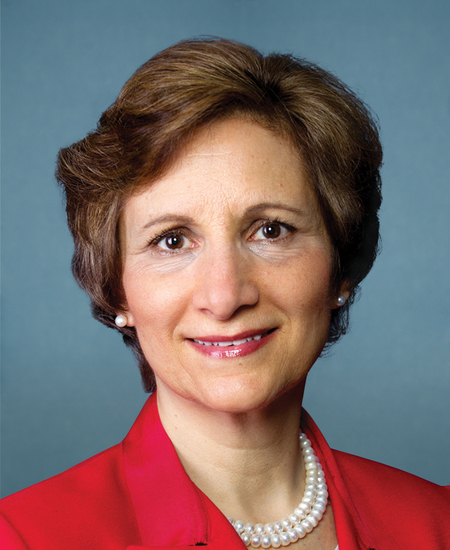
Rep. Suzanne Bonamici
Sponsored bills
Maddy summaryThe Homeless Children and Youth Act of 2023 amends the McKinney-Vento Homeless Assistance Act to better support homeless children and youth. It extends the timeframe for determining homelessness from 14 to 30 days, creates a new definition for "child or youth defined as homeless under any other Federal program" (including those covered by Head Start, Child Care Development Block Grant, and other programs), and requires that all individuals identified as homeless under any provision of the Act be eligible for services without additional verification. The bill mandates public reporting of detailed homeless data through the Homeless Management Information System (HMIS), including demographic information about homeless individuals by age, disability, and length of homelessness. It also requires that all homeless populations proposed to be served receive equal priority without discrimination based on subpopulation.
Maddy summaryThe Coastal Fellowships Act creates two new fellowship programs - the Coastal Management Fellowship and the Digital Coast Fellowship - to train and support individuals pursuing careers in coastal science, policy, management, and law. Each fellowship provides up to two years of on-the-job training, mentoring, and a stipend of at least $47,000 annually (adjusted for inflation and locality pay), with selection based on academic qualifications, leadership potential, and commitment to public service. Successful fellows may be directly hired by federal agencies within two years of completing their fellowship, bypassing standard hiring rules. The bill authorizes $1.91 million annually for fiscal years 2024-2028 to fund these programs, including stipends, professional development, and administrative costs.
Protecting Sensitive Locations Act This bill prohibits immigration enforcement actions within 1,000 feet of a sensitive location except in exigent circumstances. Sensitive locations include health care facilities; schools and school bus stops; places that provide assistance for people such as children, pregnant women, and abuse victims; places that provide disaster or emergency services; places of worship; courthouses and lawyers’ offices; facilities used as polling places; certain labor union facilities; and public assistance offices. The prohibition shall apply to Department of Homeland Security officers and agents, as well as state employees pursuing immigration enforcement actions. If an enforcement action is carried out in violation of this prohibition, (1) no information resulting from the action may be entered into the record in a resulting removal proceeding, and (2) the affected individual may move to immediately terminate such a proceeding. U.S. Immigration and Customs Enforcement and U.S. Customs and Border Protection shall annually report to Congress about enforcement actions taken at sensitive locations in the preceding year.
Maddy summaryHR 5177, the Expanding Service Coordinators Act, provides new funding and requirements for service coordinators in federally assisted housing projects to help residents access supportive services. It prohibits additional conditions for projects receiving coordinator funds, mandates $2,500 annually per project for coordinator training, and allocates $225 million yearly (2024-2028) for these programs. The bill also adds $45 million annually for rural housing services, requires a study on rural coordinator challenges, and creates $37 million in HRSA grants for 150 housing properties. These provisions directly affect federally assisted housing projects, service coordinators, and residents relying on these services.
Maddy summaryThe START Housing Act of 2023 reauthorizes a federal housing program for individuals recovering from substance use disorders, extending its funding period from 2019-2023 to 2024-2029. It requires states receiving funds to prioritize areas with the highest unemployment rates, lowest workforce participation, highest drug overdose deaths, and most unsheltered homelessness, using data from federal agencies. The bill mandates "low-barrier" housing access for participants and requires states to use federal funds to supplement, not replace, existing state/local housing funding. It also adds requirements for states to consult with local housing groups when planning program implementation.
Supporting Equity for Aquaculture and Seafood Act or the SEAS Act This bill directs the Department of Agriculture (USDA) to increase support for aquaculture grants and assistance. (Aquaculture is the controlled breeding, rearing, and harvesting of fish, shellfish, and sea vegetables.) Specifically, the bill directs USDA to give aquaculture producers the same consideration as animal agriculture producers in awarding grants or other assistance. Further, USDA must ensure adequate and fair funding levels for aquaculture producers under USDA programs. USDA must also provide its staff with specific education and trainings on aquaculture. USDA must submit to Congress (1) an annual report that includes information on USDA seafood and aquaculture purchases and grants, and (2) a report on USDA's role in supporting aquaculture and the seafood industry. USDA must make competitive grants (e.g., to regional aquaculture centers or nonprofit organizations) to develop next generation technology to reduce pollution and fuel usage in the seafood and aquaculture industries. Further, Agriculture and Food Research Initiative program grants must address methods of increasing the survival rate and adaptability of shellfish, including resistance to heat, disease, salinity, and acidification. In addition, the federal crop insurance program (FCIP) must research and develop a policy to insure aquaculture products and the Federal Crop Insurance Corporation (the agency that finances FCIP operations) must establish a policy to insure aquaculture products.
Maddy summary# Summary of the "Protecting Our Democracy Act" This comprehensive legislation aims to strengthen democratic processes, increase government transparency, and prevent foreign interference in elections. Key provisions include: ## Ethics and Transparency - **Ethics Pledge**: Requires all appointees to sign an ethics pledge committing to: - Ban on gifts from registered lobbyists - 2-year revolving door ban (prohibiting participation in matters related to former employers) - Golden parachute ban (no special payments from former employers) - Commitment to decision-making based on public interest - **Tax Transparency**: Requires presidential and vice presidential candidates to disclose 10 years of tax returns, with sitting presidents submitting returns within 30 days of enactment ## Campaign Finance and Foreign Interference - **Foreign Contact Reporting**: Requires political committees to report any contact with "covered foreign nationals" within 1 week - **Enhanced Penalties**: Criminal penalties of up to $1 million and 5 years in prison for violations - **Online Advertising Rules** ("Honest Ads Act"): - Requires clear disclosure of who paid for political ads online - Mandates machine-readable public databases of political ads - Requires visible sponsor identification that remains when ads are shared - Defines "qualified political advertisements" to include various online formats ## Preventing Patronage Systems - Limits exceptions to competitive service for federal positions - Restricts transferring positions between competitive and excepted service - Requires employee consent for position transfers ## Use of Federal Property - Prohibits holding national political conventions on federal property - Requires publicly available visitor records at White House and other official locations (with privacy exceptions) The legislation establishes detailed definitions, reporting requirements, and enforcement mechanisms across multiple agencies, with the goal of increasing transparency, preventing foreign interference, and ensuring ethical conduct in government service.
Maddy summaryThis bill establishes a federal system to coordinate efforts across agencies to address health risks from extreme heat. It creates a National Integrated Heat Health Information System (NIHHIS) and an interagency committee to develop a strategic plan for heat health planning and response. The bill authorizes funding for community resilience projects that prioritize historically disadvantaged communities and those with environmental justice concerns. It mandates a study to identify gaps in heat information and response systems across the country. The legislation aims to reduce health impacts of extreme heat, particularly for vulnerable populations including the elderly, low-income communities, and communities of color.
Maddy summaryThis bill requires phone calls, texts, and chats to 9-8-8 (the national suicide prevention and mental health crisis hotline) to be routed to the nearest participating crisis center within 90 days of enactment, while protecting caller privacy by not revealing precise location. It mandates all phone carriers to transmit every 9-8-8 call or text - including those from prepaid or non-initialized handsets - and updates phone systems to allow direct 9-8-8 dialing without extra steps. The law affects crisis centers (by directing calls to their area), callers (through improved routing and privacy), and phone carriers (by requiring transmission compliance). These changes aim to make the 9-8-8 system more efficient and accessible for those seeking mental health support.