

Continuing Robust and Uninhibited Drilling and Exporting Act or the CRUDE Act This bill limits the President's authority to restrict the export of crude oil from the United States. Currently, the President may restrict the export of oil for up to a year if the President declares a national emergency; the restrictions apply to countries, persons, or organizations for reasons of national security; or the Department of Commerce finds and reports to the President that the export of crude oil has caused sustained material oil supply shortages or sustained oil prices significantly above world market levels and those shortages or price increases have caused or are likely to cause sustained material adverse employment effects. However, this bill only allows the President to make such restrictions if the restrictions apply to countries, persons, or organizations for reasons of national security; or the Department of Defense, the Department of Energy, and Commerce jointly make those findings and report them to the President and Congress.
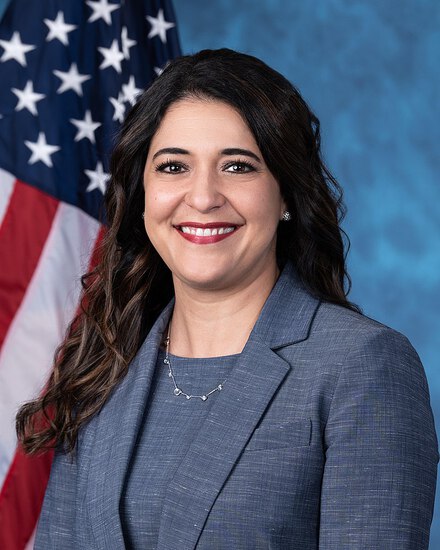
Rep. Stephanie I. Bice
Sponsored bills
Maddy summaryThis bill expands the use of 529 college savings accounts to cover career training and credentialing costs. It allows funds to pay for tuition, fees, books, and testing expenses related to recognized postsecondary credential programs (like vocational certifications) that meet specific standards under the Workforce Innovation and Opportunity Act. The change directly affects workers seeking industry-recognized credentials - such as nursing certifications or IT certifications - instead of traditional degrees. It treats these expenses the same as traditional college costs for 529 account withdrawals, making it easier to save for career-focused training. The provision applies to expenses paid after the bill's enactment date.
This joint resolution proposes a constitutional amendment that prohibits an individual who is not a U.S. citizen from voting in federal, state, or local elections for public office or voting on any ballot initiative or referendum held in the United States.
Maddy summaryHR 1388 authorizes the minting of commemorative coins to honor the 1865 Sultana steamboat disaster, the deadliest maritime tragedy in U.S. history. It specifies three coin types ($5 gold, $1 silver, and half-dollar) with defined weights and compositions, to be sold at face value plus surcharges ($35, $10, and $5 per coin, respectively). All surcharges collected will fund the Sultana Historical Preservation Society for museum development, including exhibits, artifact preservation, and facility construction. The coins are legal tender but intended for collectors, with sales limited to a one-year period starting January 2023.
Maddy summaryThis bill requires the President to assess the inflation impact of major executive orders before issuing them. For any executive order projected to cost at least $1 billion annually in budget effects (excluding emergency relief, national security actions, or treaty implementation), the President must prepare a statement estimating its effect on inflation - whether it has no impact, quantifiable impact, or significant but undeterminable impact. Federal agencies must provide necessary data to support this assessment, and the President must submit an annual report to Congress detailing all such assessments. The bill does not change inflation policy but mandates a new procedural review for major executive actions.
This joint resolution proposes a constitutional amendment to require that the seats in the House of Representatives be divided among the states based on their share of U.S. citizens rather than their share of the total U.S. population.
Maddy summaryThe Military Spouse Hiring Act expands the Work Opportunity Tax Credit to include military spouses. Employers who hire a spouse of an active-duty military member - certified by a local agency as meeting eligibility requirements on the hiring date - can claim this tax credit. The credit reduces the employer's federal tax liability for hiring such individuals. This provision applies to new hires after the bill's enactment date.
Maddy summaryHR 1310 (SHARE Act) requires the FBI to share criminal history records with state licensing agencies when needed for professional licensing checks across state lines through existing interstate compacts. It directly affects state licensing boards (like those for nurses or contractors) and individuals applying for licenses in multiple states. The bill mandates that states use this data *only* for license applications and prohibits sharing it with other agencies or the public, while allowing a simple "pass/fail" notification to the compact’s governing body.
Maddy summaryThis bill prohibits the Department of Defense from using funds to pay for or reimburse abortion services, except when the pregnancy endangers the mother's life, results from rape, or results from incest. It directly affects military personnel, civilian DOD employees, and contractors receiving medical care at military facilities by restricting funding for abortion-related expenses. Key provisions include amending federal law to ban reimbursement for travel or licensing costs related to abortion services and repealing a 2022 DOD memo that expanded access to such care. The bill explicitly blocks all funding for abortion services beyond the existing exceptions, with no new exceptions added. It does not change abortion access for civilians outside the military healthcare system.
Maddy summaryThe HITS Act changes tax rules to help independent music producers by allowing them to deduct costs for creating sound recordings as immediate business expenses, rather than spreading costs over time. It specifically applies to U.S.-produced sound recordings (like albums or podcasts) by qualifying independent producers, with a $150,000 annual cap on deductible costs. The bill also enables bonus depreciation for equipment used in these productions, treating them similarly to film or theater projects for tax purposes. This aims to improve cash flow for smaller music businesses by reducing upfront tax burdens on recording costs.