

Maddy summaryHR 3359, the Disrupt Fentanyl Trafficking Act of 2023, requires the Secretary of Defense to develop a strategy within 120 days to counter fentanyl trafficking using existing authorities. The strategy must detail how the Department of Defense will detect and monitor fentanyl trafficking across air, land, and sea domains, support other agencies, train law enforcement, and strengthen cooperation with Mexico and Canada. It also mandates reports on past reimbursements for law enforcement support and an assessment of enhanced security cooperation with Mexico. This bill directly affects the Department of Defense, federal, state, and local law enforcement agencies, and international security partners.
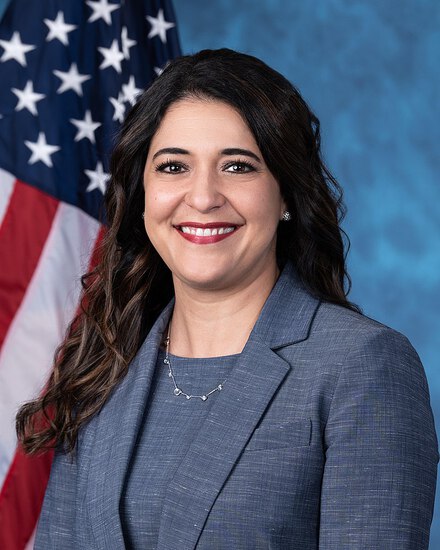
Rep. Stephanie I. Bice
Sponsored bills
National Law Enforcement Officers Remembrance, Support and Community Outreach Act This bill directs the Department of Justice (DOJ) to establish a National Law Enforcement Officers Remembrance, Support, and Community Outreach Program. The bill further directs DOJ to award a grant under the program to the National Law Enforcement Officers Memorial Fund for the expenses associated with community outreach, public education, and officer safety and wellness programs operated by the of the National Law Enforcement Officers Memorial Fund and National Law Enforcement Museum.
Maddy summaryThe NWR Modernization Act of 2023 directs the National Oceanic and Atmospheric Administration (NOAA) to upgrade its Weather Radio network, which broadcasts critical weather and hazard alerts, to improve accessibility and reliability for all Americans. Key provisions include transitioning from older copper-based systems to internet-based communication, adding transmitters in rural and underserved communities (including Tribal lands and national parks), and developing backup systems to maintain alerts during outages. The bill also requires NOAA to consult with private partners to enhance mobile and online access to broadcasts, ensuring real-time alerts reach people in both urban and remote areas without relying solely on physical receiver proximity.
Maddy summaryHRES 363 is a resolution expressing support for recognizing National Police Week, an annual observance established by law to honor law enforcement officers who have died in the line of duty. The resolution acknowledges 556 officers killed in the line of duty during 2022 and calls for ensuring law enforcement officers have necessary equipment, training, and resources to protect both themselves and the public. It encourages the American public to observe National Police Week by honoring law enforcement personnel and recognizing their essential mission in serving communities across the United States. This resolution does not create new law but formally expresses congressional support for an existing observance.
Maddy summaryHR 3331, the Improving Mental Health and Wellness in Schools Act, requires public schools participating in federal school meal programs to integrate mental health into their wellness policies. The bill mandates schools to form teams including mental health professionals to develop and update these policies, and to promote mental health assessments, encourage mental health support, and build resilient school environments. It amends the National School Lunch Act to add mental health promotion alongside physical activity and eating disorder prevention, and extends a policy review deadline from 2014 to 2026. This directly affects all K-12 schools receiving federal nutrition funding.
Maddy summaryHR 3256, the Preventing Executive Climate Overreach Act, would eliminate the legal effect of Executive Order 14096. This order, issued by the President to advance environmental justice in federal programs, would no longer be enforceable. The bill's key provision directly states that the executive order "shall have no force or effect." As a result, the administration would be unable to implement environmental justice policies based on that order.
Maddy summaryHRES 396 is a non-binding House resolution recognizing motherhood on Mother's Day. It expresses support for the term "mother" and criticizes language alternatives like "pregnant people" or "birthing person," while stating mothers are defined as women. The resolution contains no policy changes or concrete effects - it is purely symbolic, affirming traditional definitions of motherhood without altering laws or impacting any programs. It was introduced by multiple House members and referred to the Education and Workforce Committee.
Maddy summaryHR 3175, the Regulation Reduction Act of 2023, requires federal agencies to repeal two existing regulations before issuing a new rule, and three for "major rules" (those with significant economic impact). For major rules, the new rule's cost must not exceed the cost of the repealed rules, and the Office of Management and Budget must certify this. Agencies must also submit a 90-day review to Congress identifying costly, ineffective, duplicative, or outdated regulations. This bill directly affects federal agencies and the businesses, states, and local governments subject to federal regulations.
Maddy summaryThe ACRE Act of 2023 amends the tax code to exclude interest income from certain rural and agricultural loans from taxable income for eligible lenders. It directly affects banks, savings associations, and their wholly-owned entities that provide qualified loans secured by rural or agricultural real estate, including single-family homes in designated rural areas (with a $750,000 loan balance cap) or aquaculture facilities. The key provision allows these lenders to exclude interest earned on qualifying loans from their gross income, effectively reducing their tax liability on such lending activity. The bill applies to loans made after its enactment date and aligns with existing definitions of rural property from the Agricultural Credit Act of 1987.
Maddy summaryHR 3046 establishes a federal grant program to support medical education focused on primary care in underserved areas. It provides funding to eligible public colleges in states with severe primary care physician shortages, prioritizing institutions in regions with significant Indian Tribes and public-private partnerships. Grants require schools to use funds for hands-on community training, telehealth integration, mental health care coordination, scholarships, and programs specifically preparing students to serve Tribal, rural, or medically underserved communities after residency. The program authorizes $150 million annually for fiscal years 2023-2025 to expand this training pipeline.