

Maddy summaryThe RIFLE Act of 2024 changes how the federal government handles violations by firearms licensees, affecting gun dealers and manufacturers who hold federal licenses. It creates a graduated penalty system where non-willful violations require the Attorney General to work with licensees to fix issues before taking action, while willful violations may lead to license suspension or revocation only after proper notice, hearing, and evidence of continued noncompliance. The bill establishes new procedures for administrative hearings, defines "willful" violations more clearly, and gives licensees 90 days to liquidate inventory after license expiration or revocation, with extensions possible for reasonable cause. These changes aim to create a more transparent process for addressing violations while maintaining public safety standards.
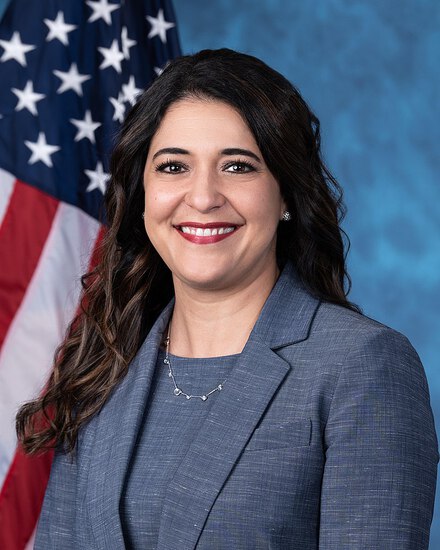
Rep. Stephanie I. Bice
Sponsored bills
Maddy summaryHR 1709, the Tribal Firearm Access Act, allows members of federally recognized tribes to use their Tribal government-issued ID instead of a state-issued ID when purchasing firearms from licensed dealers. It amends federal law (18 U.S.C. § 922(t)(1)(D)) to explicitly accept tribal identification documents as valid proof of identity for firearm transactions. The bill defines "Tribal government" to include recognized tribes listed under the Federally Recognized Indian Tribe List Act of 1994. This change directly affects tribal members seeking to purchase firearms and federally licensed dealers who must now accept tribal IDs as valid identification. The law takes effect 90 days after enactment.
Maddy summaryHR 6744, the "No VA Resources for Illegal Aliens Act," prohibits the Department of Veterans Affairs (VA) from providing health care or processing health care claims for individuals unlawfully present in the United States who are not already eligible for VA health care under existing law. This bill directly affects undocumented immigrants who do not qualify for VA benefits through standard veteran eligibility criteria. The key provision explicitly bars VA resources from being used for any care or claims processing for such individuals. The bill does not alter VA eligibility rules for veterans but prevents the use of VA funds for non-eligible non-citizens unlawfully present in the U.S.
Maddy summaryHRES 941 is a non-binding House resolution condemning the final agreement from the December 2023 UN Climate Change Conference in Dubai, which includes language urging a "transitioning away from fossil fuels." The resolution states that Congress believes the U.S. should not promote policies discouraging fossil fuels and urges the Biden administration not to implement policies aligned with the UN agreement. It references U.S. energy exports and economic benefits from fossil fuel production as context for its position. This resolution has no legal effect and serves only as a symbolic expression of congressional sentiment.
Maddy summaryHR 6853, the SOS Act, requires the Congressional Budget Office to include a new graph in annual reports about Social Security trust funds. The graph must compare projected payments under a 1985 law (section 257(b)(1)) with actual outlays from current law. This procedural bill affects how Congress reports on Social Security funding, adding transparency about payment assumptions versus current spending. It does not change eligibility or benefit amounts for seniors or disability recipients.
Maddy summaryHR 6524, the Federal Cybersecurity Workforce Expansion Act, creates a new federal apprenticeship program to address the cybersecurity workforce shortage by training individuals for cybersecurity roles within federal agencies. The program partners with community colleges, career and technical schools, and other educational institutions to provide training aligned with federal cybersecurity needs. It also establishes a pilot program specifically for veterans and military members transitioning to civilian life, offering cybersecurity training with portable credentials that can be used across the job market. The bill requires coordination with multiple federal agencies and includes reporting requirements to assess program effectiveness and track participant employment outcomes.
Maddy summaryThe Menopause Research and Equity Act of 2023 requires the National Institutes of Health (NIH) to evaluate existing and ongoing research on menopause, perimenopause, and mid-life women’s health, identifying gaps in knowledge and funding over the past five years. The NIH must then develop a strategic plan with health professionals (including specialists like gynecologists and endocrinologists) to address these gaps and guide future research on treatments for menopause symptoms. The bill also mandates new NIH research on causes, symptoms, and treatments for menopause-related health issues, including a study on hormonal treatments. All activities must be funded using existing NIH resources, with no new appropriations authorized. This aims to improve scientific understanding of women’s mid-life health needs.
Maddy summaryThis bill expands eligibility for government-furnished headstones, markers, or medallions for Medal of Honor recipients. It directly affects veterans who have received the Medal of Honor but were previously excluded from this benefit due to a specific rule. The key change modifies eligibility rules to remove an exclusion (previously applying to certain recipients), ensuring all Medal of Honor recipients qualify for these headstones or markers. The bill also corrects a reference to the wrong section of law in the existing statute.
Maddy summaryHR 6734 prohibits the use of federal funds to finalize, implement, or enforce the Bureau of Alcohol, Tobacco, Firearms, and Explosives' (ATF) proposed rule (2022R-17) defining "engaged in the business as a dealer in firearms." This bill directly affects the ATF by blocking funding for this specific regulatory rule, which was proposed in August 2023. The legislation does not create new requirements but prevents federal resources from being used to advance this particular ATF regulation.
Maddy summaryHR 6573, the Protecting Military Servicemembers' Data Act of 2023, prohibits data brokers from selling, reselling, or sharing military servicemember lists to "covered nations" (as defined in federal law). It directly affects military members by preventing their personal information - contained in specialized lists created for compiling military service details - from being sold to specific foreign governments. The key mechanism bans the commercial transfer of these lists, with enforcement handled by the Federal Trade Commission and state attorneys general. The law takes effect within one year of enactment or when the FTC issues final rules, whichever comes first. This is a concrete policy change targeting data brokers' practices, not a procedural measure.